

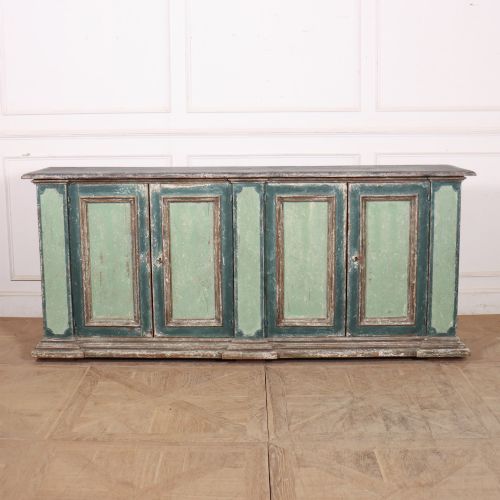


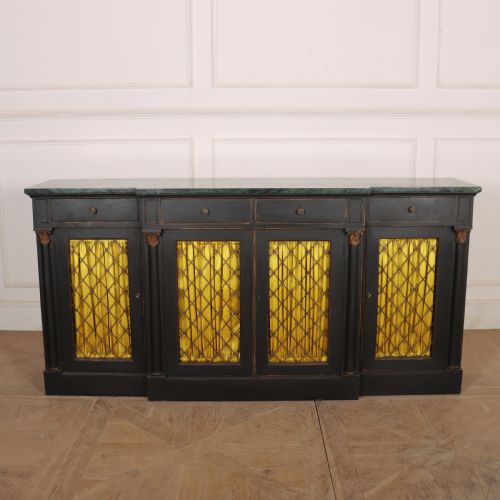


Green Painted Credenza
A green painted credenza brings rich colour and enduring utility to a room through painted wood, pine, and marble finishes.
Green Painted Credenza
A green painted credenza encompasses versatile storage furniture finished in various shades of paint, ranging from side cabinets to dresser bases and sideboards. These items draw on historical traditions across England, Scotland, Italy, France, and Sweden.
The pieces listed on this page span the eighteenth, nineteenth, and early twentieth centuries, reflecting styles such as English Country, Venetian Rococo, and Neoclassical. Buyers most frequently encounter nineteenth-century painted pine and timber items designed for domestic storage.
Forms vary from large breakfront buffets and housekeeper cupboards to compact demi-lune cabinets and console tables. Each piece serves primarily as a practical surface and storage unit while displaying painted wooden surfaces.
Materials and construction methods
Construction relies primarily on pine and various other woods, shaped into side cabinets, cupboards, and dresser bases. Carpenters utilised solid timber framing to build durable storage furniture intended for everyday household use.
Surfaces received layers of paint, sometimes complemented by brass hardware or marble tops on select demi-lune and commode forms. Hand-painted decoration appears on specific regional pieces, particularly those following Venetian or English country traditions.
Green Painted Credenza Retail Price Guide 2026
Typical asking prices for green painted credenza among the pieces listed under this phrase on Sellingantiques today, from the lower quarter to the upper quarter. They describe what is for sale here now, not the wider market.
Dairy dressers originally kept milk pails cool, though today they mostly hold dinnerware and small collections.
Assessing quality in painted storage furniture
Quality differentiates through the integrity of the wooden structure and the preservation of original painted surfaces rather than applied decorative flourishes. Pieces retaining their early or original paint layers command greater interest among collectors of regional furniture.
Refinement in proportion and joinery distinguishes standard utility cupboards from sophisticated provincial examples like Venetian serpentine buffets or Dutch commodes. The integration of superior materials, such as fitted marble tops, separates standard timber builds from finer decorative cabinets.
Melissa White·Pauly et Cie
The Green Painted Credenza Glossary
- Credenza
- A sideboard or cabinet used for storing and displaying household goods. This form provides a broad top surface and lower enclosed storage.
- Dresser base
- The lower section of a traditional kitchen or dining room dresser, featuring cupboards and drawers without upper shelving. These heavy timber pieces served practical food preparation and storage functions.
- Demi-lune
- A half-moon shape characteristic of console tables, cabinets, and commodes designed to sit flush against a wall. This profile saves floor space while offering a decorative surface.
- Serpentine
- A curved line with a convex centre flanked by concave sides, often seen on the fronts of Venetian buffets and commodes. This shaping requires advanced woodworking skill.
- Breakfront
- A piece of furniture whose central section projects forward from the flanking outer sections. This architectural arrangement adds visual depth to large sideboards and dressers.
Green Painted Credenza: Frequently Asked Questions
What rooms suit a green painted credenza?
These storage pieces fit dining rooms, hallways, and kitchens where functional surface space and enclosed storage are required. Their painted finishes allow them to anchor a colour scheme or contrast against neutral walls.
Larger dresser bases and buffets work well in spacious living areas, while compact demi-lune cabinets and side cabinets suit narrower corridors or bedrooms.
How do I care for painted wooden surfaces?
Maintenance involves dusting with a soft, dry cloth and avoiding harsh chemical cleaners that can degrade historic paint layers. Keeping pieces away from direct sunlight prevents fading of the painted finish.
Wax or mild polish may be used sparingly on unpainted wooden elements, but painted areas require gentle handling to preserve their surface texture.
What distinguishes a dresser base from a sideboard?
A dresser base originates from country kitchen traditions, featuring sturdy pine or timber construction designed for heavy domestic use. Sideboards often display more formal stylistic influences, such as Neoclassical or Regency detailing.
Both forms provide substantial lower storage through cupboards and drawers, but dresser bases generally reflect vernacular rural craftsmanship.
Are these pieces from the nineteenth century?
Many examples date from the nineteenth century, including Victorian country pieces and mid-century Swedish pine cupboards. Eighteenth-century items also appear among the larger dresser bases and continental commodes.
Construction details, timber types, and paint characteristics help identify the specific period of origin for each cabinet.