
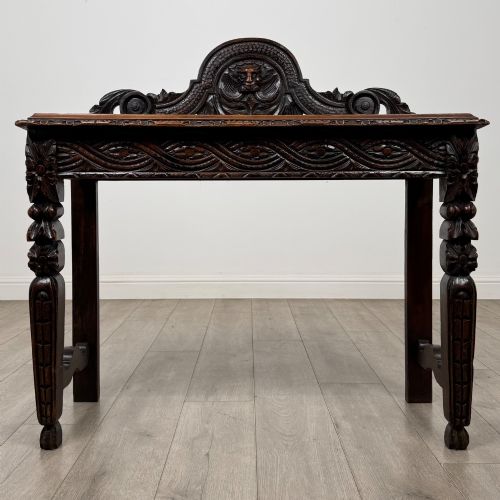
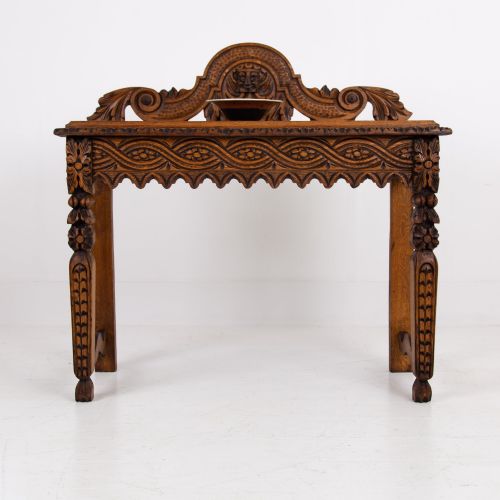




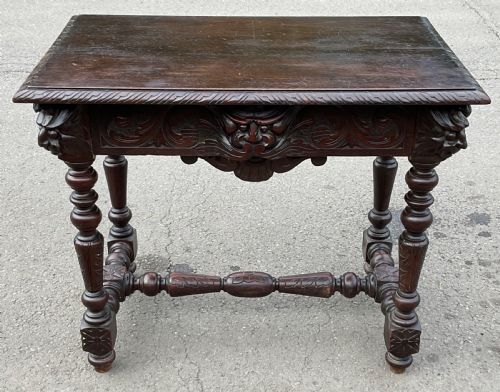

Green Man Side Table
A green man side table brings robust Victorian Gothic character into a room through bold carved oak woodwork and mythical foliage faces.
Green Man Side Table
A green man side table sits within the Victorian Gothic Revival tradition, combining functional household furniture with intense mythical carving. These tables serve primarily as hall furniture, console tables, or compact desks.
The green man motif dominates the design, typically appearing as a carved mask overflowing with foliage or leaves. Buyers meet examples spanning the mid to late nineteenth century, predominantly constructed from solid oak.
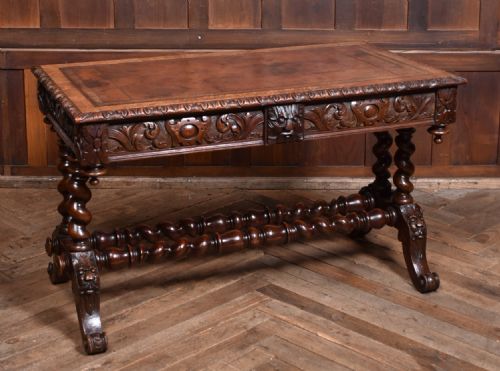
Forms vary from simple single-drawer stands and two-tier tables to more elaborate writing desks and console tables. The proportions remain generally compact, designed to anchor a hallway or reception space.
How they were made
Cabinet makers utilised solid oak and golden oak to build these heavy side tables, often applying deep relief carving directly to the timber. Brass hardware occasionally appears on drawers, while some variants incorporate leather writing surfaces.
Every single green man stares silently from his foliage, making sure nobody steals the house keys from the hall table drawer.
What varies in quality
Construction substance also defines the upper tier of pieces, seen in heavier timbers, balanced proportions, and integrated drawers rather than applied ornamentation.
The Green Man Side Table Glossary
- Green man
- A sculptural architectural and furniture motif representing a human face emerging from or entwined with leaves and vines. It symbolises rebirth and spring in various decorative traditions.
- Gothic revival
- An architectural and design movement spanning the nineteenth century that revived medieval Gothic forms, arches, and heavy ornamentation. This style heavily influenced Victorian furniture production.
- Console table
- A table designed to stand against a wall, frequently supported by brackets or decorative legs. In nineteenth-century interiors, these pieces occupied entrance halls and reception rooms.
- Golden oak
- A bright, warm shade and grain pattern of oak timber utilised extensively in Victorian and later revival cabinet making. It highlights the natural figure of the wood.
- Low boy
- A traditional English term for a small table with drawers, often standing on relatively tall legs. Several side tables in this tradition share these proportions.
Green Man Side Table: Frequently Asked Questions
Where should I place a green man side table?
These tables suit entrance halls, corridors, or living rooms where their dark carved wood can anchor a wall space. Their compact footprints allow them to function as display surfaces or small writing desks.
Pair them with neutral backgrounds to let the intricate leaf and mask carvings stand out without overwhelming the room.
How do I date a Victorian oak side table?
Dating relies on examining the timber preparation, the style of the carving, and hardware such as drawer pulls or brass elements. Pieces from the mid to late nineteenth century often show hand-cut joinery and characteristic Gothic Revival motifs.
Comparing the specific depth of the oak patination and construction methods helps distinguish pieces from the eighteen-fifties through to nineteen-hundred.
What is the difference between a hall table and a side table?
Hall tables typically feature narrow proportions designed specifically for passage spaces, sometimes incorporating drawers for keys or stationery. Side tables share similar constructions but can serve broader functional roles across multiple room types.
Both forms utilise the same sturdy oak framework and decorative carving styles seen in Victorian Gothic furniture.
How do I care for antique carved oak?
Maintain the timber by dusting regularly with a soft, dry cloth and avoiding placement near direct heat sources or strong sunlight. Excessive dryness causes oak to split, while moisture damages the antique polish.
Occasional application of appropriate wax polish helps preserve the deep lustre of the carved green man details.