

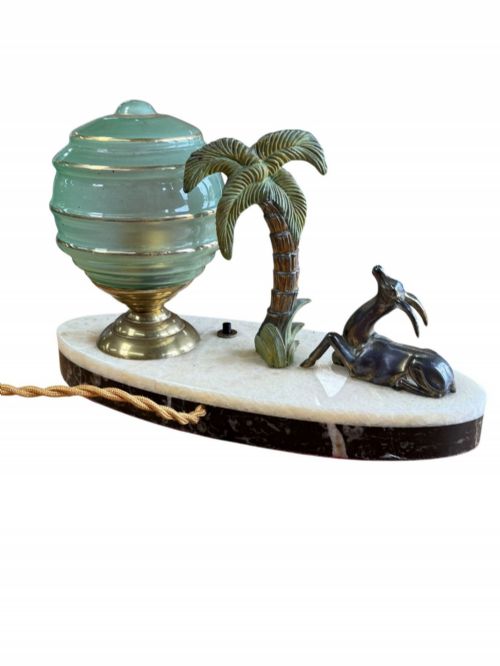


Green Glass Desk Light
These green glass desk light options combine brass, marble, and patinated metal to illuminate workspaces with period character.
Green Glass Desk Light
A green glass desk light brings functional task illumination and distinct period style to a study or workspace. These pieces span the nineteenth century through the 1940s, encompassing Edwardian designs and Art Deco forms.
Buyers encounter traditional styles alongside Arts and Crafts, Art Nouveau, and Grand Regency pieces. Each example demonstrates the utilitarian and decorative approaches of its specific decade.
Materials and Construction
Maker workshops utilised robust metals including brass, bronze, and patinated metal to form sturdy bases and adjustable arms. Ormolu and spelter details often provided surface enrichment on period bodies.
Stonework such as marble supplied heavy, stable foundations for upright standards and figural groups. Glass components completed the assembly, diffusing the output of early electrical fittings or earlier burners.
Green Glass Desk Light Retail Price Guide 2026
Typical asking prices for green glass desk light among the pieces listed under this phrase on Sellingantiques today, from the lower quarter to the upper quarter. They describe what is for sale here now, not the wider market.
Design movements represented include Art Deco, Arts and Crafts, Art Nouveau, and Grand Regency.
Judging Quality and Finish
Quality rests upon the weight of the metal components and the stability of the marble bases. Heavier castings and substantial brass or bronze elements indicate superior baseline construction.
The refinement of the casting work and the integration of moving parts dictate the overall standard of a piece. Better examples display crisp detailing on figures, mounts, and adjustable swan neck joints.
The Green Glass Desk Light Glossary
- Spelter
- A zinc alloy frequently used as a cheaper substitute for bronze in decorative figures and lamp bases. It takes patination well to simulate heavier metals.
- Ormolu
- Gilded bronze produced by applying a mercury and gold amalgam to a bronze base. This technique creates a rich golden finish seen on finer period mounts.
- Patinated metal
- Metal treated with chemicals or heat to produce an aged surface finish. This process highlights relief details and protects the underlying material.
- Swan neck
- A curved metal arm that positions a light source over a desk surface. The shape allows for directional adjustment of the shade.
Green Glass Desk Light: Frequently Asked Questions
How do I clean brass and bronze?
Dust metal components regularly with a soft, dry cloth to prevent grime accumulation. Avoid abrasive polishes that strip historical patina from the surface.
Marble bases require simple wiping with a damp cloth and immediate drying. Harsh chemicals damage both the stone sealant and surrounding metalwork.
Are these lamps safe for daily use?
Older electrical wiring often requires professional rewiring to meet modern safety standards. A qualified electrician can replace frayed cords while preserving original sockets and switches.
Checking the internal components ensures stable operation in a contemporary home. Many collectors have antique pieces tested before placing them into regular service.
How do I date a desk lamp?
Stylistic markers such as Art Deco geometric lines or Art Nouveau floral motifs point to specific decades. Materials like spelter and ormolu also align with nineteenth and early twentieth-century manufacturing trends.
Base construction methods and switch types offer further clues regarding age. Comparing the overall form to documented examples helps narrow down the production era.
Where should I place a desk lamp?
Position the piece on a sturdy wooden desk or a library table to balance its physical weight. Marble and bronze designs need substantial furniture to support their heft safely.
Keep the fitting away from direct moisture and bright sunlight to protect the metal finishes and glass. Adequate clearance allows any adjustable arms to move without obstruction.