

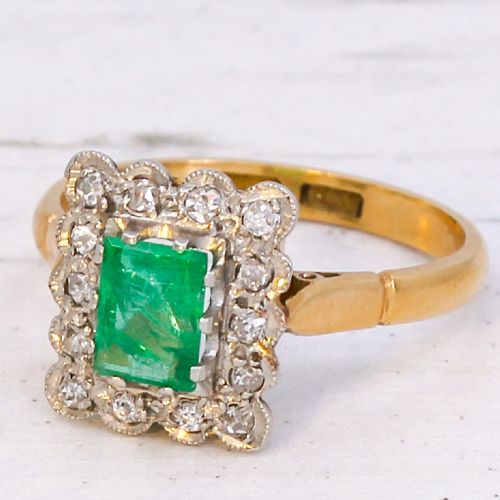
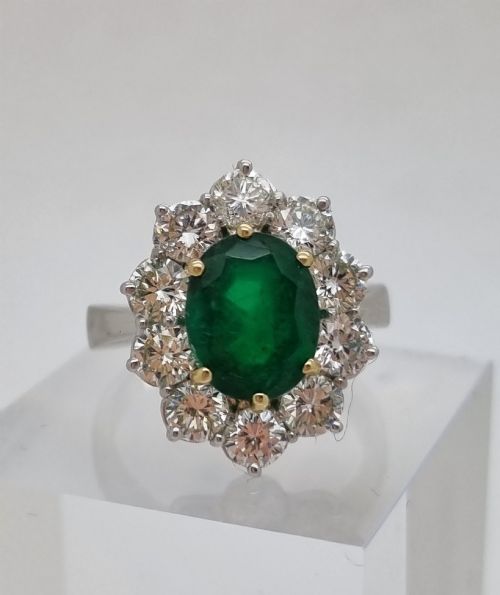
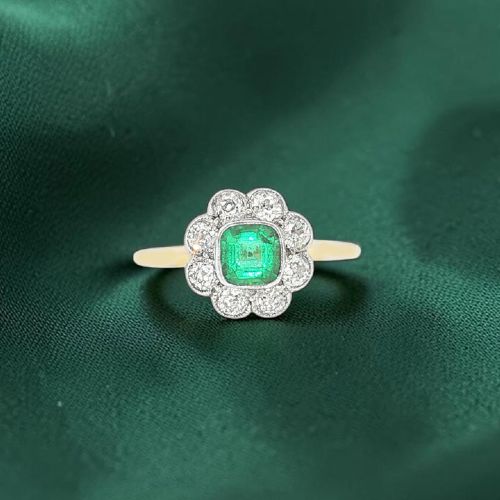

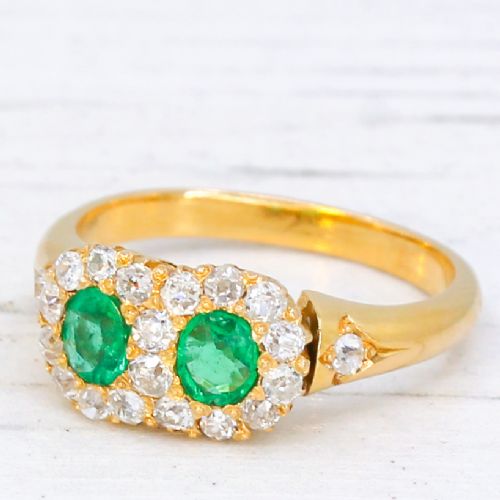




Green Gemstone Halo Ring
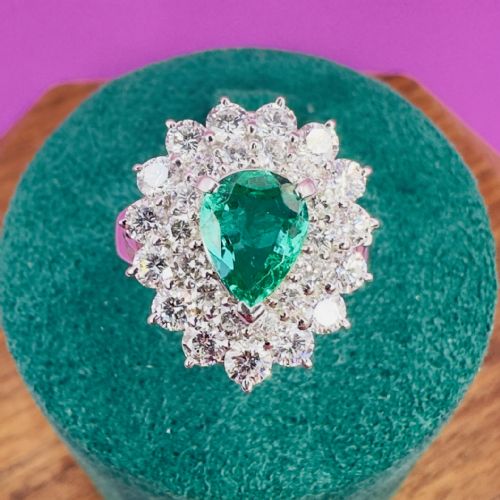
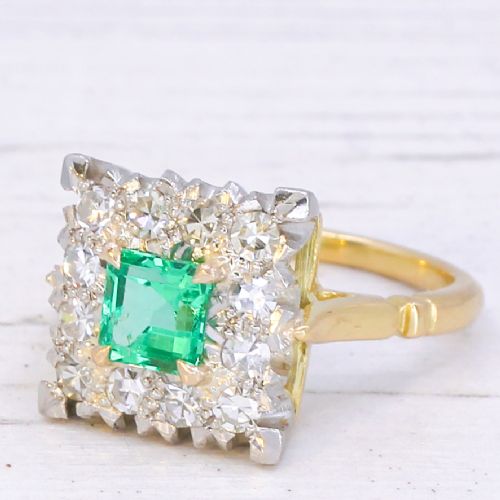
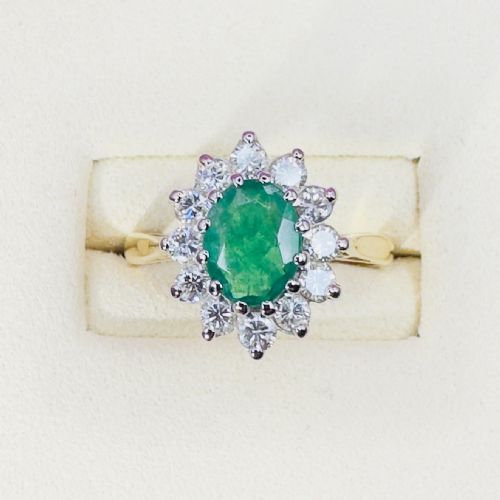
A green gemstone halo ring brings together a central emerald or chrysoberyl framed by diamonds, offering striking contrast for everyday wear.
Green Gemstone Halo Ring
A green gemstone halo ring places a vibrant centre stone directly within a sparkling border of diamonds. These pieces appear in clusters, dress designs and cocktail formats.
The selection on this page spans periods from the Georgian era through Victorian, Edwardian, Art Deco and Mid-Century decades. You will frequently encounter cluster configurations where the central green stone dominates the silhouette.
Makers utilised various cuts including old cut, rose cut, pear, oval and marquis stones. Platinum and yellow or white gold serve as the primary settings for these historical specimens.
How they were made
Goldsmiths constructed these mounts predominantly in platinum or multi-tone 18ct gold, sometimes combining yellow gold shanks with white gold or silver heads to enhance diamond brilliance. Stones are secured in claw settings or close bezels depending on the period.
Lapidaries shaped the central green gems into oval, pear, princess and marquis profiles, surrounded by symmetrical arrangements of old cut or brilliant cut diamonds.
Green Gemstone Halo Ring Retail Price Guide 2026
Typical asking prices for green gemstone halo ring among the pieces listed under this phrase on Sellingantiques today, from the lower quarter to the upper quarter. They describe what is for sale here now, not the wider market.
Several rings feature adjustable shanks, proving that Victorians also dealt with the eternal mystery of fluctuating finger sizes.
What varies in quality
Distinction in these rings rests upon the saturation and clarity of the central green gem, alongside certification confirming origin or oil treatments. Higher tiers display superior stone weight and matching diamond brilliance.
The integrity of the metalwork, whether platinum or hallmarked gold, and the precision of the cluster symmetry dictate the overall standard of the piece.
The Green Gemstone Halo Ring Glossary
- Halo
- A concentric ring of smaller diamonds or gemstones encircling a larger central stone. This layout maximises perceived visual impact and light reflection.
- Cluster ring
- A design grouping multiple smaller stones tightly around a dominant focal gem. This style gained immense popularity during the Georgian and Edwardian periods.
- Old cut
- A hand-faceted diamond shape typical of antique jewellery predating modern brilliant standards. These cuts feature smaller tables and larger culets.
- Ballerina ring
- A complex cluster setting with tapered baguette or brilliant cut diamonds radiating outward like a dancer's tutu. The effect creates significant finger coverage.
Green Gemstone Halo Ring: Frequently Asked Questions
How do I care for a green gemstone halo ring?
Clean these rings gently using warm soapy water and a soft brush, avoiding harsh chemical ultrasonic cleaners. Emeralds and softer green stones require particular care to protect their settings.
Store each piece individually in a lined box to prevent metal and diamond scratching. Regular checks by a jeweller ensure the claws secure the halo stones firmly.
Can I wear an antique halo ring daily?
Many buyers wear these historical rings daily, provided the setting remains robust and secure. Platinum and 18ct gold offer strong foundations for regular use.
Consider removing the ring during heavy manual tasks or sports to protect softer centre stones like emeralds. Periodic inspection of the shanks and claws preserves their longevity.
What is the difference between an emerald and a tourmaline?
Emeralds are a distinct variety of beryl coloured by trace amounts of chromium or vanadium, often containing natural inclusions. Tourmalines belong to a different mineral group with varied crystal structures and distinct refractive properties.
Both stones provide vivid green shades in antique halo settings, though emeralds carry a distinct historical pedigree and specific certification standards.
How can I tell an Art Deco halo ring from an Edwardian one?
Edwardian rings typically showcase delicate platinum lace-work, millegrain edges, and flowing organic motifs. The focus remains on ethereal lightness and intricate wirework.
Art Deco examples shift toward geometric precision, sharp symmetry, and bold contrasts utilising platinum alongside yellow or white gold. The silhouette becomes more architectural and streamlined.