



Green Floor Lamp
These green floor lamp examples bring strong period character and ambient light to a room, ranging from early brass standards to mid-century industrial spots.
Green Floor Lamp
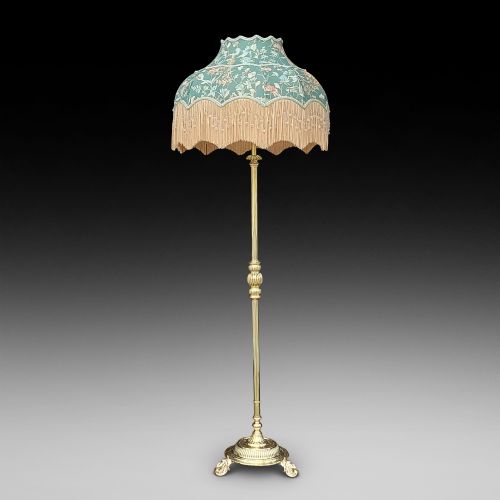
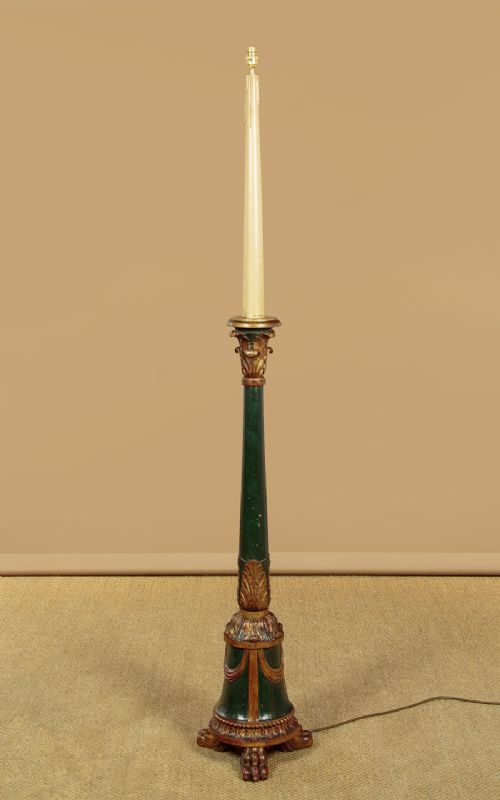
When you search for a green floor lamp, you encounter tall lighting stands designed to illuminate a room from floor level rather than a table top. The evidence on this page shows standard lamps and floor lamps spanning the Victorian era through to the 1960s.
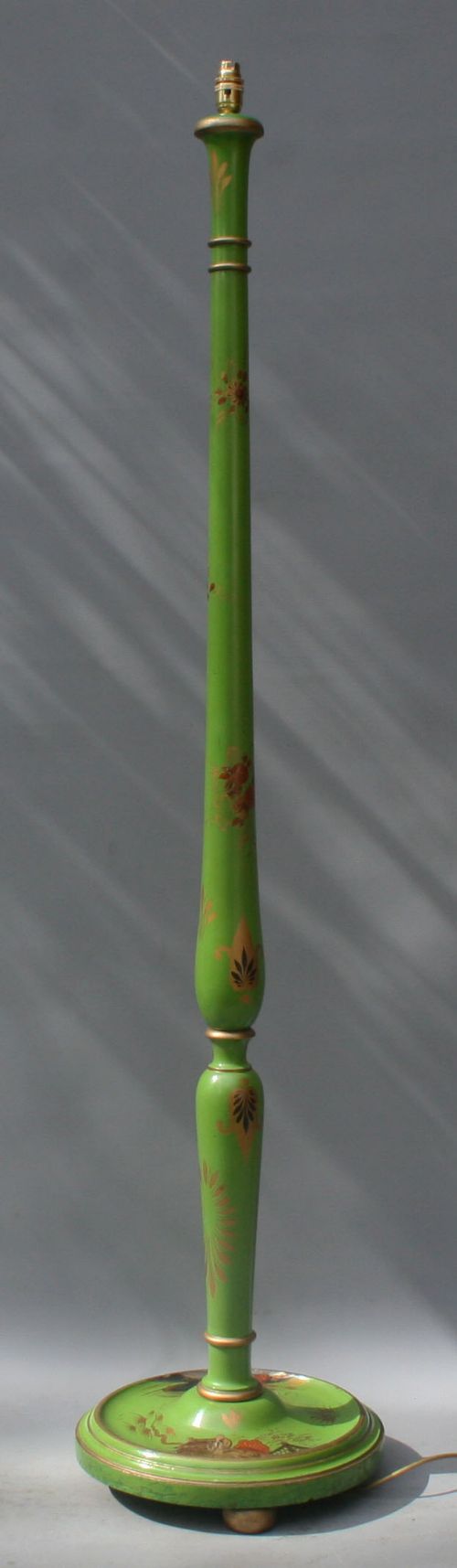
The most frequent versions you meet include brass standards, painted wooden shafts, and fabric-shaded columns, alongside specific decorative styles like Chinoiserie and Art Deco.
Makers and designers from periods such as the Edwardian era and 1930s focused on height and stability, creating functional pieces that doubled as sculptural elements in a parlour or drawing room.
How they were made
Construction relies heavily on metals like brass and bronze, often paired with wooden elements such as oak or painted surfaces to achieve height and structural integrity.
Finishes include gilt work, paint, and fabric coverings like silk, alongside decorative details such as cast ram's heads and fringe trimming.
Early wiring and conversion from oil to electricity show how these tall standards adapted to modern homes over decades of use.
Green Floor Lamp Retail Price Guide 2026
Typical asking prices for green floor lamp among the pieces listed under this phrase on Sellingantiques today, from the lower quarter to the upper quarter. They describe what is for sale here now, not the wider market.
Cast ram's heads stare out from Edwardian brass standards, watching over the room with stoic determination.
What varies in quality
Quality rests in the weight and integrity of the base and column, where solid cast bronze or heavy brass outlasts lighter, more flexible constructions.
The refinement of decorative details, from hand-painted Chinoiserie motifs to finely cast figural torcheres, separates standard workshop production from finer examples.
F. De Luca
The Green Floor Lamp Glossary
- Standard Lamp
- A tall floor-standing lamp designed to hold a shade and illuminate a room from a corner or beside seating. These pieces often feature adjustable height or heavy weighted bases for stability.
- Torchiere
- An ornate standing lamp that directs light upward towards the ceiling. The evidence here includes large figural examples in bronze.
- Chinoiserie
- A decorative style reflecting European interpretations of Chinese artistic traditions, frequently seen in painted lamp standards from the early twentieth century.
- Gilt
- A thin layer of gold applied to surfaces such as wood or metal to give a rich metallic sheen. This finish enhances the decorative impact of antique lighting.
Green Floor Lamp: Frequently Asked Questions
How do I date an older standard lamp?
Dating relies on examining the materials, wiring methods, and base construction styles typical of periods like the Victorian era or the 1930s.
Stylistic cues such as cast brass ornamentation or painted Chinoiserie motifs further help pinpoint the decade of manufacture.
Were these lamps originally electric?
Many surviving examples began life as oil lamps or gas standards before being converted to electricity during the twentieth century.
This history means fittings often show adaptations made to accommodate modern bulbs and wiring safely.
Where should I place a tall floor lamp?
These tall standards work best in corners or beside substantial furniture where their height provides balanced ambient lighting.
Their decorative columns also serve as visual focal points in a traditional room setting.
What maintenance do fabric shades need?
Silk and fabric coverings benefit from gentle dusting with a soft brush to prevent the accumulation of grime over time.
Care must be taken around older textiles and fringe trims to preserve their original condition.