



Grand Tour Stone Souvenir
When you search for a grand tour stone souvenir, you examine carved marble, alabaster and serpentine objects brought home by travellers from Italy during the nineteenth century.
Grand Tour Stone Souvenir
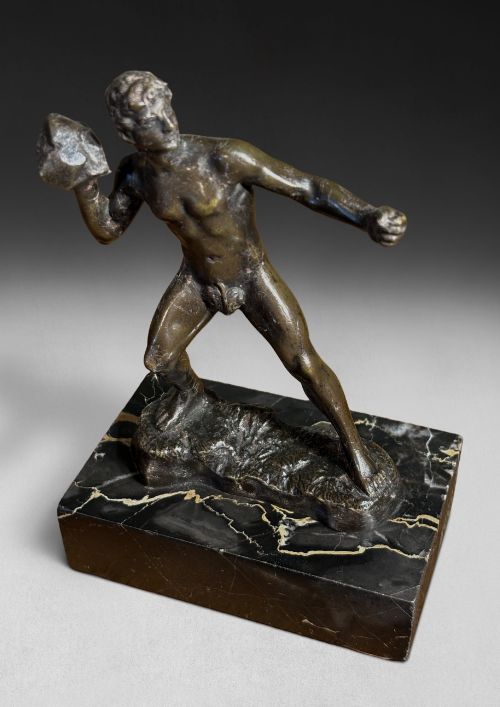
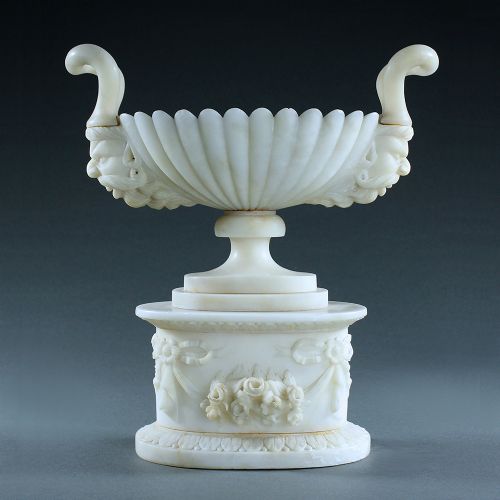
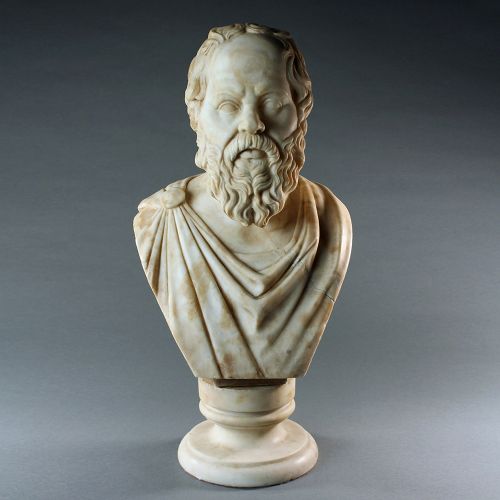
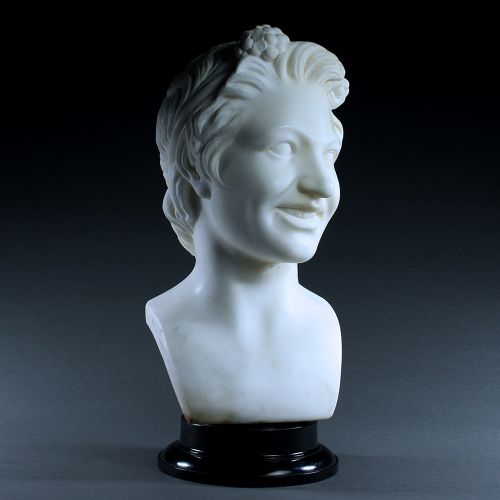
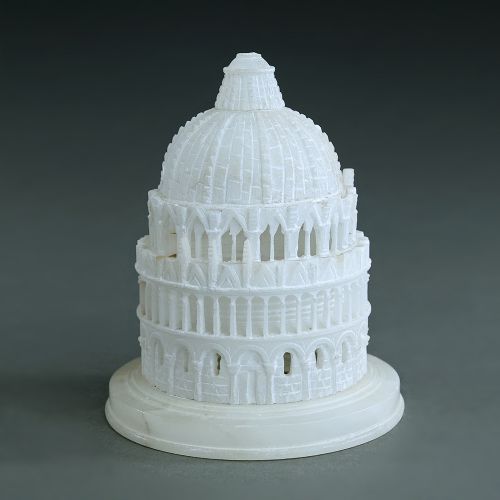
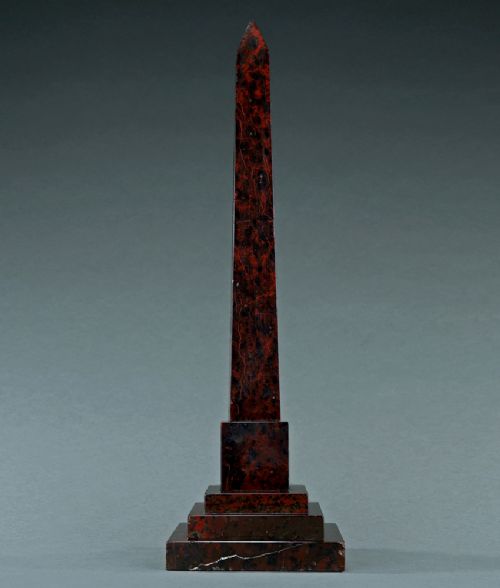
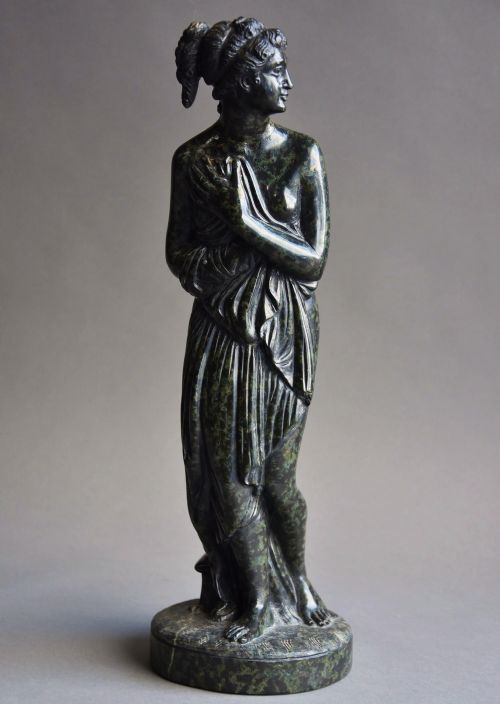
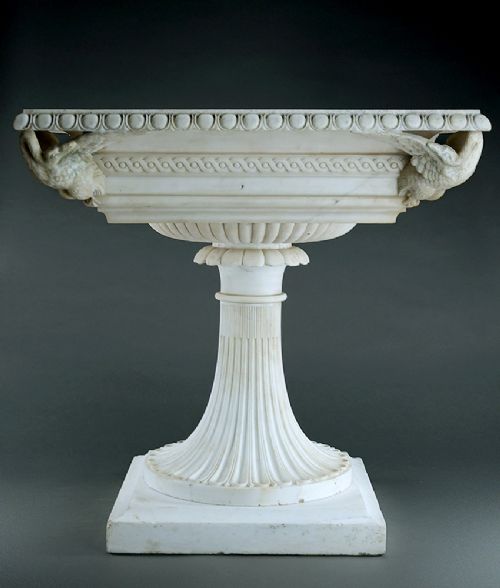
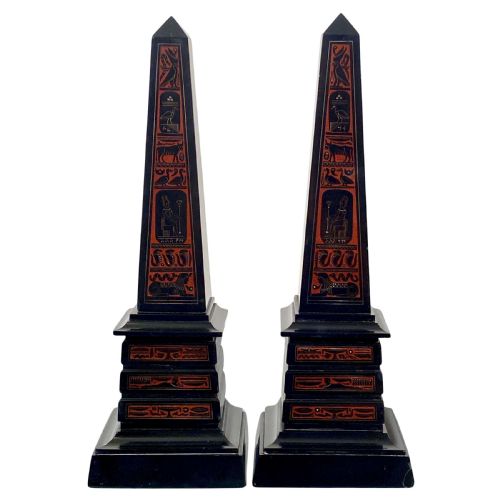
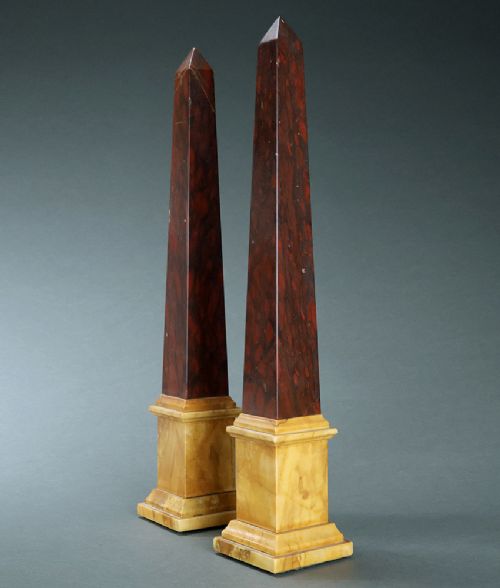
A grand tour stone souvenir encompasses carved figures, tazzas, obelisks and paperweights shaped from various stones and marbles. These pieces represent miniature copies of classical sculptures, ancient architecture and architectural elements seen by travellers abroad.
The objects on this page date predominantly from the nineteenth century, including specific years in the 1850s, 1860s, 1870s, 1880s and 1900, alongside earlier eighteenth-century items. Forms range from large vases and labrum vessels to small jewellery caskets, brooches and desk weights.
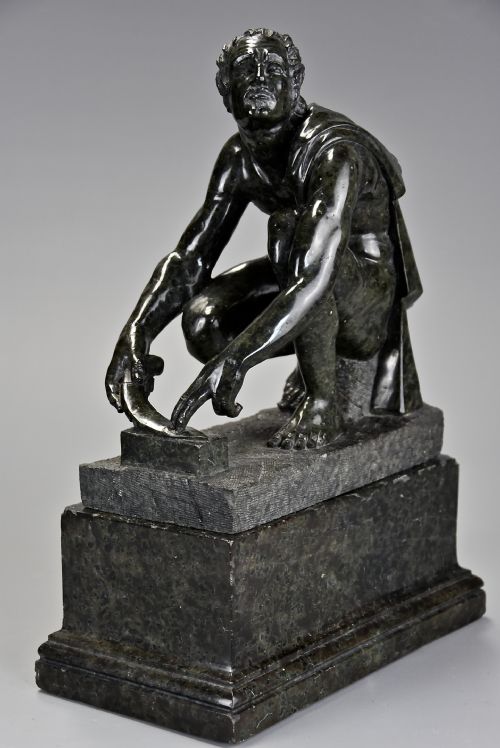
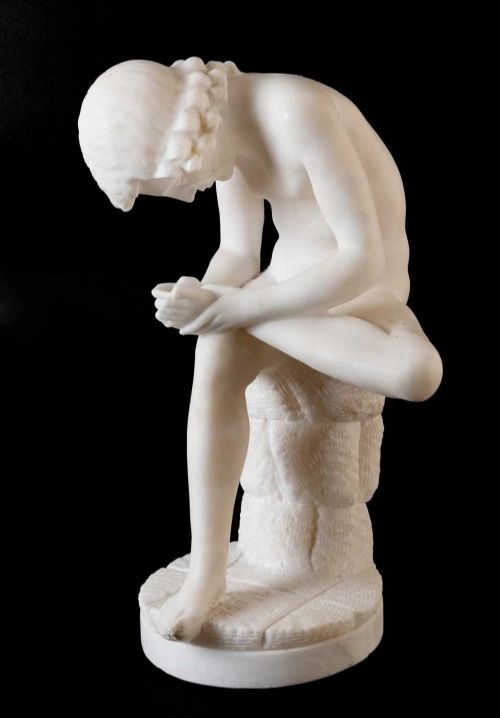
Buyers will encounter figures after the antique such as the Spinario, the Knife Sharpener and Venus Italica, as well as animal models like the dogs of Alcibiades and Venetian lions. Architectural markers such as obelisks and tazzas appear frequently alongside inlaid pictorial panels.
Materials and Techniques
Carvers shaped these souvenirs from marble, alabaster, serpentine, slate and lava stone, utilising natural mineral variations for dramatic effect. Many works combine turned and hand-carved stone bodies with fitted metal mounts in silver or ormolu.
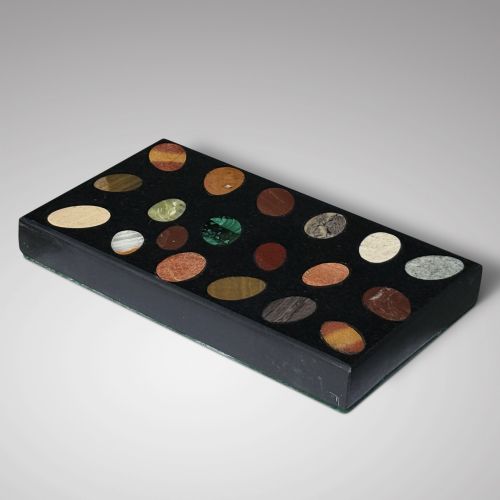
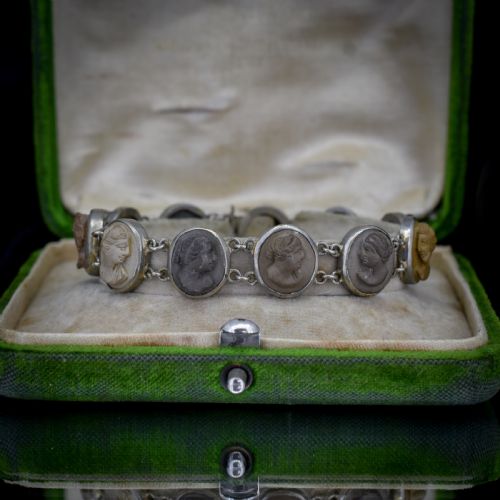
Flat surfaces and decorative plaques often employ pietra dura or pietre dure techniques, assembling precision-cut specimen marbles and hardstones into detailed pictorial compositions. Cameos carved directly into lava stone provide another sculptural method visible across jewellery items.
Grand Tour Stone Souvenir Retail Price Guide 2026
Typical asking prices for grand tour stone souvenir among the pieces listed under this phrase on Sellingantiques today, from the lower quarter to the upper quarter. They describe what is for sale here now, not the wider market.
Judging Quality
The merit of a piece rests upon the crispness of the hand-carving and the fidelity of the miniature scale to the original monument. Sculptures that capture subtle musculature and accurate proportions demonstrate superior craftsmanship compared to rigid or formulaic copies.
Material selection dictates the upper tier of the range, where stones show striking natural figuring, such as alabastro egiziano or rich green serpentine. In pietra dura works, the tightness of the stone joints and the variety of mineral specimens determine the level of accomplishment.
Antonio Canova·Boschetti
The Grand Tour Stone Souvenir Glossary
- Pietra dura
- An Italian technique of inlaying cut and fitted polished coloured stones to create pictorial images. This method produced elaborate tabletops, desk paperweights and decorative plaques.
- Tazza
- A shallow bowl or vase raised on a stem and foot, often modelled after classical drinking vessels. These decorative objects frequently utilise contrasting black marble bases.
- Obelisk
- A tall, four-sided, narrow tapering monument which terminates in a pyramid-like shape at the top. Makers produced these in various marbles and serpentine as architectural ornaments.
- Labrum
- A large ancient Roman basin or shallow vessel type associated with baths. Grand tour versions translate this monumental form into decorative desk and display pieces.
- Alabaster
- A fine-grained, translucent stone favoured for carving smooth classical figures and vessels. Its softness allowed artisans to achieve delicate drapery and facial details.
Grand Tour Stone Souvenir: Frequently Asked Questions
What is a grand tour stone souvenir?
A grand tour stone souvenir is a carved marble, alabaster or serpentine object acquired by wealthy travellers visiting Italy and classical sites during the eighteenth and nineteenth centuries.
These pieces served as portable reminders of famous antiquities, architecture and sculpture seen abroad.
How were these stone objects used?
Travellers displayed these carved figures, tazzas and obelisks on mantelpieces, desks and cabinets within their homes as symbols of classical education and culture.
Smaller items like lava cameo brooches, jewellery caskets and specimen paperweights functioned as personal accessories or functional desk furnishings.
How do I live with stone souvenirs?
These decorative objects anchor tables, bookshelves and mantelpieces, pairing easily with wood furniture and neutral interiors where their mineral colours stand out.
Maintenance requires simple dusting with a dry cloth, avoiding harsh chemical cleaners that can damage polished stone or delicate alabaster surfaces.
How do I distinguish periods of pieces?
Earlier eighteenth-century works often show sharper, more individual hand-carving in portrait bas-reliefs, while nineteenth-century production expanded into varied decorative obelisks and animal models.
Materials and mounting styles, such as silver or ormolu settings on jewellery, help indicate specific Victorian manufacturing decades.