

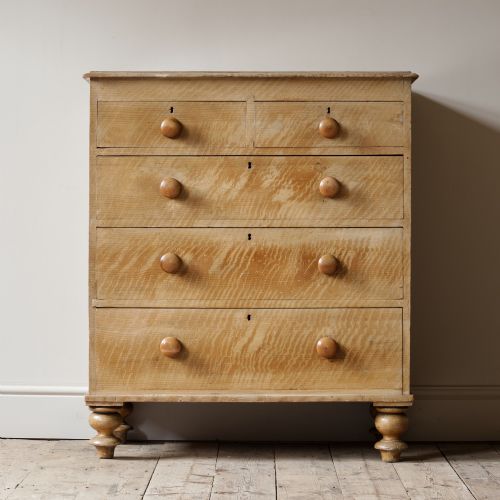
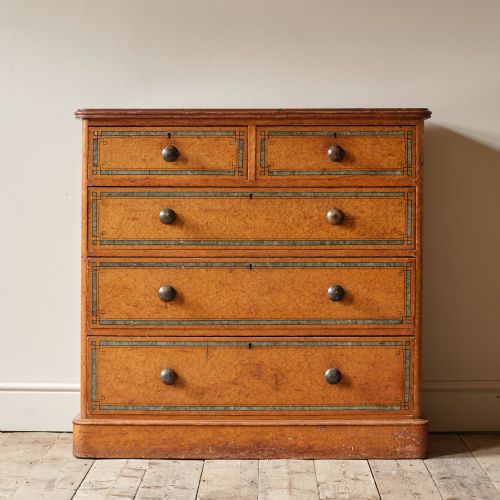
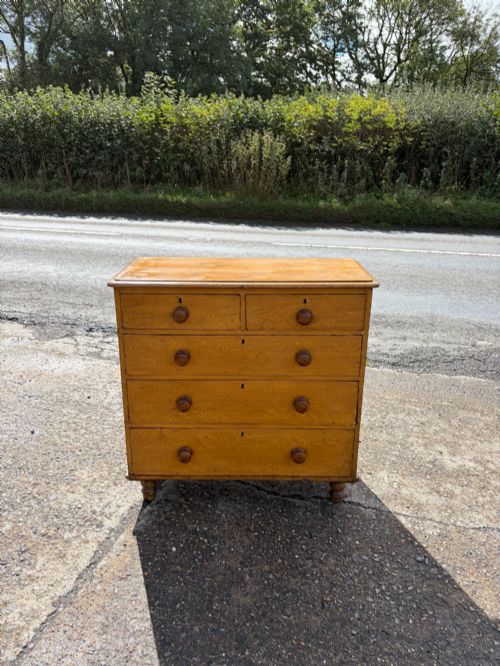
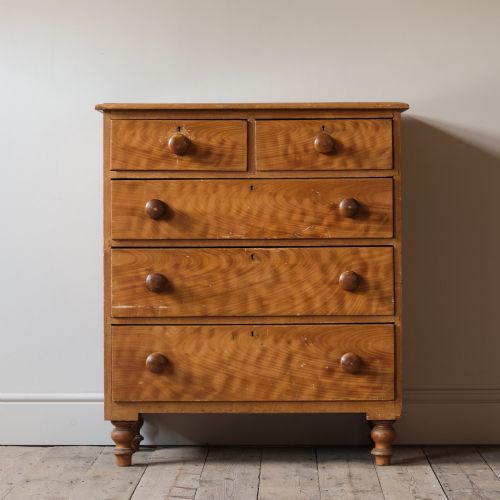
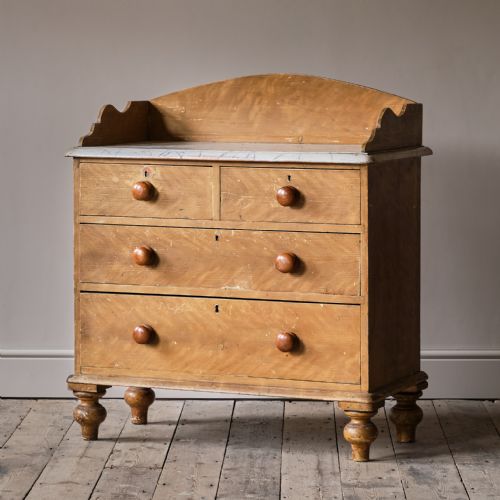
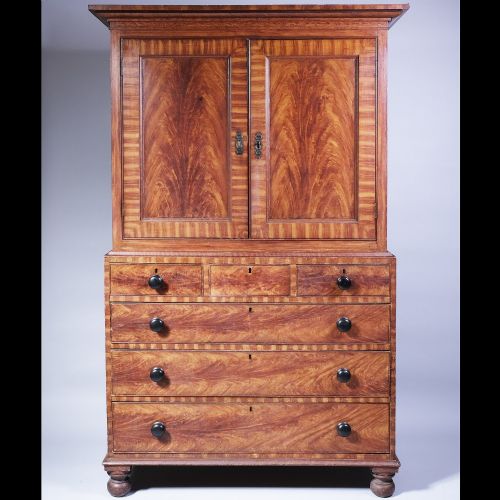


Graining Painted Chest
These graining painted chest pieces are durable pine and softwood storage items finished to imitate fine timber, offering character for period interiors.
Graining Painted Chest
A graining painted chest provides utilitarian storage finished with decorative surface work designed to mimic expensive hardwoods like oak or walnut. When searching for this phrase, buyers encounter various forms including chests of drawers, blanket boxes, and washstands originating from the nineteenth century.
Most examples found on this page date from the Victorian era and reflect country house or rustic farmhouse styles. These pieces range from standard two-over-three drawer configurations to smaller miniature chests and specialised storage boxes.
Origins span English country workshops as well as continental sources such as French chateaux and Scandinavian country environments. Each piece combines functional domestic storage with decorative surface treatments applied to softwood timbers.
Materials and construction
Makers built these pieces primarily using pine and softwood, selecting timbers that accepted surface treatments readily while providing sturdy domestic storage. Iron and brass hardware such as drawer pulls, handles, and hinges were fitted to secure drawers and lids.
Surface decoration involved specialised painting techniques like scumbling and graining, where layers of pigment were manipulated with combs, feathers, or brushes to simulate natural wood figures. This layered paint protected the softer underlying timber while creating an elaborate decorative finish.
Graining Painted Chest Retail Price Guide 2026
Typical asking prices for graining painted chest among the pieces listed under this phrase on Sellingantiques today, from the lower quarter to the upper quarter. They describe what is for sale here now, not the wider market.
Listings span the nineteenth century, featuring Victorian country styles, Scandinavian country influences, and French chateau pieces made from pine and softwood.
Judging the range
Quality separates primitive domestic utility items from finer decorative furnishings through the skill and precision of the surface decoration. Superior pieces display carefully executed scumble glazing or simulated grain work that maintains depth and realism across the entire surface.
Construction standards also differentiate the items, with better examples retaining original painted surfaces alongside well-fitted drawers, sturdy framing, and appropriate period brass or ceramic hardware rather than later replacements.
The Graining Painted Chest Glossary
- Scumble
- A semi-transparent layer of dark paint dragged or brushed over a lighter base colour to create mottled or textured decorative effects. This technique forms the basis of much nineteenth-century simulated graining.
- Graining
- The artistic practice of painting surfaces to imitate the natural grain patterns of costly hardwoods. Artisans utilised tools like combs and specialised brushes to achieve realistic timber movement.
- Mule chest
- A traditional storage chest featuring one or more drawers built into the base beneath the primary lift-top compartment. These versatile items bridge the design gap between blanket boxes and chests of drawers.
- Washstand
- A specialised piece of furniture designed to hold a wash basin and pitcher, often incorporating drawers or cupboards for toiletries. They frequently appear in pine with painted or scumbled finishes.
- Softwood
- Timber derived from conifer trees, predominantly pine in these listings, which served as the standard structural material for painted country furniture. It provided an economical and workable alternative to hardwoods.
Graining Painted Chest: Frequently Asked Questions
What is a scumble painted finish?
A scumble painted finish involves manipulating translucent darker paint over a lighter base colour to create decorative patterns.
This technique was widely utilised on nineteenth-century pine furniture to imitate expensive timbers like mahogany or oak.
How do I care for original painted pine?
Care for original painted surfaces by dusting gently with a dry cloth and avoiding harsh chemical cleaning agents.
Keep the furniture away from direct sunlight and excessive moisture to preserve the nineteenth-century paintwork and underlying pine timber.
Where were these painted chests used?
These pieces served practical storage functions in Victorian bedrooms, country house utility rooms, and farmhouse settings.
Their decorative graining allowed modest pine furniture to suit more formal living spaces within nineteenth-century homes.
Are these chests made of solid pine?
Yes, the listings comprise pieces constructed from solid pine and softwood timbers rather than manufactured board products.
Craftsmen built these items to withstand heavy domestic use while providing functional storage through drawers, boxes, and cupboards.