

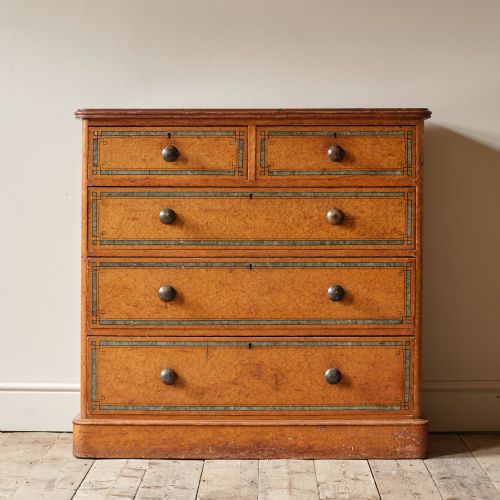
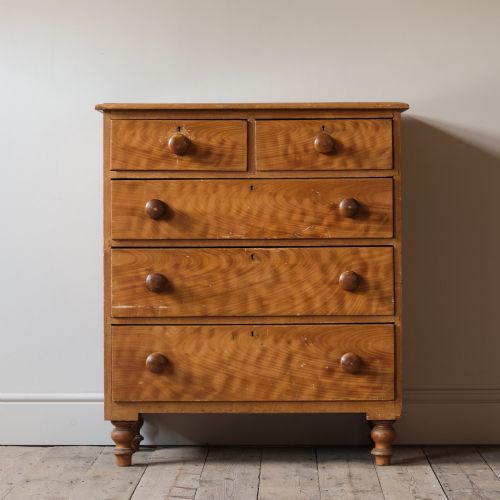
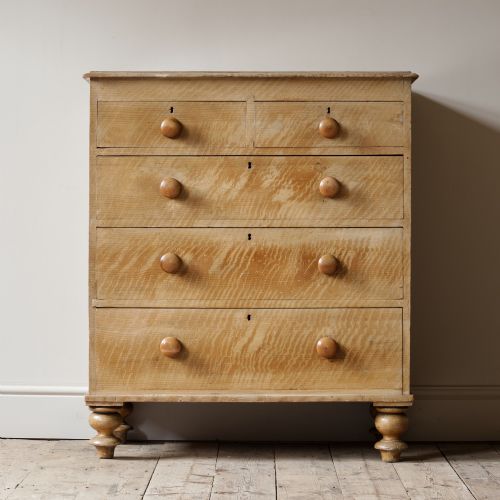
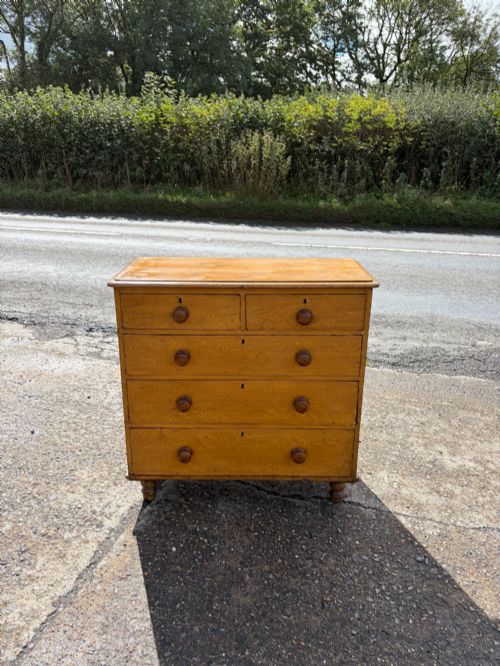
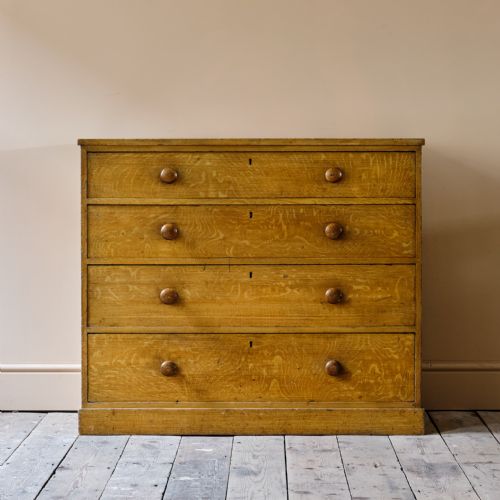


Grained Chest of Drawers
A grained chest of drawers brings surface pattern and practical storage into a room, using applied paintwork to mimic rarer timber.
Grained Chest of Drawers
A grained chest of drawers relies on decorative paint techniques to imitate the rich figure of expensive hardwoods, transforming plain pine or softwoods into striking furniture. These pieces span several eras, appearing most frequently as nineteenth-century Victorian examples finished in original scumble or decorative paint.
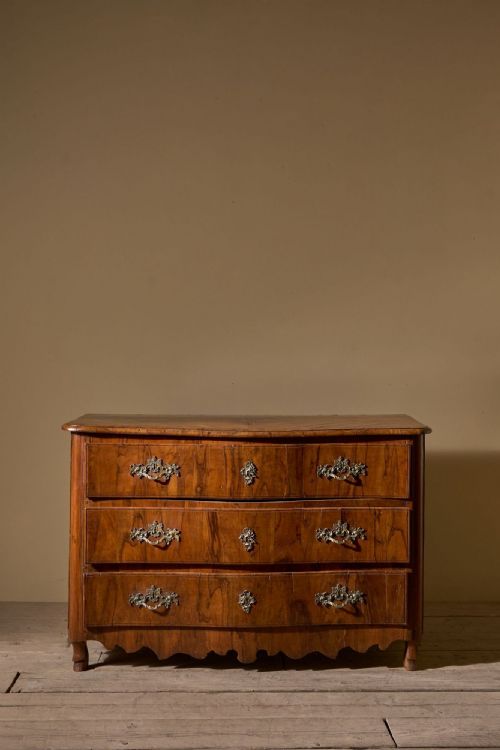
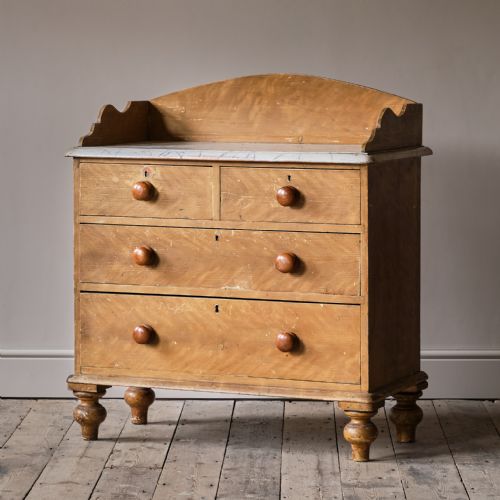
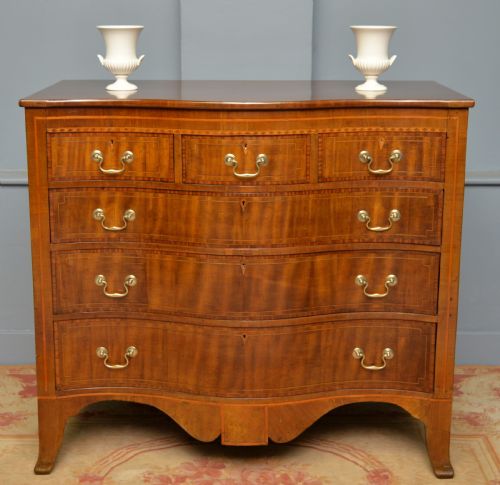
Beyond standard bedroom chests, the selection encompasses miniature furniture, mule chests, and washstand combinations alongside traditional two-over-three drawer configurations. Regional English country pieces sit alongside more exotic items, including eighteenth-century Maltese olivewood work and serpentine George III mahogany forms.
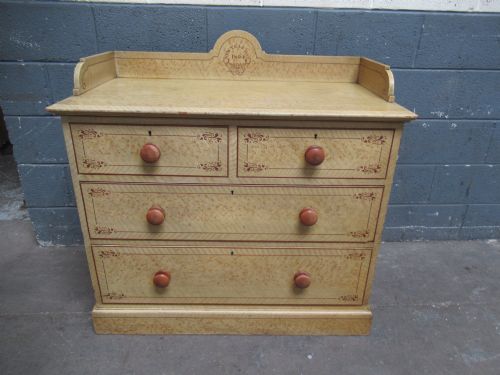
The finish itself defines the character of each piece, ranging from deep scumble glazes to deliberate simulated wood graining applied by hand. Surviving surfaces often retain their original turned knobs, painted details, and structural feet from the period of manufacture.
How they were made
Makers constructed the primary carcase using accessible domestic timbers like pine, preparing a smooth foundation for decorative surface treatments. Secondary woods and solid brass hardware completed the construction, ensuring functional longevity for daily storage.
The distinctive appearance stems from scumble work, where artisans dragged, combed, or brushed translucent tinted glazes over a lighter base coat to replicate timber grain. This skilled painted layer was then sealed to protect the intricate faux-finish beneath.
Grained Chest of Drawers Retail Price Guide 2026
Typical asking prices for grained chest of drawers among the pieces listed under this phrase on Sellingantiques today, from the lower quarter to the upper quarter. They describe what is for sale here now, not the wider market.
Miniature chests allowed nineteenth-century apprentices to practice complex dovetailing and graining techniques on a delightfully domestic scale.
What varies in quality
The fidelity and skill of the graining separate basic utility pieces from superior decorative examples, with master painters achieving convincing depth and movement in the faux finish. Originality of the painted surface remains paramount, as untouched nineteenth-century scumble carries significantly more visual integrity than later overpainting.
Construction details also dictate the tier of the piece, visible in the precision of drawer dovetails, the selection of primary timbers such as olivewood or flame mahogany, and the survival of original turned wooden knobs.
The Grained Chest of Drawers Glossary
- Scumble paint
- A translucent glaze applied over a lighter painted base and manipulated with combs or brushes to simulate natural wood grain. This technique was widely utilised on nineteenth-century pine furniture.
- Serpentine chest
- A storage piece featuring a distinctly undulating, convex-concave front profile. This sophisticated shape demands precise cabinetmaking.
- Mule chest
- A storage form combining deep chest storage with one or two functioning drawers along the base. These pieces bridge the gap between traditional blanket boxes and modern drawer chests.
- Fiddleback mahogany
- A highly figured tropical timber exhibiting fine, rippled transverse lines resembling the back of a violin. It commands attention for its striking optical depth.
Grained Chest of Drawers: Frequently Asked Questions
What is scumble paint?
Scumble paint involves applying a translucent tinted glaze over a solid base coat, then manipulating the wet surface using specialised combs or brushes to imitate natural timber grain.
This decorative method allowed nineteenth-century makers to transform humble pine furniture into visually striking pieces that resembled more expensive exotic hardwoods.
How do I identify original graining?
Original graining shows natural softening around edges and handling areas, matching the overall age and wear of the underlying timber carcase beneath.
Closer inspection reveals the delicate brushwork and tool marks typical of period application, rather than the flat uniformity found in modern reproductions.
Were these chests used in bedrooms?
These chests served primarily as practical storage for clothing and linens within domestic chambers, varying in size from miniature pieces to large five-drawer upright formats.
Some iterations also functioned as washstands or dressing chests, combining surface utility with enclosed drawer space for personal items.
What woods lie beneath the paint?
Pine serves as the most common foundational timber for these painted and scumbled pieces, chosen for its smooth, receptive surface before decoration.
Other examples incorporate solid mahogany or exotic olivewood beneath their finishes, depending on the regional origin and overall cabinetmaking standard.