

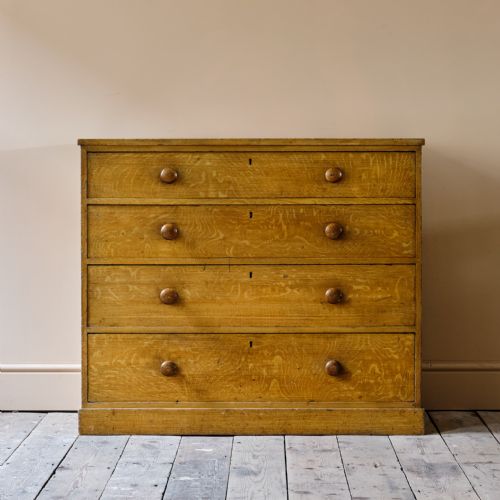


Grain Painted Dresser
A grain painted dresser brings rich surface texture and honest country utility into a room.
Grain Painted Dresser
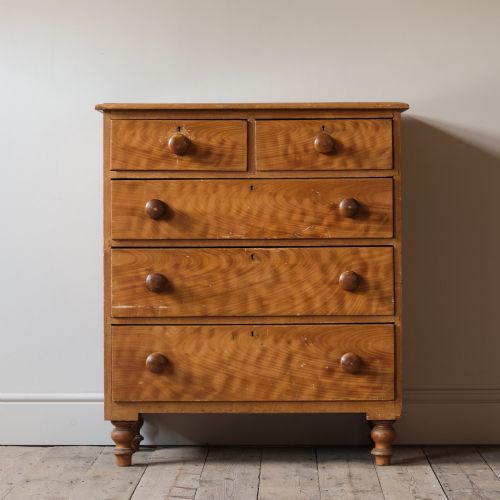
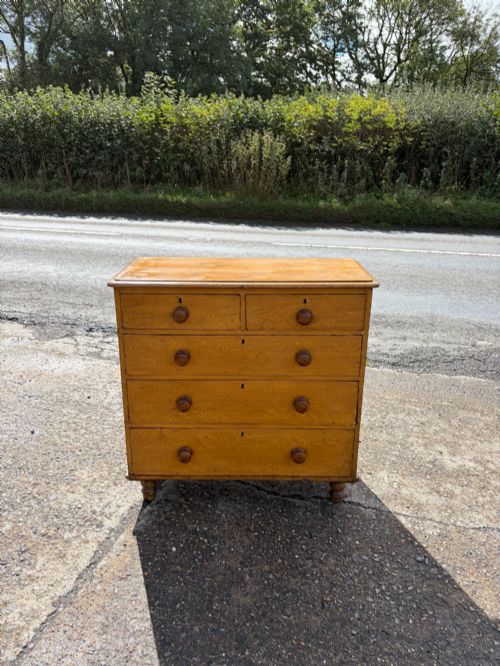
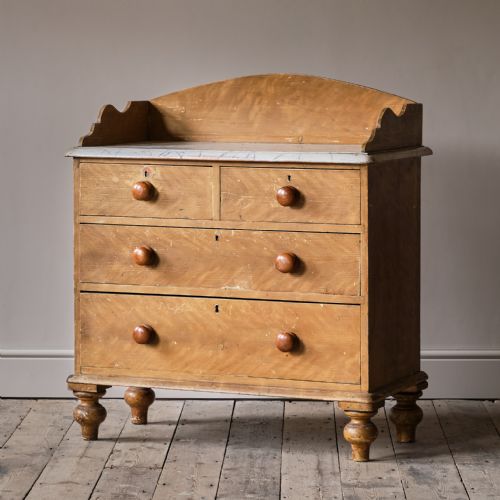
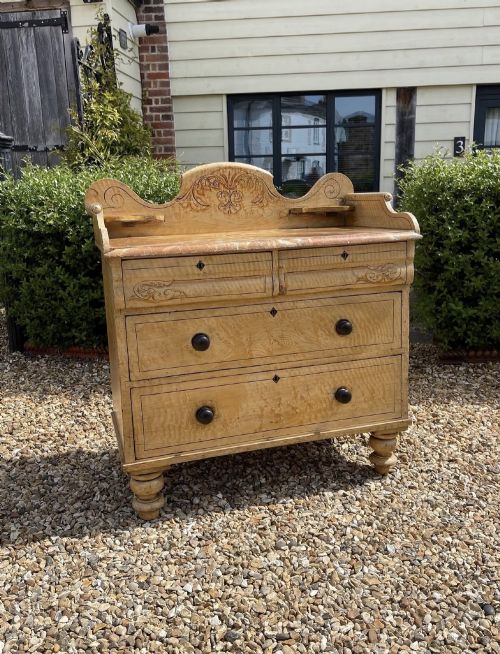
A grain painted dresser combines functional storage with a decorative surface finish that mimics more expensive timber. The pieces seen here span the nineteenth century and the early twentieth century, taking the form of chests of drawers, washstand chests, and side cabinets.
Most examples originate from the Victorian era and the broader nineteenth century, reflecting country and vernacular tastes. Makers worked mainly in pine, applying surface treatments to create the appearance of richer woods like rosewood.
Buyers seeking a grain painted dresser will encounter sturdy domestic furniture built for everyday use. The selection relies heavily on original scumbled and painted finishes applied to pine carcasses.
Materials and surface techniques
Makers built these pieces primarily from solid pine, selecting a timber that accepts decorative paint layers readily. Metal and brass hardware often furnish the drawer pulls, while ceramic components appear on washstand variants.
The defining technique involves scumbling and hand painting, where artisans manipulated wet paint glazes with combs, feathers, or brushes to simulate natural wood grain. This decorative layer was applied directly over the pine base to elevate simple furniture into something more striking.
Grain Painted Dresser Retail Price Guide 2026
Typical asking prices for grain painted dresser among the pieces listed under this phrase on Sellingantiques today, from the lower quarter to the upper quarter. They describe what is for sale here now, not the wider market.
Victorian decorators used combs and feathers to trick the eye into seeing exotic rosewood where there was only honest pine.
Factors of quality and finish
Quality rests primarily on the integrity and preservation of the original surface finish. A piece retaining its untouched scumbled or painted layer holds greater character than one with later overpainting.
Construction methods and timber selection also set examples apart. Heavier pine framing, well-fitted drawers, and subtle, convincing grain simulation distinguish the more carefully executed pieces in this group.
The Grain Painted Dresser Glossary
- Scumble
- A translucent layer of dark paint manipulated over a lighter ground to imitate the grain of exotic woods. This technique defines the visual appeal of many nineteenth-century country pieces.
- Pine
- A softwood commonly used for utilitarian furniture throughout the Victorian period. It provides a stable base for decorative painted finishes.
- Side cabinet
- A low storage furniture form designed for domestic rooms. These pieces often feature painted or simulated timber surfaces.
- Washstand chest
- A functional furniture piece combining drawer storage with a surface suited for washing equipment. Examples from the nineteenth century frequently incorporate original paint.
Grain Painted Dresser: Frequently Asked Questions
What is a grain painted dresser?
A grain painted dresser is a piece of nineteenth-century storage furniture finished with decorative paintwork that mimics costly timber. Artisans used combs and brushes on pine to create convincing wood patterns.
These items served practical household needs while bringing pattern and warmth to domestic interiors. They remain popular for their robust construction and decorative surfaces.
How do I care for original paint?
Original painted surfaces require gentle treatment to preserve the historic scumble or glaze. Keep them away from direct sunlight and excessive moisture to protect the finish.
Dust with a dry, soft cloth rather than using liquid polishes or chemical cleaners. Wax should only be applied if the paint layer is completely sealed and stable.
How old are these pieces?
The examples on this page date primarily from the nineteenth century, with Victorian pieces forming the majority. Some items extend into the early twentieth century, reflecting enduring traditional styles.
Construction details, such as drawer dovetails and timber thickness, help indicate the age of each individual chest or cabinet.
Where were they used?
These items were made for bedrooms, parlours, and living spaces in country homes and Victorian dwellings. They provided everyday storage for linens, clothing, and household goods.
Their domestic origins mean they integrate easily into modern rooms as functional storage units with a strong decorative presence.