
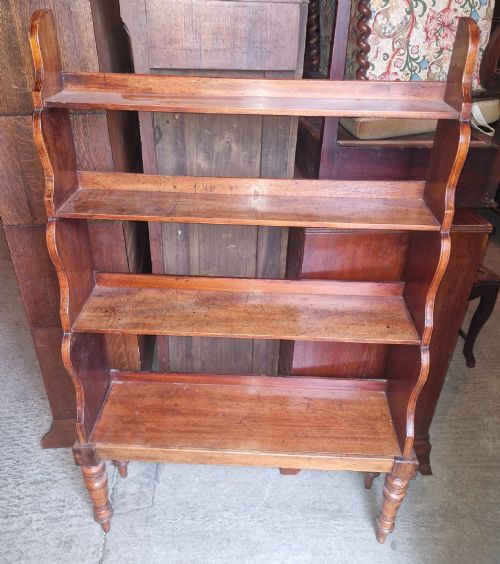
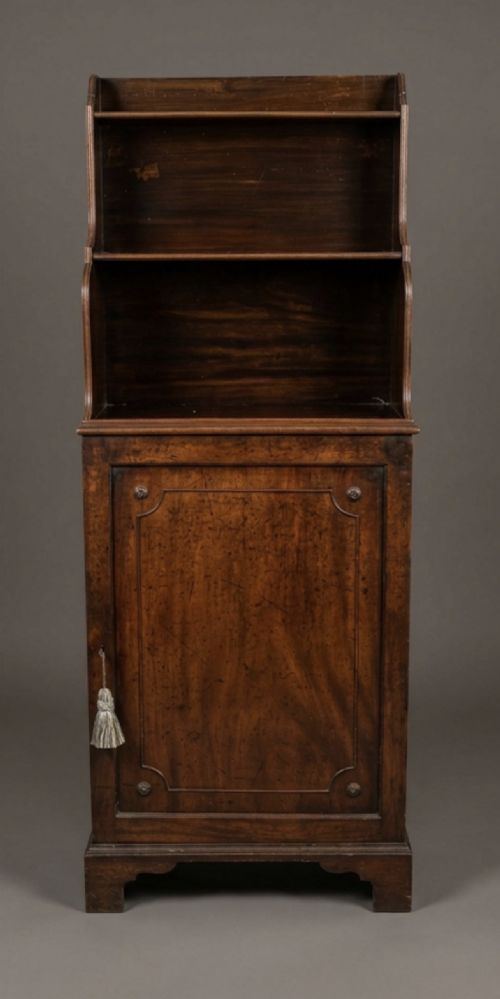

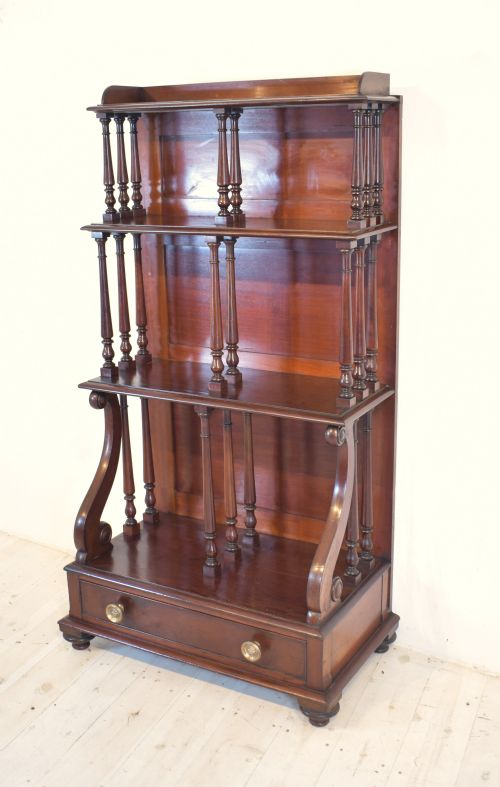


Graduated Shelf Mahogany Bookcase
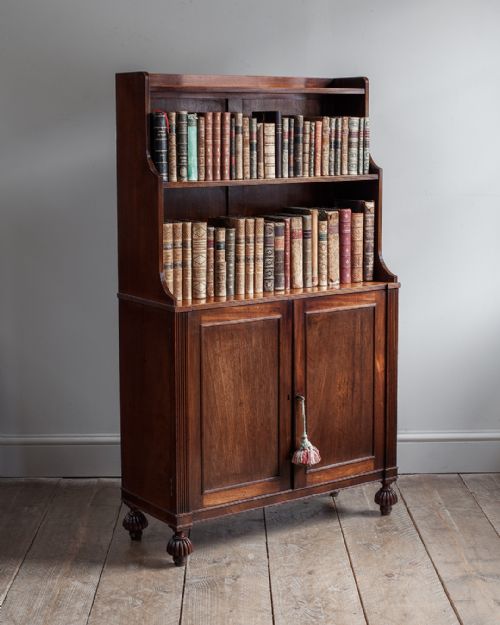
These graduated shelf mahogany bookcase examples offer tiered open shelving that brings elegance and practical display to any room.
Graduated Shelf Mahogany Bookcase
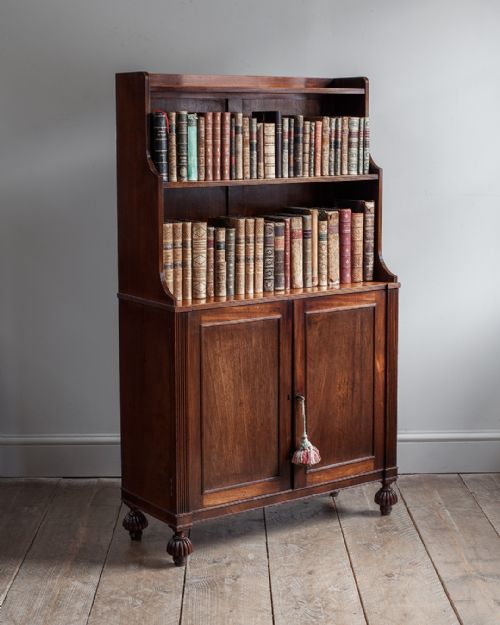
A graduated shelf mahogany bookcase provides tiered open storage that steps back from a deep base to narrower upper shelves. When searching for a graduated shelf mahogany bookcase, you encounter pieces designed primarily for displaying books and small ornamental objects. These items typically feature distinct stepped tiers arranged in a cascading formation.
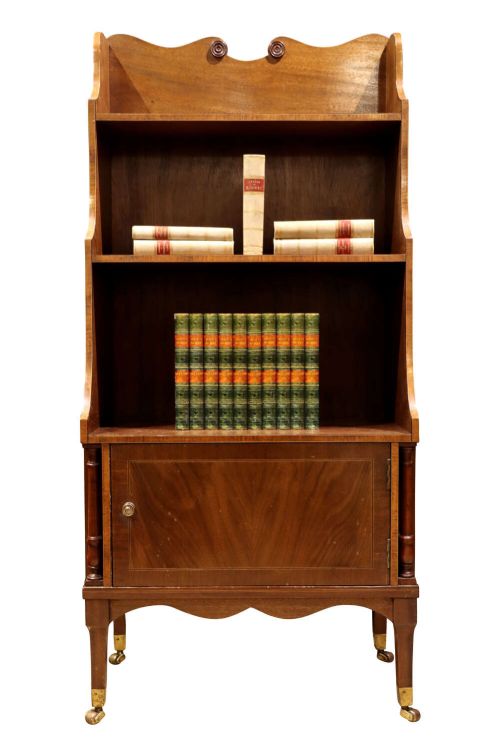
The selections span multiple eras including the Georgian, Regency, and Victorian periods alongside later Edwardian and 1920s revivals. Many examples take the form of open shelving units, while others incorporate lower cupboards or integrated storage compartments beneath the graduated tiers.
Most specimens originate from the nineteenth century or reflect earlier Regency and Georgian design principles. Makers constructed these items to stand freely against a wall or serve as dwarf bookcases housing modest collections of volumes.
How they were made
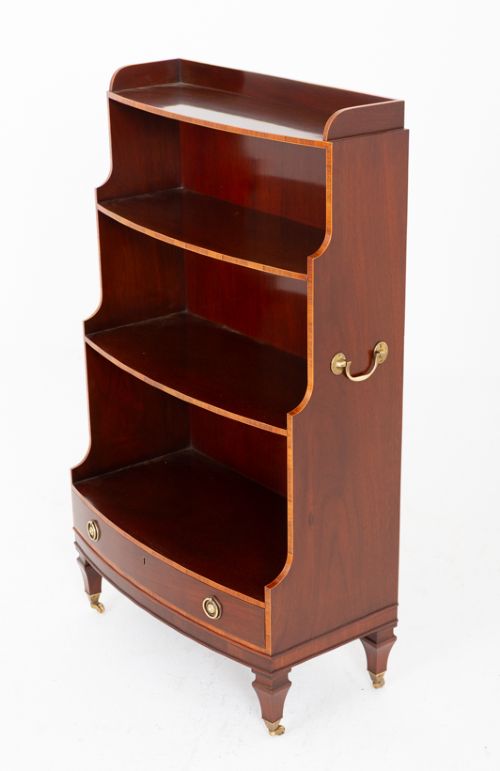
Craftsmen built these pieces predominantly using solid mahogany and flame mahogany veneer applied over secondary woods. Workshops frequently embellished the surfaces with contrasting boxwood stringing and cross banding to accentuate the stepped profile of the shelves.
Structural details often incorporate brass castors on the feet and delicate wirework elements on cabinet doors where lower cupboards exist. Carpenters shaped the graduated tiers to recede progressively toward the top, creating the characteristic waterfall silhouette seen across the inventory.
Some tiers incorporate tiny side galleries to keep errant volumes from tumbling off the edge.
What varies in quality
The grade of timber and the choice of flame mahogany veneer set finer examples apart from simpler utilitarian pieces. Superior construction shows in the precision of the boxwood stringing and the deliberate alignment of cross banded veneers along the graduated shelves.
Proportion and architectural balance dictate the overall desirability of each tier arrangement. Pieces exhibiting integrated lower cupboards with well-fitted doors and original brass castors demonstrate a higher standard of period cabinet making.
The Graduated Shelf Mahogany Bookcase Glossary
- Waterfall bookcase
- A set of open shelves that steps back progressively from bottom to top, creating a cascading profile. This form gained popularity during the Regency period.
- Cross banding
- A decorative border of veneer laid perpendicular to the grain of the main surface. It frames the edges of shelves and tabletops.
- Boxwood stringing
- Thin inlay lines of pale boxwood set into dark mahogany to create geometric borders. This technique highlights the structural contours of the cabinet.
- Dwarf bookcase
- A low standing bookcase designed to sit below window height. These units provide accessible top surfaces for display.
- Flame mahogany veneer
- Timber sliced from a section of mahogany showing a fiery, undulating grain pattern. Cabinet makers reserved this material for prominent display surfaces.
Graduated Shelf Mahogany Bookcase: Frequently Asked Questions
How do I identify Regency pieces?
Regency pieces often display crisp architectural lines, dark mahogany timbers, and refined decorative stringing. Makers working in this period favoured classical proportions and understated elegance.
Look for contrasting boxwood inlays and balanced tier graduations that reflect early nineteenth-century design standards. Many examples from this era also incorporate subtle brass hardware.
Where should I place these shelves?
These bookcases suit studies, living rooms, and hallways where open storage complements the surrounding furniture. Their graduated depth allows them to fit comfortably against walls without dominating the floor space.
Freestanding models offer flexibility in room layouts, while cupboard variants provide enclosed storage at the base. Keep them away from direct heat sources to protect the mahogany veneer.
What wood was used?
Mahogany serves as the primary timber across these pieces, often enhanced by flame mahogany veneer. Workshops also utilised secondary woods for internal structures and incorporated boxwood for decorative stringing lines.
Occasional examples feature contrasting satinwood accents or brass castors fitted to the base. The selection of dense hardwoods ensured the stability of the graduated tiers.