

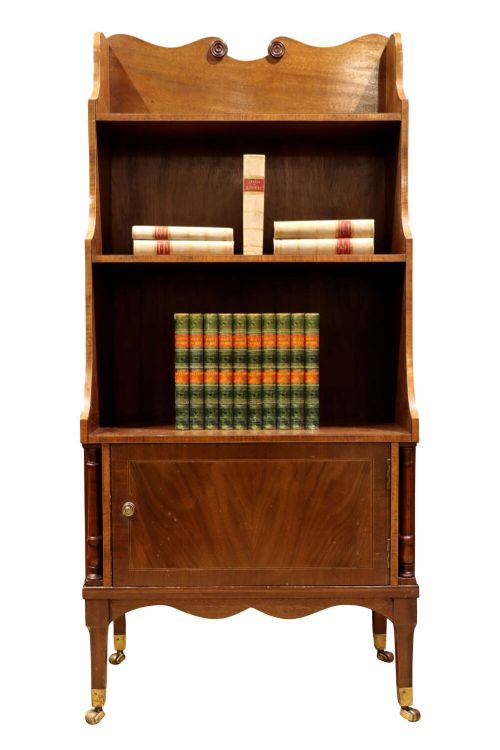
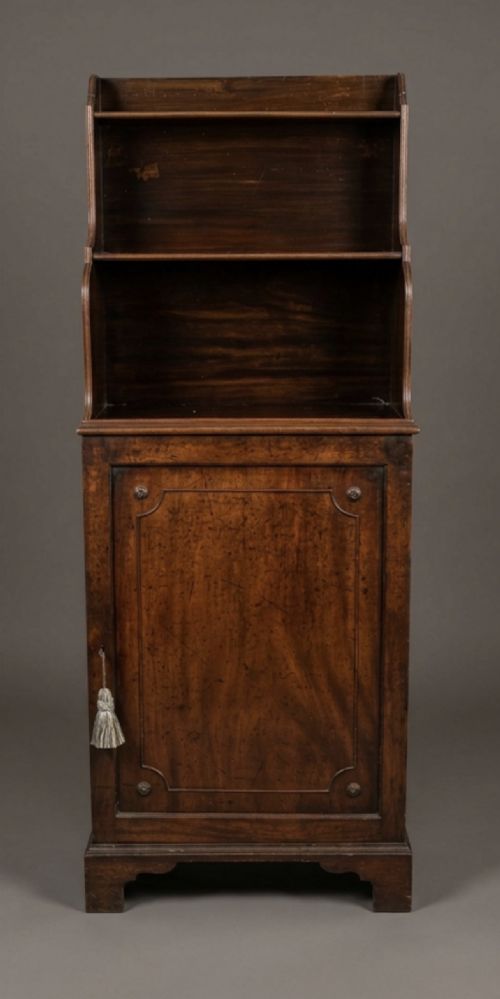


Graduated Display Cabinet
These graduated display cabinet pieces give your rooms architectural rhythm, offering stepped tiers that hold books or collections with elegance.
Graduated Display Cabinet
A graduated display cabinet provides stepped shelves that recede from bottom to top, creating a distinct waterfall profile for showcasing books or ornamental objects. Buyers searching for a graduated display cabinet often encounter open bookcases, freestanding shelves, and pieces combining enclosed cupboards with open tiered tops.
The selections span distinct historical eras, appearing in Georgian and Regency forms alongside Victorian, Edwardian, and later twentieth-century iterations. Timbers include mahogany, oak, satinwood, and rosewood, sometimes augmented by brass hardware, wire elements, or painted finishes.
Makers and workshops constructed these items as functional furniture that also served to display prized possessions in reception rooms and libraries. The stepped arrangement allows multiple levels of objects to remain visible without obscuring the tier directly behind them.
Materials and construction methods
Cabinet makers utilised dense hardwoods such as mahogany and rosewood, frequently applying wood veneer or delicate inlay work to surfaces. Satinwood appears in finer examples, offering a lighter palette and smooth grain structure.
Structural integrity relied on solid timber framing for the graduated tiers, supported on brass castors in some larger floor-standing pieces. Open shelving formats work alongside enclosed cupboards, incorporating wire mesh or timber panels depending on the period.
Graduated Display Cabinet Retail Price Guide 2026
Typical asking prices for graduated display cabinet among the pieces listed under this phrase on Sellingantiques today, from the lower quarter to the upper quarter. They describe what is for sale here now, not the wider market.
Listings feature mahogany, oak, satinwood, and rosewood across Georgian, Regency, Victorian, and Edwardian periods.
Distinctions in quality
Superior examples demonstrate precise graduation in the depth and height of each tier, maintaining structural balance without heavy bracing. The selection of timber grain, particularly in figured mahogany and rosewood veneers, marks the distinction between standard production and workshop pieces.
Refined details such as inlaid stringing, brass castors, and integrated cupboard doors elevate the construction complexity. The joinery of the stepped shelves remains tight and flush, ensuring the uprights bear the weight of stacked books or collections securely.
Gillows
The Graduated Display Cabinet Glossary
- Waterfall bookcase
- A set of open shelves that step back progressively from the bottom to the top, resembling a cascading stream. This form maximises vertical display space.
- Whatnot
- A freestanding piece of furniture with multiple open shelves tiered above one another for displaying ornaments. Originating in the eighteenth century, it became popular throughout the Victorian era.
- Chiffonier
- A low sideboard or cabinet featuring shelves or a superstructure above the main surface. Regency and nineteenth-century versions often incorporate graduated tiers for display.
- Veneer
- A thin layer of finely figured wood applied over a secondary timber base. This technique allows cabinet makers to display striking grain patterns economically.
Graduated Display Cabinet: Frequently Asked Questions
How were these cabinets used?
Owners placed them in libraries and drawing rooms to organise volumes and display decorative ornaments.
The tiered shelves kept collections accessible while occupying minimal floor space in domestic interiors.
Which timbers are most common?
Mahogany appears most frequently across Georgian, Regency, and Victorian iterations of these stepped display pieces.
Rosewood, oak, and satinwood also occur, often selected to match the prevailing interior woodwork of the period.
How do I date a piece?
Dating relies on observing timber choices, construction techniques, and stylistic markers such as inlay or turning.
Georgian and Regency examples show clean classical lines, whereas Victorian pieces frequently introduce heavier turned elements or elaborate walnut.