
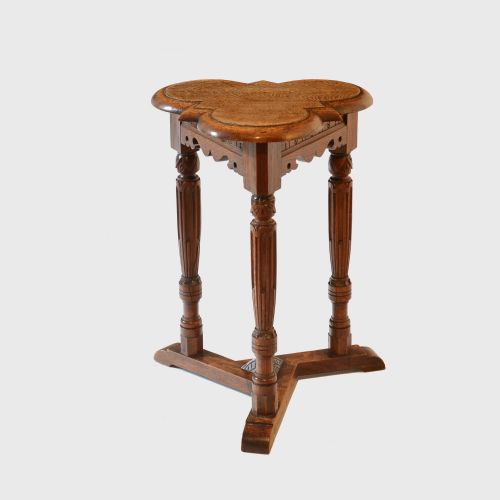


Gothic Tripod Side Table
A gothic tripod side table brings pointed arches and carved tracery to a compact three-legged form that sits neatly beside a chair.
Gothic Tripod Side Table
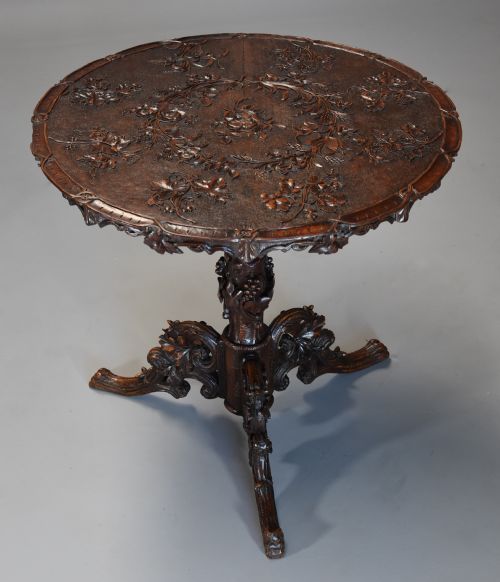
A gothic tripod side table is a small occasional piece defined by its three-legged support and architectural or medieval ornamentation. When you search for this phrase, you find items that range from strict Victorian Gothic Revival designs to more whimsical Black Forest carved work.
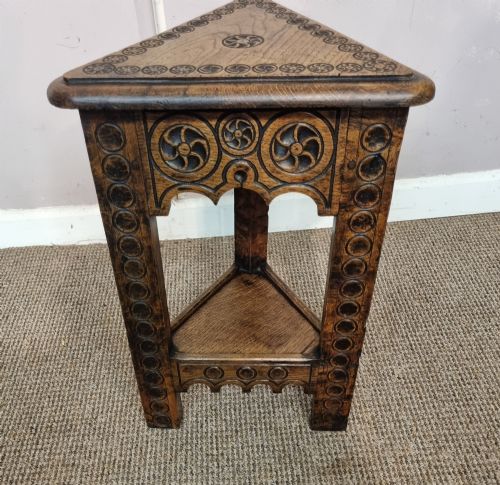
The versions you are most likely to meet on this page date predominantly from the nineteenth century, including specific years like eighteen-sixty and eighteen-eighty, alongside a few Edwardian examples. These tables take various forms such as clover leaf tops, trefoil shapes, and triangular lift-top designs used as parlour or centre tables.
Makers drew on diverse regional traditions, producing English oak pieces with zodiac carvings, French interpretations, and Italian inlaid surfaces. Each piece balances the sturdy utility of a side table with the dramatic pointed motifs of the Gothic style.
How they were made
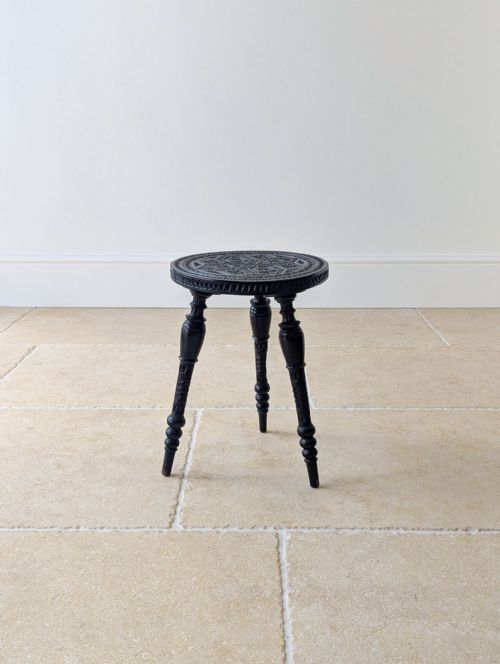
Carpenters constructed these tables using a foundation of solid timbers, with oak and mahogany appearing most frequently across the listings alongside ebonised hardwood and linden wood. These woods provided the dense, stable grain necessary for deep chip-carving and structural integrity on a three-legged base.
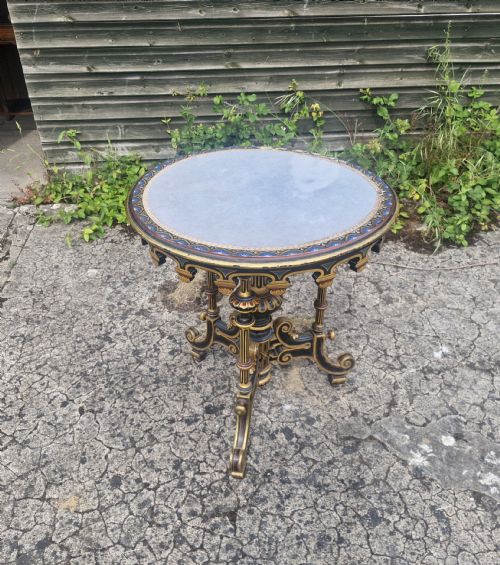
Makers embellished the surfaces through profuse hand carving, chip-carving, and occasionally paint, gilt, or velvet inserts. The tripod bases rely on sturdy central pillars joined to three supporting feet, often shaped to echo the trefoil or clover leaf contours of the table tops above.
Some tables feature zodiac carvings and lift tops, built secretly for nineteenth-century tarot readings in the parlour.
What varies in quality
The distinction between standard work and the finest pieces lies in the depth and ambition of the carving. Profuse, crisp hand carving on linden wood or oak elevates a table far above plain, utilitarian surfaces.
Quality also shows in the integration of design, where architectural details like trefoil cut-outs and inlaid motifs are executed with precision rather than applied merely as surface decoration.
The Gothic Tripod Side Table Glossary
- Tripod base
- A three-legged support structure common to small tables and stands. This configuration ensures stability on uneven floors.
- Trefoil
- A three-lobed architectural shape resembling a clover leaf. It frequently dictates the outline of table tops in Gothic Revival furniture.
- Ebonised
- Wood treated with a dark finish to imitate ebony. This technique was popular in Victorian joinery for creating stark contrast.
- Chip-carving
- A decorative technique where small chips are removed from a flat surface in geometric patterns. It creates low-relief ornamentation on small tables.
- Gothic Revival
- An architectural and decorative style drawing on medieval forms. It is characterised by pointed arches, trefoils, and heavy carved details.
Gothic Tripod Side Table: Frequently Asked Questions
What is a gothic tripod side table used for?
These tables served as occasional, parlour, or centre pieces in Victorian and Edwardian homes. They held small lamps, books, or decorative items while adding architectural character to a room.
Today, they function well as compact bedside surfaces or accent pieces beside seating, offering a surface area that suits smaller spaces without dominating a room.
How do I date a gothic tripod side table?
Dating relies on identifying stylistic markers and material choices recorded across the nineteenth century. Victorian pieces often display heavy Gothic Revival or Black Forest carving.
Later Edwardian examples tend to feature lighter constructions or simpler trefoil tops. Examining the specific timber and joining techniques helps narrow down the decade of manufacture.
Are these tables made of solid wood?
The listings show that makers predominantly utilised solid timbers such as oak, mahogany, linden wood, and ebonised hardwood. These materials provided the necessary strength for three-legged bases.
Solid construction was essential for supporting the deep chip-carving and intricate architectural mouldings characteristic of the style.
What styles appear within this category?
The category encompasses Victorian Gothic Revival, French nineteenth-century design, Italian inlaid work, and Black Forest styles. Each regional interpretation brings distinct decorative elements to the basic tripod form.
Some pieces lean towards Celtic Gothic motifs or incorporate zodiac carvings, reflecting the eclectic tastes of nineteenth-century makers.