

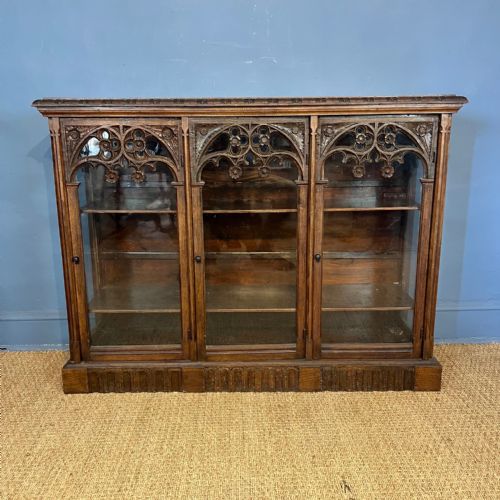


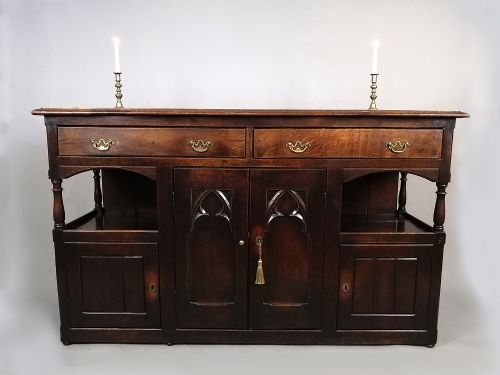
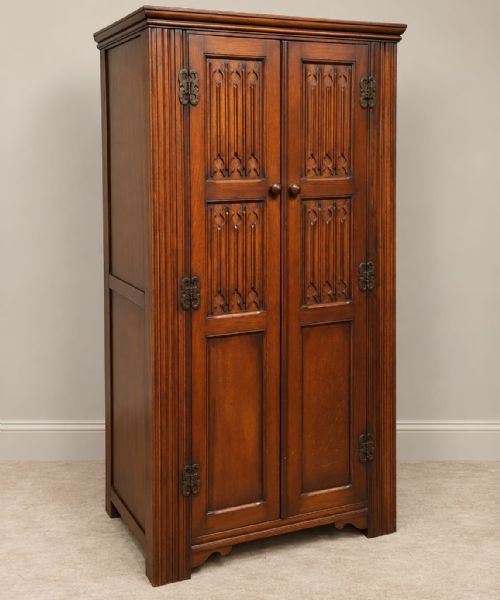
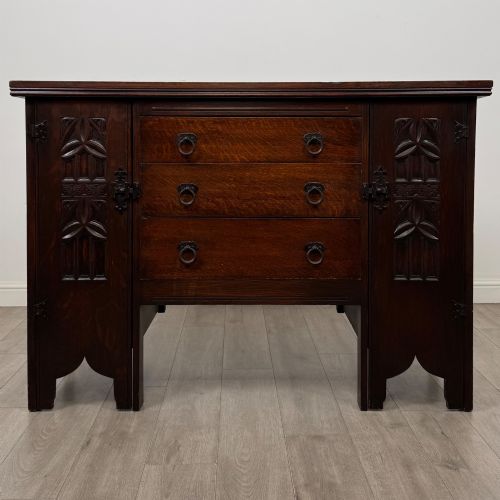
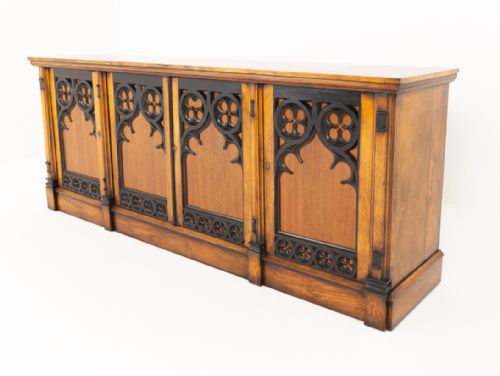


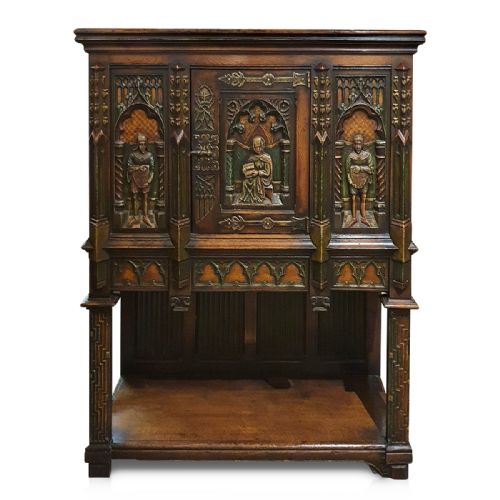
Gothic Tracery Oak Cupboard
These gothic tracery oak cupboard pieces bring genuine architectural presence to a room, offering robust storage built from solid timber.
Gothic Tracery Oak Cupboard
When you search for a gothic tracery oak cupboard, you encounter a distinct form of storage furniture rooted in medieval design principles. These pieces range from compact bedside cabinets and hall cupboards to substantial sideboards, wardrobes, and bookcase configurations.
The selections available here lean heavily towards nineteenth-century revivals, alongside sixteenth-century examples and twentieth-century interpretations. Oak remains the definitive timber across these items, often paired with iron, brass, glass, or wrought iron details.
Buyers frequently find distinct stylistic markers such as pointed arch motifs, carved panels, and framework echoing ecclesiastical architecture. Whether configured as a cabinet on stand, a credence cabinet, or a double wardrobe, each piece serves a practical storage function while displaying strong historicism.
Materials and Construction
Construction relies fundamentally on solid oak, selected for its durability and suitability for deep carving. Makers utilised traditional joinery techniques to build robust carcases capable of housing heavy doors and internal shelving.
Metalwork plays a crucial functional and decorative role, with iron, brass, and wrought iron utilised for hinges, handles, and lock plates. Certain pieces incorporate glass panels or polychrome and ebonised wood highlights to accentuate the architectural tracery.
Gothic Tracery Oak Cupboard Retail Price Guide 2026
Typical asking prices for gothic tracery oak cupboard among the pieces listed under this phrase on Sellingantiques today, from the lower quarter to the upper quarter. They describe what is for sale here now, not the wider market.
Listings span multiple eras from the sixteenth century through the Victorian and Edwardian periods into the nineteen-twenties, uniting diverse oak storage forms.
Evaluating Quality and Execution
The standard of a gothic tracery oak cupboard rests primarily on the depth and crispness of the carved ornamentation. Superior pieces demonstrate confident hand-carving in the tracery and linenfold or panel sections, whereas lesser examples rely on shallower, mechanised detailing.
The choice and treatment of the oak itself distinguishes finer items, particularly where the grain and timber selection enhance the architectural proportions. Furthermore, the integration of original or period-appropriate iron and brass hardware elevates the authenticity of the construction.
The Gothic Tracery Oak Cupboard Glossary
- Tracery
- The stonework ornament of windows, extended in these pieces to woodwork and cabinet doors. It provides the characteristic pointed arches and geometric patterns seen across the panels.
- Creedence Cabinet
- A small medieval or revival side table or cupboard used originally for holding food or sacred vessels. In later interpretations, it functions as a compact display or storage cabinet.
- Gothic Revival
- An architectural and decorative movement spanning the eighteenth and nineteenth centuries that re-imagined medieval forms. This style dominates the nineteenth-century cabinets and sideboards found in this category.
- Flamboyant Gothic
- A late medieval architectural phase characterised by flame-like curving tracery shapes. Sixteenth-century examples in this style exhibit exceptionally fluid and complex carving patterns.
- Cabinet on Stand
- A enclosed storage section elevated upon a separate open framework or legs. This configuration lightens the visual mass of heavy oak furniture.
Gothic Tracery Oak Cupboard: Frequently Asked Questions
How do I date a gothic oak cupboard?
Dating relies on examining the construction methods, tool marks, and specific revival characteristics present in the oak frame. Nineteenth-century pieces often display machine-assisted elements alongside hand-carving, whereas sixteenth-century examples show entirely hand-wrought joinery.
The style of the tracery and hardware also offers clues, as Victorian and Edwardian makers interpreted medieval motifs differently than craftsmen working during the original gothic periods.
Where should I place a hall cupboard?
A gothic oak hall cupboard suits entranceways, landings, or living spaces where its architectural presence can be appreciated. Because these pieces are built from solid oak, they provide sturdy storage for everyday items while anchoring the room's decor.
Ensure the dimensions of the cabinet align with the wall space, as the projecting cornices and heavy doors often require adequate clearance.
Are these cupboards suitable for modern homes?
These cabinets integrate well into contemporary interiors by providing functional storage with a distinct historical focal point. The dark tones of the oak and the striking geometry of the tracery complement minimalist or eclectic design schemes alike.
Consider the internal configuration, whether shelving, hanging space, or open compartments, to ensure the piece meets your specific storage requirements.
What is the difference between a sideboard and a credence cabinet?
A sideboard generally functions as a larger dining room or hallway storage unit with extended surface space and multiple cupboards or drawers. A credence cabinet is typically more compact, historically associated with display or ritual storage, featuring distinct elevated proportions.
Both forms utilise gothic revival or earlier stylistic vocabulary, but their scale and internal layouts serve different functional needs.