
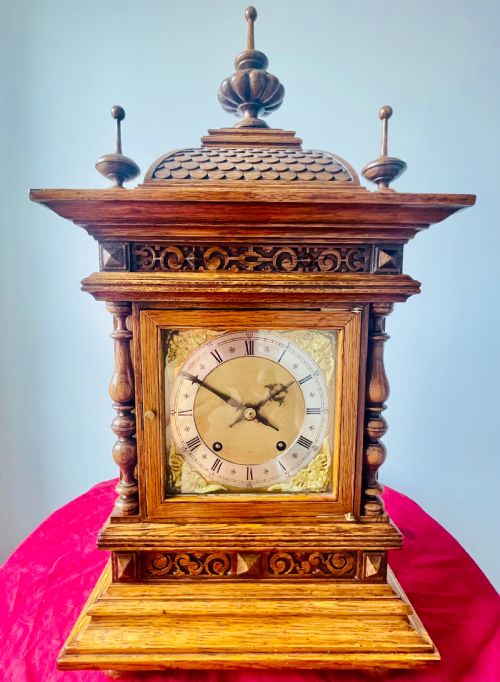
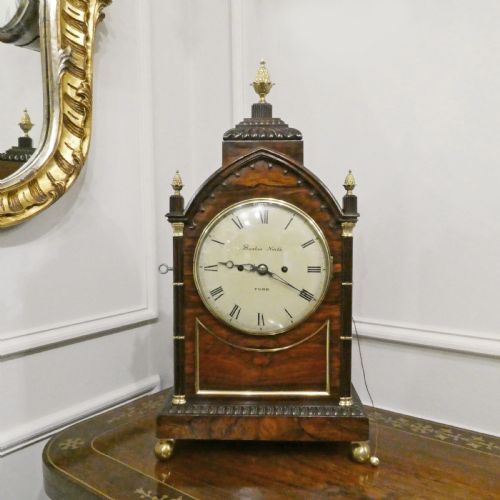

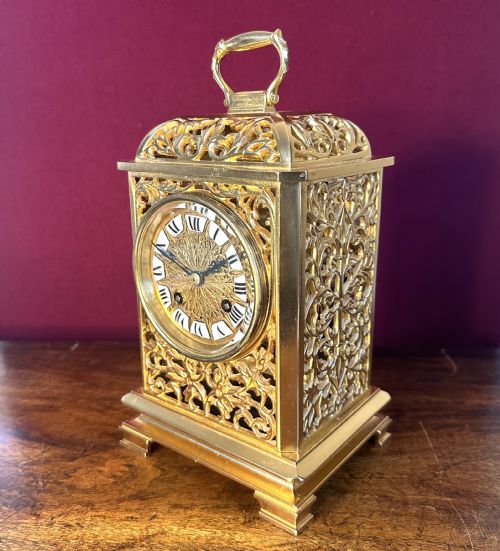


Gothic Revival Brass Clock
These gothic revival brass clock pieces combine architectural tracery with mechanical timekeeping, offering a striking centrepiece for any room.
Gothic Revival Brass Clock
A gothic revival brass clock brings medieval architectural forms into domestic spaces through pointed arches, lancets and metalwork. These items appear across the nineteenth century, including Victorian and Regency periods, taking forms such as bracket clocks, mantel clocks and skeleton clocks. Buyers encounter brass most frequently, often paired with mahogany, rosewood, glass, enamel and marble.
The selection ranges from tall longcase clocks in gothic mahogany cases to compact desk clocks and carriage clocks. Scottish and English makers feature prominently, constructing timepieces designed to stand on tables, mantels or bracket shelves. Each example adapts cathedral motifs for domestic interiors, blending functional horology with revival ornamentation.
How they were made
Brass forms the primary structural and decorative body of these timepieces, often paired with gilded finishes, bronze or timber cases like mahogany and rosewood. Enamel dials provide a clear face for Roman or Arabic numerals, protected beneath glass panels.
Clockmakers housed complex fusee and quarter-striking movements inside heavy metal or wooden housings. Cases incorporate architectural details such as miniature buttresses, spires and pointed arches executed in cast brass and carved hardwoods.
Object types span mantel clocks, bracket clocks, longcase clocks, desk clocks and carriage clocks.
What varies in quality
The calibre of the movement separates standard timepieces from exceptional examples, with quarterly striking mechanisms and fusee movements representing finer horological work. Heavier, more complex gear trains and signed movements by known makers elevate a piece.
Case construction and materials dictate visual standing. Richly figured rosewood and flame mahogany paired with finely chased, substantial brass mounts demonstrate superior craftsmanship compared to simpler timber housings.
Winterhalder·Barber & North of York·George Orpwood·William Moon London·Bryson Edinburgh·Christie of Perth·Mitchell & Russell of Glasgow·Perigal Bond Street
The Gothic Revival Brass Clock Glossary
- Bracket clock
- A portable clock originally designed to sit on a wall bracket. They evolved into large table or mantel timepieces.
- Fusee
- A conical pulley used in clock movements to maintain an even pull as the mainspring unwinds. This mechanism improves timekeeping accuracy.
- Skeleton clock
- A timepiece with an open framework designed to expose the gear train and movement. These clocks often sit beneath a glass dome.
- Quarter striking
- A mechanism that chimes the hours and every quarter hour on bells or gongs. It requires a more intricate gear train than standard hourly striking.
Gothic Revival Brass Clock: Frequently Asked Questions
Where should I place a bracket clock?
These clocks suit sturdy mantelpieces, sideboards or dedicated wall brackets where their architectural details remain visible.
Ensure the surface sits level to keep the pendulum swinging truly and the movement running without interruption.
How do I wind a mechanical clock?
Use the appropriate key on the winding arbors, turning gently until you feel resistance without forcing the spring.
Most nineteenth-century movements require attention weekly, though specific intervals depend on the gear train and fusee setup.
What is a skeleton clock?
A skeleton clock strips away the solid dial and case to expose the brass wheels and escapement to view.
These pieces usually require a glass dome to protect the exposed mechanism from dust and air currents in the room.
How do I identify the period?
Examine the timber casing, dial layout, and the style of the brass gothic tracery to determine age.
Victorian and Regency examples often feature distinct architectural proportions that match the cabinet-making trends of their decade.