


Gothic Oak Wall Mirror
A gothic oak wall mirror brings solemn architectural dignity and deep-carved texture to an interior, channelling centuries of monastic and revival design.
Gothic Oak Wall Mirror
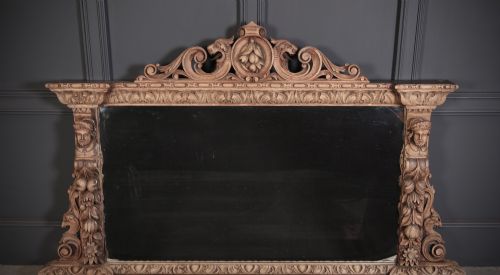
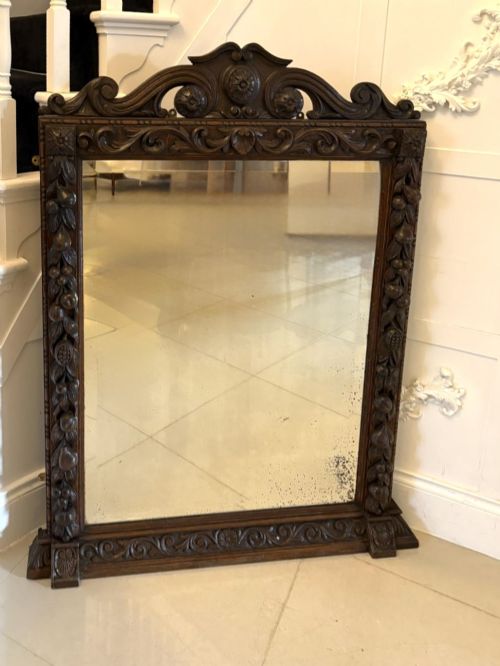
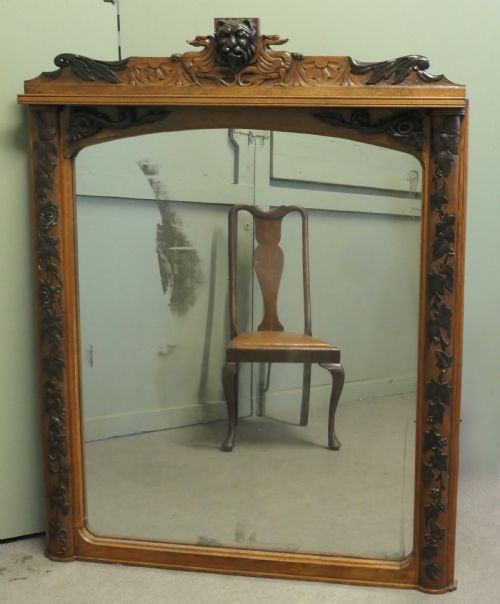
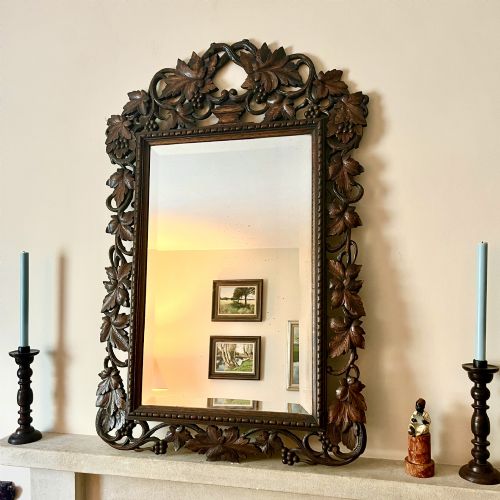
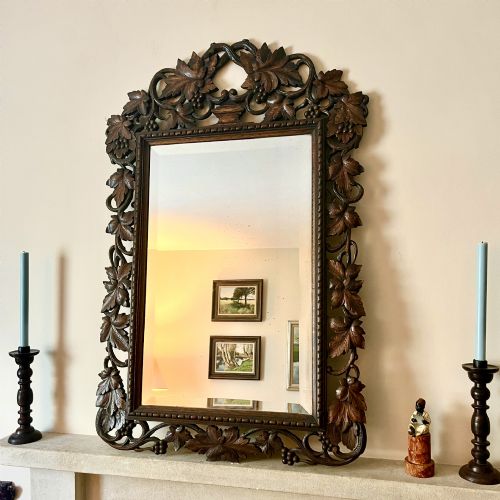
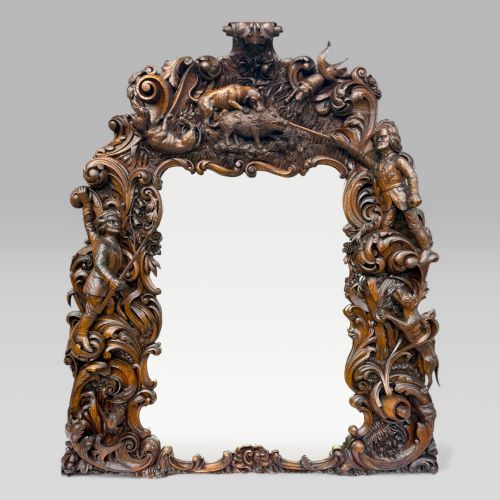
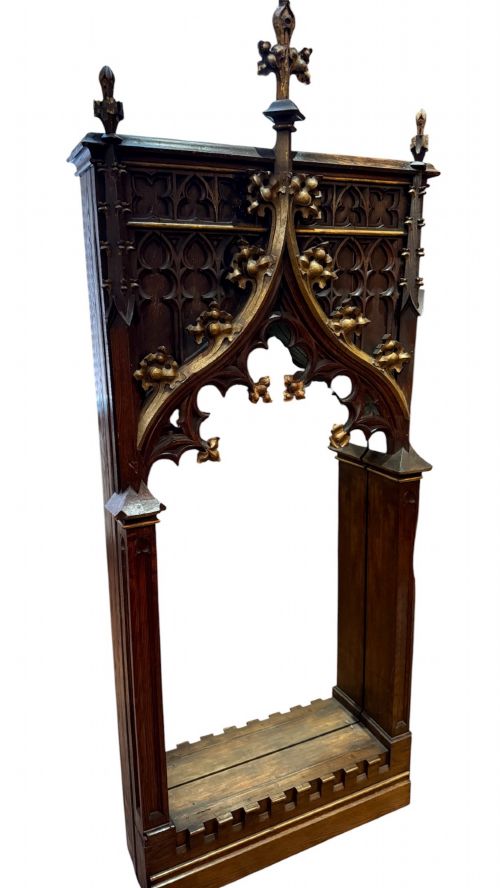
A gothic oak wall mirror is a heavy decorative glass frame rooted in the architectural motifs of the medieval revival, most commonly encountered in nineteenth-century and Edwardian forms. These pieces range from restrained circular frames to monumental overmantels and console mirrors featuring pointed arches and tracery.
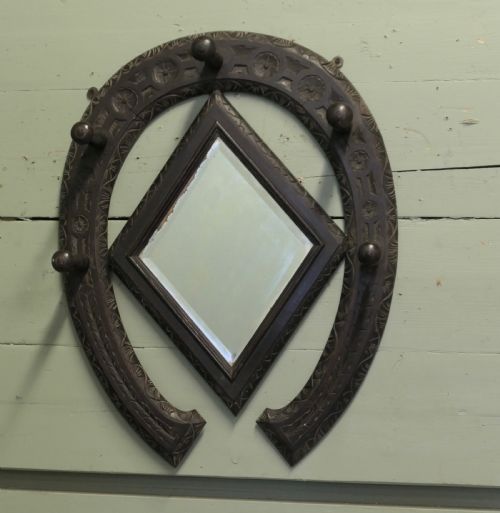
The selection here encompasses wall-hanging variants, large overmantels, and functional hybrids incorporating coat hooks or tack racks. Oak dominates the construction, frequently paired with mirrored glass and occasional highlights of gesso, brass, or giltwood.
How they were made
Makers utilised solid timber frames carved deeply with characteristic gothic ornament such as dragons, snakes, and geometric tracery. The wood is often polished or left with a rich natural grain, occasionally complemented by gilded wood or gesso details.
Mirror glass is set securely within substantial rebated wooden mouldings, sometimes accompanied by applied brass fittings or structural backing boards typical of Victorian workshop production.
Recorded styles include German Historicism, the Oxford Movement, and Puginesque designs alongside standard Victorian Gothic Revival.
What varies in quality
The distinction between standard production and exceptional examples lies in the depth and crispness of the hand-carving upon the timber frame. Superior pieces display sculptural fluidity in motifs like dragons or foliage, whereas lesser variants rely on repetitive mechanical moulding.
Proportion and architectural integrity also divide the range, with finer mirrors maintaining balanced sightlines and harmonious integration of period details such as pointed arches and subsidiary shelf consoles.
L Blondie
The Gothic Oak Wall Mirror Glossary
- Gothic Revival
- An architectural and decorative style drawing on medieval forms, prominent throughout the nineteenth century. It relies heavily on pointed arches, cusping, and ecclesiastical motifs.
- Overmantel Mirror
- A large horizontal mirror designed to hang directly above a fireplace mantelpiece. These substantial pieces frequently anchor the decorative scheme of a period reception room.
- Gesso
- A plaster-like material applied to wooden frames as a smooth base for gilding or painting. It allows for crisp decorative relief work around the mirror plate.
- Puginesque
- A design style associated with the architectural principles of Augustus Pugin. It emphasises structural honesty and authentic medieval detailing in woodwork and metalwork.
- Console Wall Mirror
- A mirror format incorporating an attached shelf or bracket base. They bridge the gap between wall hanging and furniture support.
Gothic Oak Wall Mirror: Frequently Asked Questions
Where should I hang a gothic oak wall mirror?
These mirrors command attention and function best above a substantial fireplace mantel or in a hallway where their architectural frames can be fully appreciated.
Ensure the wall structure is sufficiently robust to support the significant weight of solid oak and heavy glass.
How do I date an oak wall mirror?
Examine the backboards, fixings, and the style of the woodcarving for clues to the period. Nineteenth-century examples often display hand-cut joinery and characteristic Victorian Gothic Revival motifs.
Later Edwardian and early twentieth-century pieces may show shifts toward stylised naturalism or specific movement influences like the Oxford Movement.
Are these mirrors suitable for modern rooms?
The rich grain and dark tones of oak provide a grounding element that contrasts well with minimalist or contemporary interiors. Their sculptural frames act as focal art pieces rather than mere functional looking glasses.
Placing one opposite a window will also amplify natural light within smaller modern spaces.
What maintenance do these wooden frames need?
Keep the timber clean with a soft, dry cloth and occasionally feed the oak with a suitable wax to preserve the finish. Avoid placing them in areas subject to dampness or extreme temperature fluctuations.
Check the hanging wire and structural fixings periodically to ensure the heavy frame remains secure on the wall.