




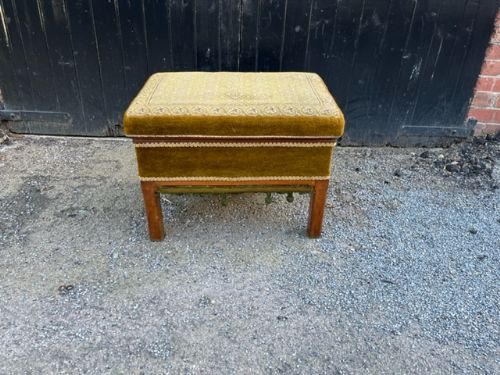
Gothic Footstool
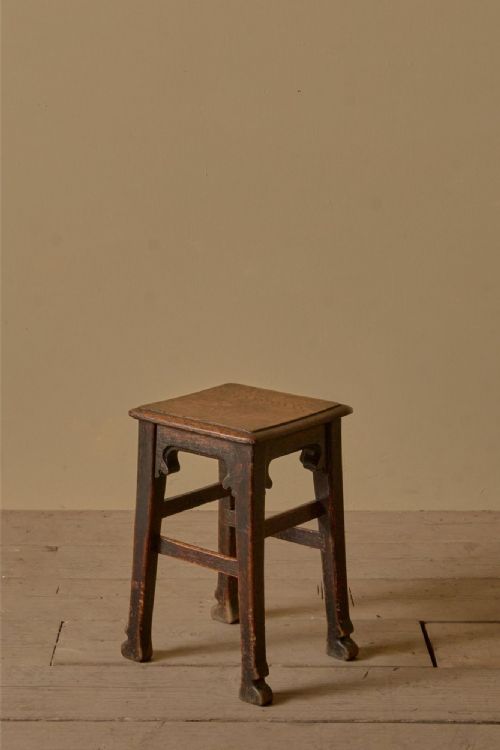
These gothic footstool examples combine dense timber frames with period upholstery, offering low seating rooted in nineteenth-century revival design.
Gothic Footstool
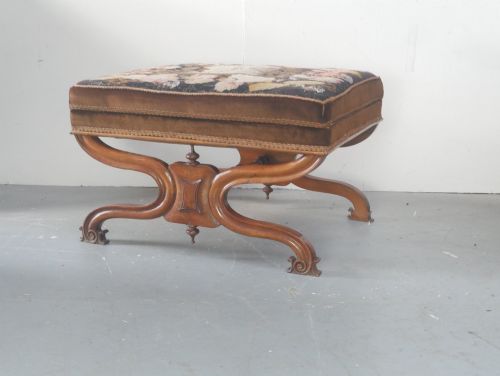
A gothic footstool takes several forms across the nineteenth and twentieth centuries, appearing as prayer stools, X-framed seats, and low ottomans. The listings show heavy reliance on oak and walnut structures paired with textile surfaces.
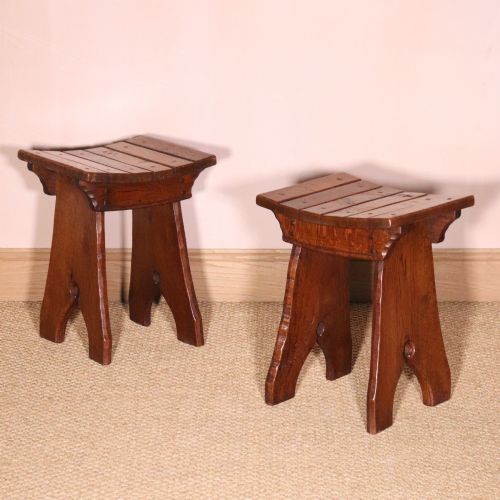
Most pieces date from the Victorian era and the subsequent Arts and Crafts movement. Makers drew upon Gothic Revival, Scottish Baronial, and Renaissance Revival vocabulary for their designs.
Forms range from simple triangulated stools to large Scottish Baronial examples and adjustable ebonised pieces. Upholstery materials like velvet, leather, and tapestry frequently complete the physical build.
Materials and construction
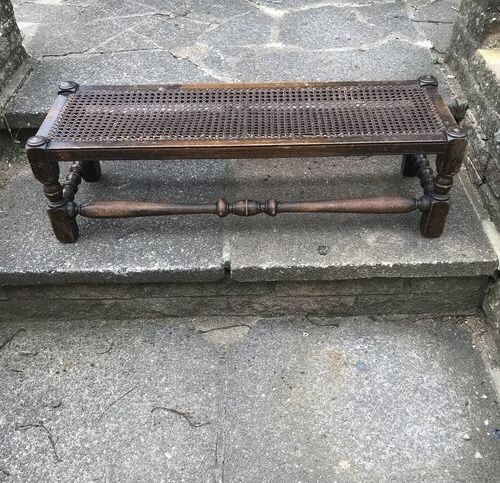
Makers utilised solid oak and walnut for the primary framework, often employing turned legs, carved details, and X-frame supports. Some pieces incorporate brass fittings or cane work alongside the timber structure.
Upholstery techniques involved durable textiles such as velvet, leather, and tapestry stretched across the wooden bases. Carved motifs, including hunting dog heads, frequently decorated the structural woodwork.
Gothic Footstool Retail Price Guide 2026
Typical asking prices for gothic footstool among the pieces listed under this phrase on Sellingantiques today, from the lower quarter to the upper quarter. They describe what is for sale here now, not the wider market.
Carved hunting dog heads peer out from the wooden frames of Victorian window seats, keeping watch over the floorboards.
Judgements of quality
Quality rests upon the crispness of the timber carving and the integration of stylistic elements like Gothic Revival or Arts and Crafts details. Pieces attributed to specific workshops demonstrate greater ambition in their joinery and silhouette.
The choice of secondary materials, such as brass hardware or specialist textiles like tapestry and velvet, elevates certain examples above simpler vernacular items. Preservation of the original timber patina also governs the standing of each piece.
Jack Grimble·Awn Pugin
The Gothic Footstool Glossary
- Gothic Revival
- An architectural and decorative style drawing inspiration from medieval forms, pointed arches, and heavy timber construction. This movement dominated nineteenth-century furniture production.
- X-Framed
- A structural configuration where the legs cross in the centre to form an X shape, providing robust support for low seating. Walnut and oak examples utilise this format frequently.
- Arts and Crafts
- A design movement valuing traditional craftsmanship, visible construction, and simple material honesty over mass production. Oak is the primary wood associated with this aesthetic in the listings.
- Scottish Baronial
- A nineteenth-century revival style incorporating heavy proportions and fortress-like architectural motifs into domestic furniture. Large stools often display these robust characteristics.
- Tapestry
- A heavy hand-woven or machine-woven textile used historically for durable upholstery on seating. It appears alongside velvet and leather on period footstools.
Gothic Footstool: Frequently Asked Questions
What is a gothic footstool?
A gothic footstool is a low seat constructed from timber such as oak or walnut, featuring design elements from nineteenth-century revival movements. These pieces often include upholstered surfaces in velvet, leather, or tapestry.
They serve as functional seating or footrests within period interiors, reflecting architectural motifs from medieval and ecclesiastical sources.
How were these stools used?
These items functioned as prayer stools, window seats, or general low seating within nineteenth- and twentieth-century domestic spaces. Some examples incorporated adjustable mechanisms for varying heights.
Their robust timber frames and durable textile coverings allowed them to withstand heavy daily use in parlours and halls.
How do I date a gothic footstool?
Dating relies on identifying the stylistic movement, such as Victorian Gothic, Arts and Crafts, or Aesthetic Movement, combined with wood types and construction methods. Oak and walnut were utilised differently across these decades.
Specific architectural references and turning styles on the legs help narrow down the period of manufacture between the nineteenth and early twentieth centuries.
What woods were used for these stools?
Makers relied primarily on solid oak and walnut for the structural frames of these pieces. Hardwood and ebonised timber also appear in later nineteenth- and twentieth-century examples.
These durable woods supported heavy carving, turned legs, and complex joinery characteristic of revival furniture.