



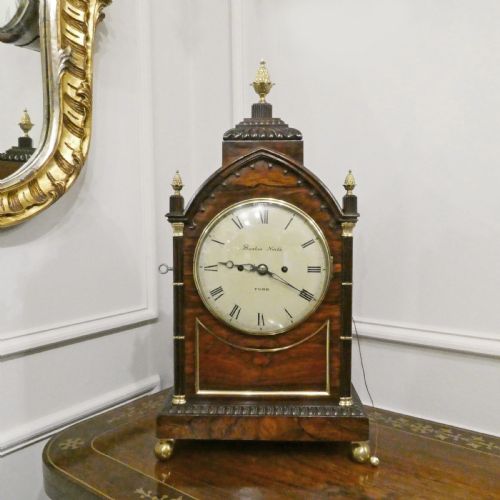


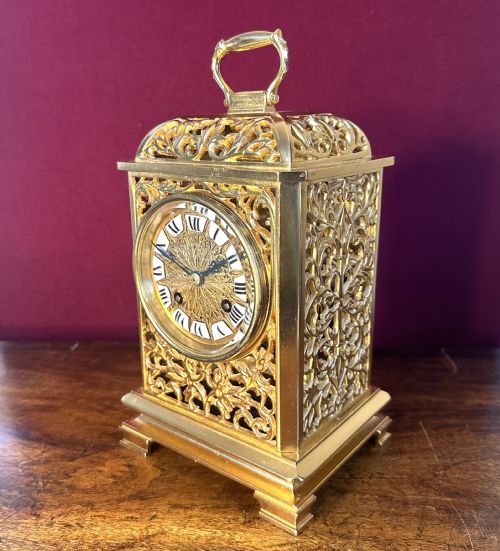
Gothic Brass Mantel Clock
A gothic brass mantel clock brings striking architectural geometry and reliable timekeeping to a room, drawing the eye with intricate metalwork.
Gothic Brass Mantel Clock
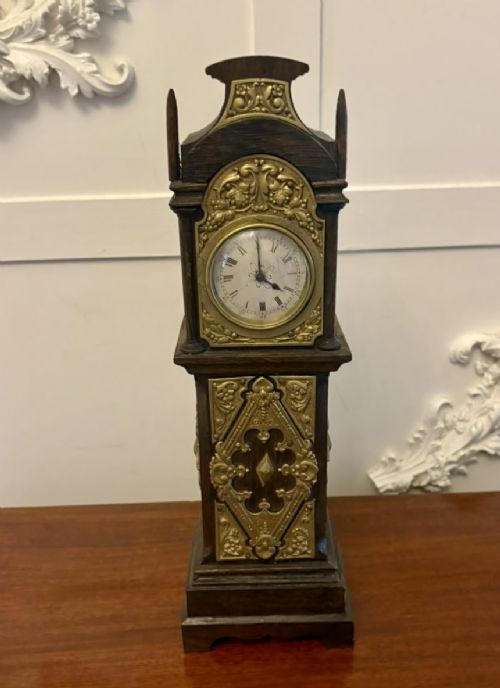
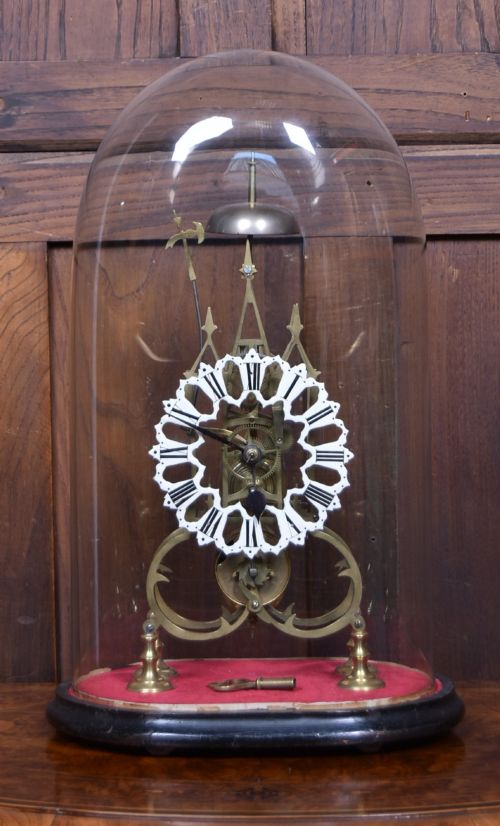
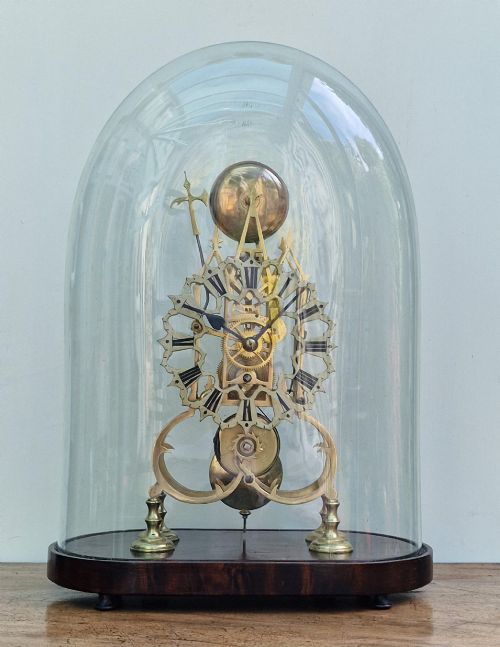
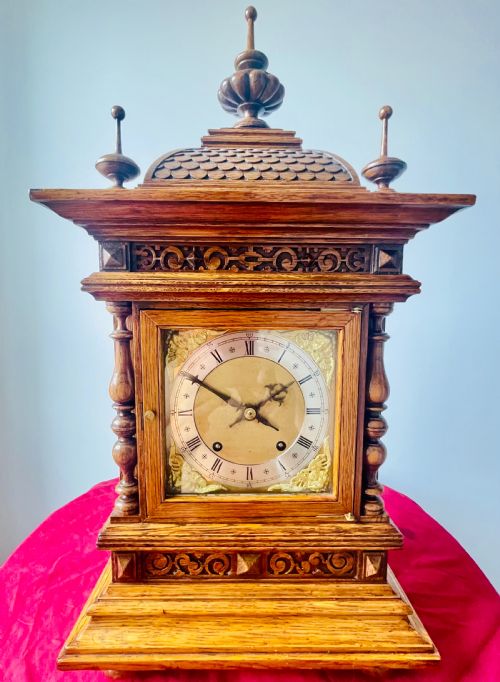
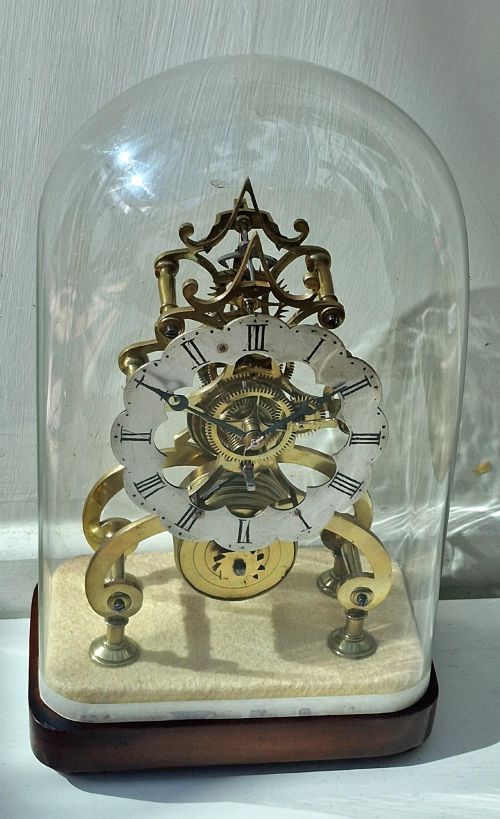
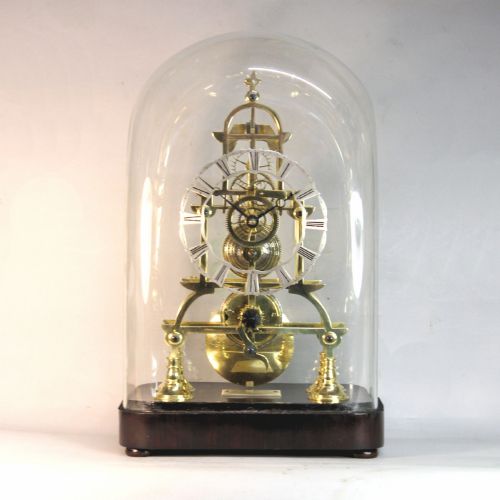
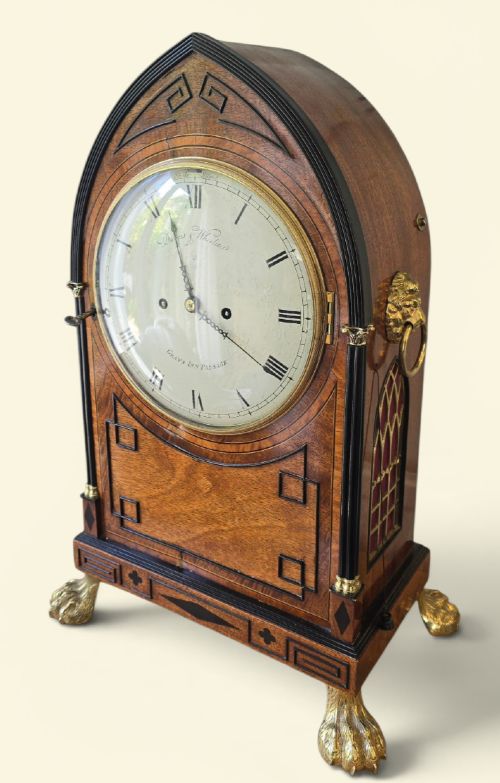
When you search for a gothic brass mantel clock, you encounter timepieces that combine period architectural motifs with metallic frames and cases. The selection spans structural skeleton forms under glass domes alongside classic bracket and mantel designs dating from the nineteenth century.
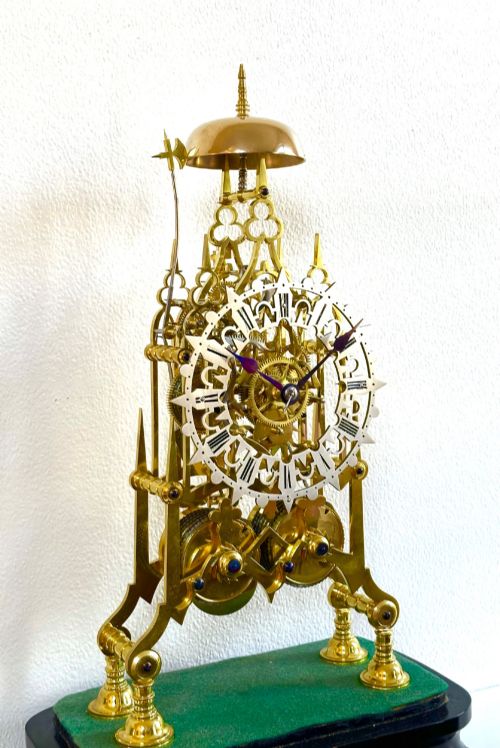
Victorian examples dominate the selection, often taking the form of open skeleton clocks or architectural bracket pieces. These items echo medieval cathedral arches and lancet windows, translating stonework into polished brass frameworks intended for tabletop display.
How they were made
Clockmakers constructed these pieces using brass for plates, bezels, and skeletal frameworks, frequently housing movements within mahogany, rosewood, oak, or marble bodies. Enamel dials provide a clear surface for painted numerals, while glass domes protect intricate internal gear trains from dust.
Mechanisms rely on fusee and spring-driven movements to maintain tension and drive the hands with precision. Skilled metalworkers cast, pierced, and engraved brass plates to achieve openwork gothic arches and tracery.
Gothic Brass Mantel Clock Retail Price Guide 2026
Typical asking prices for gothic brass mantel clock among the pieces listed under this phrase on Sellingantiques today, from the lower quarter to the upper quarter. They describe what is for sale here now, not the wider market.
Some clocks hide their ticking hearts beneath glass domes, letting you watch brass gears chase time in miniature cathedrals.
What varies in quality
The sophistication of the brass piercing and the crispness of the architectural engraving distinguish standard pieces from superior examples. Finely cut plates and well-proportioned gothic arches reveal the hand of a master workshop rather than mass production.
Movement complexity also divides the range, moving from simple time-only mechanisms up to fusee drives, quarter-striking systems, and musical trains. Original glass domes and untouched dial enamel further elevate a piece.
Winterhalder And Hofmeier·Thwaites Of London·Barber And North·Desbois And Wheeler
The Gothic Brass Mantel Clock Glossary
- Fusee
- A conical pulley used in spring-driven clocks to equalise the torque of the mainspring as it unwinds. This mechanism helps maintain consistent timekeeping accuracy across the power reserve.
- Skeleton clock
- A timepiece with an open framework that exposes the gear train and escapement to view. These pieces are typically displayed beneath a protective glass dome.
- Lancet top
- A clock case design featuring a pointed arch shape that mimics medieval gothic church windows. This silhouette was particularly popular during the Regency and Victorian periods.
- Passing strike
- A clock mechanism that chimes the hour on a single bell or gong as the minute hand reaches the top of the hour, without counting the specific hour.
Gothic Brass Mantel Clock: Frequently Asked Questions
How do I wind a brass mantel clock?
Use the appropriate key on the arbors located on the dial face to tension the mainspring gently until resistance is felt. Avoid over-winding to protect the internal brass gears from undue strain.
Ensure you keep the winding key stored in a secure location separate from the clock to prevent accidental loss or misplacement.
Where should I place my clock?
Position the clock on a stable, level mantelpiece or shelf away from direct sunlight, draughts, and damp areas. A sturdy surface prevents vibrations that can disrupt the delicate pendulum or balance wheel.
Keep the timepiece away from external heat sources like radiators to prevent wood cases from warping and lubricants from drying out prematurely.
How do I care for the glass dome?
Lift the glass dome using both hands only when necessary, placing it on a soft, secure surface to clean it. Wipe the glass with a lint-free cloth and mild cleaner to maintain clarity.
Avoid lifting the clock by its dome or rim, as domes are heavy and rarely secured to the base.
What maintenance do these movements need?
Have a qualified horologist service the mechanical movement every few years to clean old oils and inspect the pivots and escapement. Regular professional cleaning prevents wear on the brass components.
Dust the exterior brass elements lightly with a dry microfibre cloth, avoiding harsh chemical polishes that can strip original patination.