



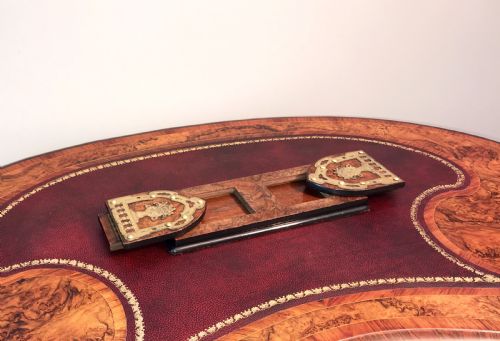
Gothic Bookends
These gothic bookends bring heavy architectural weight and rich timber tones straight to the desktop, offering a practical anchor for a library.
Gothic Bookends
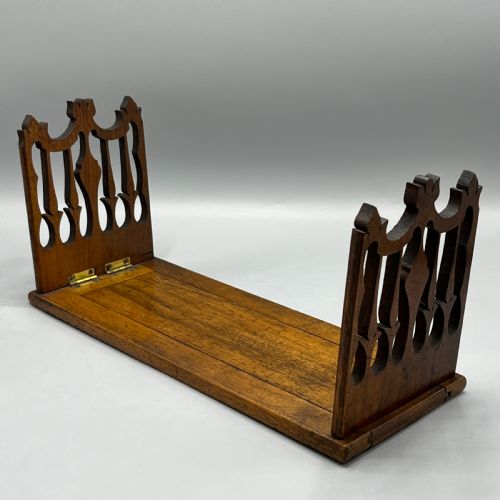
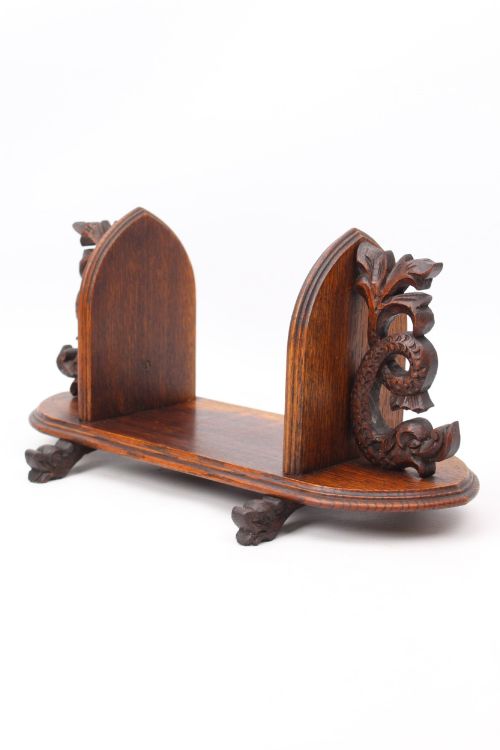
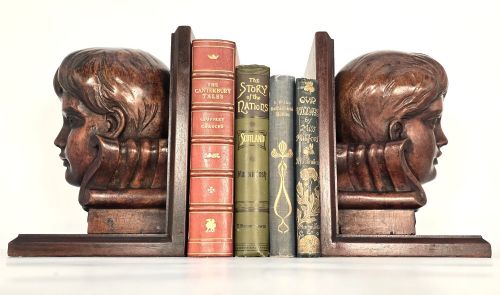
When you search for gothic bookends, you encounter substantial desk accessories designed to hold heavy volumes upright. These pieces commonly take the form of extending book slides or matched pairs of terminals.
The versions most frequently met on this page date from the nineteenth century into the Edwardian era. They draw heavily on Victorian Gothic Revival architecture, utilising architectural motifs to bring authority to a study.
Forms range from simple carved wooden book stands to sophisticated extending slides fitted with brass mounts. Walnut, oak, and mahogany provide the primary structural weight for these items.
How they were made
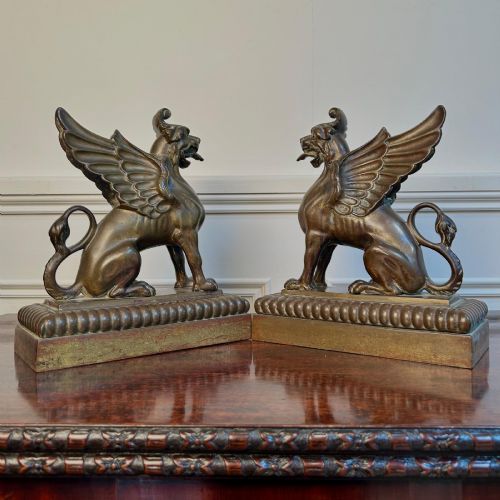
Makers constructed these pieces using dense hardwoods such as walnut, oak, and mahogany, often combining them with cast brass mounts. Ebonised wood also appears, offering a dark and dramatic surface finish suited to the style.
Carving defines the ornamentation, with craftsmen working directly into the timber to produce complex terminals like griffins and ecclesiastical details. Extending book slides incorporated clever mechanical actions to adjust the length between the bookends.
Gothic Bookends Retail Price Guide 2026
Typical asking prices for gothic bookends among the pieces listed under this phrase on Sellingantiques today, from the lower quarter to the upper quarter. They describe what is for sale here now, not the wider market.
Listings feature pieces from the nineteenth century, Victorian period, and Edwardian era, utilising walnut, oak, mahogany, and brass.
What varies in quality
Quality rests upon the crispness of the timber carving and the architectural ambition of the design. Sharply defined details on carved figures separate ordinary examples from the best items.
The integration of materials dictates the standard of the piece, particularly where brass mounts join solid walnut or mahogany. Smooth operation in extending book slides points to superior original construction.
The Gothic Bookends Glossary
- Book slide
- An adjustable desktop rack designed to hold a row of books upright between two expanding ends. It allows the user to lengthen or shorten the shelf space as needed.
- Gothic Revival
- An architectural and decorative style drawing on medieval forms, pointed arches, and heavy ornamentation. It dominated much of nineteenth-century design.
- Ebonised wood
- Timber treated with a chemical stain or finish to imitate expensive ebony. This dark surface was popular for nineteenth-century desk accessories.
- Ecclesiastical
- A design vocabulary borrowed from Christian church architecture and furnishings. It often includes motifs such as tracery and pointed arches.
Gothic Bookends: Frequently Asked Questions
What are gothic bookends?
These are heavy desk items and extending slides designed to keep volumes secure on a shelf or table. They utilise nineteenth-century architectural styles to anchor a collection of books.
Most examples rely on dense timbers and cast metal mounts to provide the necessary weight for holding large books. They serve as both functional library equipment and decorative desk sculpture.
How do extending book slides work?
Extending book slides feature a sliding mechanism built into the wooden base. This allows the two ends to pull apart or push together depending on how many volumes sit between them.
Brass hardware often reinforces the sliding joints to ensure smooth movement over time. The expanding design keeps rows of books upright without tipping.
How do I date these pieces?
Dating relies on identifying the timber species, construction methods, and stylistic cues such as Victorian Gothic Revival motifs. Nineteenth-century examples frequently combine walnut or mahogany with heavy brass mounts.
Edwardian pieces often show lighter timber treatments or simplified carved details. Comparing the hardware and joinery helps place an item within its period.
Where should I place them?
These pieces suit heavy oak desks, library tables, and deep bookshelves where their architectural presence can be appreciated. Their dark woods and carved details anchor a room.
Ensure the surface has enough depth to support extending slides or heavy carved terminals. They work best alongside traditional leather-bound volumes.