
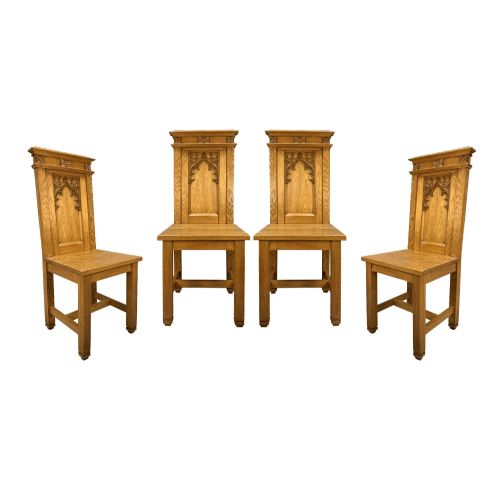
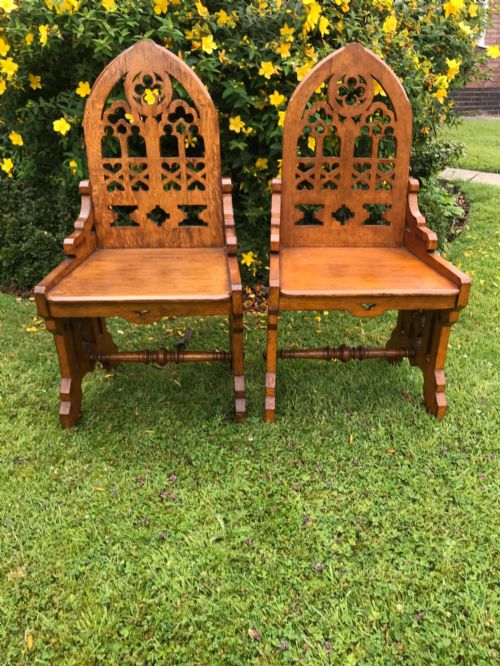
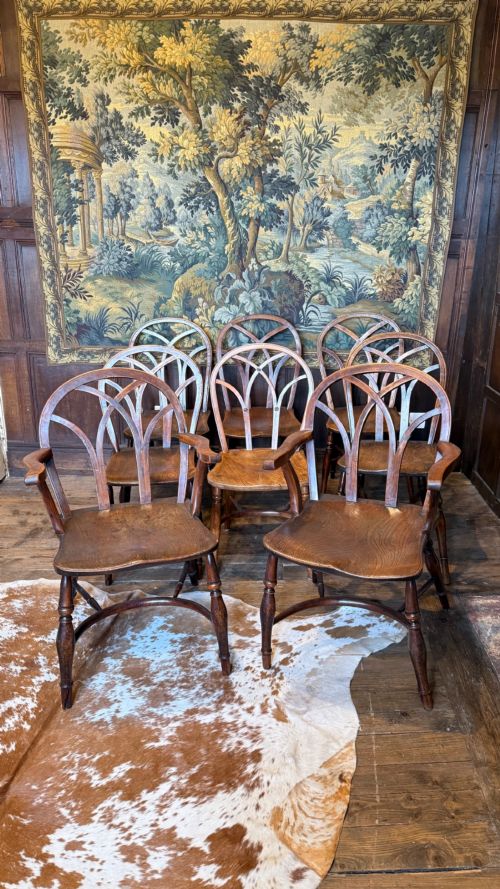

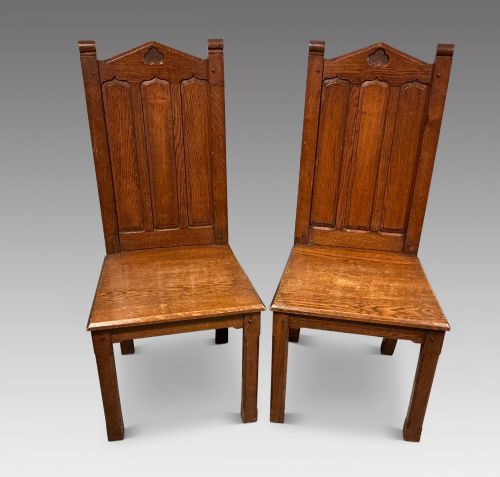

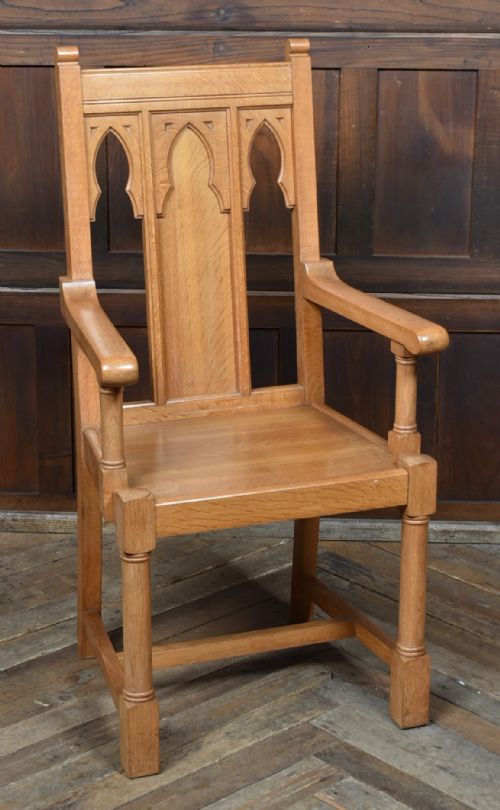


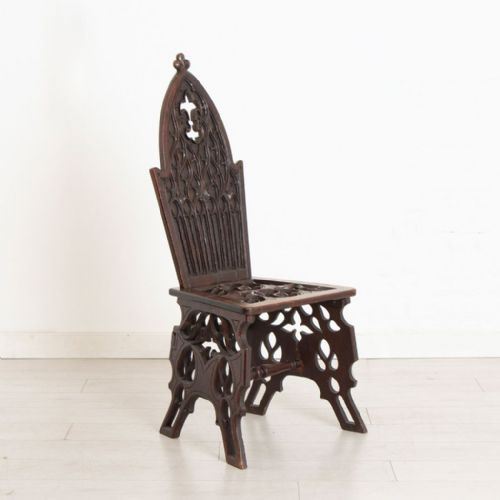


Gothic Arch Wooden Seat
These gothic arch wooden seat examples bring pointed architectural form into domestic spaces through timber construction.
Gothic Arch Wooden Seat
Makers shaped these timber forms with pointed arch motifs, drawing heavily on ecclesiastical and medieval design traditions. You frequently meet matched pairs and single chairs intended for hallways, reception rooms, and churches.
How these seats were constructed
Cabinet makers relied on sturdy hardwoods like oak, mahogany, pitch pine, yew, and elm to support the upright architectural framing. Timber selection dictated the structural rigidity needed for high-backed hall chairs and deep chapel thrones.
Joinery techniques united solid wood components with precise framing, while occasional examples incorporated upholstered fabric, leather inserts, or brass fittings to accent the woodwork.
One piece made the journey from Paris, proving that French cabinet makers also enjoyed a bit of British pointed architecture.
What separates the best from the rest
Quality rests upon the ambition of the architectural timber carving and the crispness of the pointed arch detailing. Plain utility seating differs markedly from heavily figured oak or rich mahogany pieces bearing deep mouldings.
Proportion and timber selection drive distinction, separating standard vernacular production from finely considered cabinet work intended for formal reception spaces.
The Gothic Arch Wooden Seat Glossary
- Gothic Revival
- An architectural and decorative style that revived medieval forms during the eighteenth and nineteenth centuries. It heavily influenced furniture design through pointed arches and ecclesiastical motifs.
- Hall Chair
- A rigid wooden seat traditionally placed in entrance halls and passage spaces. These pieces prioritised upright posture and architectural display over comfort.
- Pitch Pine
- A resinous softwood utilised in nineteenth century furniture making. It provided a durable alternative to traditional hardwoods with distinct grain patterns.
Gothic Arch Wooden Seat: Frequently Asked Questions
Where were these seats placed?
These pieces typically stood in entrance halls, corridors, and reception rooms of grand homes. They functioned as formal seating for visitors waiting to be announced.
Religious institutions also utilised similar wooden furniture within chapels and churches for clergy and congregation members.
How do I date a gothic wooden chair?
Dating relies on identifying timber choices, construction techniques, and stylistic markers recorded across the nineteenth and earlier centuries. Oak and mahogany appear frequently in Georgian and Victorian iterations.
Later pieces often incorporate pitch pine or specific revival styling typical of the Edwardian era and the early twentieth century.
Are these chairs comfortable for daily use?
Hall chairs and formal chapel thrones were built with upright wooden panels and rigid seats rather than deep cushioning. They were designed for posture and architectural presence.
Placing them in low-traffic areas or pairing them with loose squab cushions makes them practical for modern sitting environments.
What woods were used for these seats?
Joiners worked primarily with durable native and imported timbers suited to load-bearing architectural forms. Oak, mahogany, pitch pine, yew, elm, and occasional fruitwoods appear across the listings.
Each wood imparted a distinct colour and grain pattern that influenced the overall character of the carved archwork.