



Gold Station Chain
A gold station chain is a distinctive necklace punctuated by spaced ornaments or pearls, offering a refined way to wear antique craftsmanship every day.
Gold Station Chain
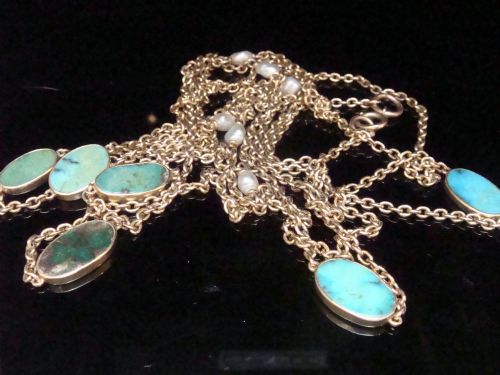
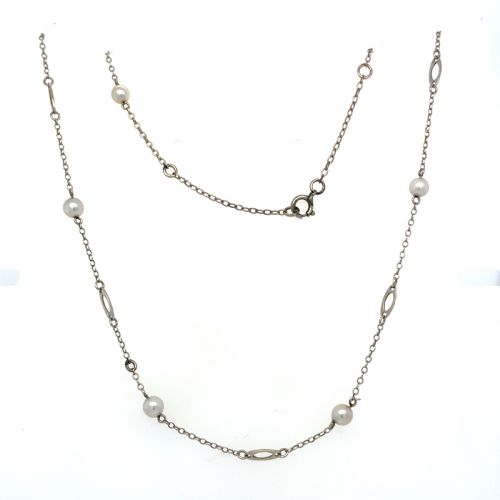
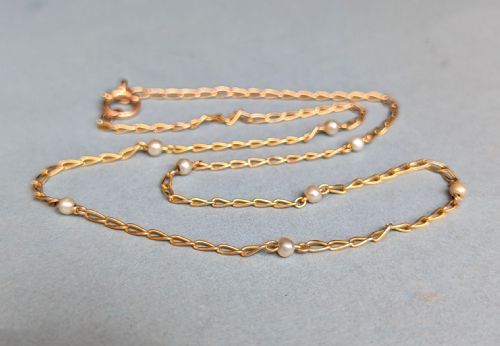
A gold station chain pairs precious metal links with evenly spaced decorative elements such as pearls, turquoise, or diamonds along the length of the necklace. These pieces function as versatile neckwear that moves easily from formal settings to daily wear.
The selections span distinct historical eras, most notably the Edwardian period and the mid-twentieth century, including longuard designs and shorter pearl-set necklaces. Buyers frequently encounter longer formats equipped with dog clips, alongside delicate white and yellow gold configurations.
Construction and materials
Goldsmiths constructed these chains utilising varying purities of gold, ranging from nine carat and fifteen carat yellow gold to eighteen carat white gold and platinum settings. Natural pearls, saltwater pearls, Akoya pearls, and turquoise stones were carefully integrated into the metalwork at regular intervals.
Makers incorporated specialised components such as dog clips and secure box clasps to handle the substantial weight of longuard chains. Hand-setting techniques secured small diamonds and pearls within the metal framework to create durable, balanced ornaments.
Gold Station Chain Retail Price Guide 2026
Typical asking prices for gold station chain among the pieces listed under this phrase on Sellingantiques today, from the lower quarter to the upper quarter. They describe what is for sale here now, not the wider market.
The listings encompass Edwardian, Victorian, and mid-century periods, utilising materials from turquoise and natural pearls to nine carat and eighteen carat gold.
Assessing craftsmanship
The distinction between standard examples and superior pieces rests on the precision of the link construction and the uniform matching of natural pearls or turquoise stones. Finer pieces demonstrate meticulous attention to the proportions between the gold stations and the connecting links.
The integrity of the original clasp mechanisms and the consistent gauge of the gold wire throughout the entire length indicate higher manufacturing standards. Pieces that retain their structural weight and original fittings command greater appreciation among collectors.
The Gold Station Chain Glossary
- Longuard chain
- A very long Victorian or Edwardian necklace designed to be doubled around the neck or suspended with a watch or locket. These substantial pieces often feature decorative slides or dog clips.
- Dog clip
- A spring-loaded swivel clasp commonly found on antique chains and longuards. It allowed the wearer to securely attach charms, pendants, or pocket watches.
- Seed pearl
- A very small, naturally formed pearl, often unnucleated, used extensively in delicate clusters and threaded jewellery during the nineteenth and early twentieth centuries.
- Akoya pearl
- A saltwater cultured pearl originating from Japan, known for its high lustre and nearly spherical shape. These pearls frequently appear in mid-century jewellery designs.
- Turquoise
- An opaque, blue-to-green mineral utilised in antique jewellery as cabochons or beads. It was particularly favoured during the Victorian and Edwardian eras for adding colour contrast to gold work.
Gold Station Chain: Frequently Asked Questions
What is a gold station chain?
A gold station chain is a necklace featuring uniform links of precious metal interspersed with decorative elements like pearls or gemstones at regular intervals. These intervals create a rhythmic pattern along the length of the piece.
Such designs appeared across multiple historical eras, functioning both as standalone neckwear and as practical chains for securing watches or pendants.
How do I wear a longuard chain?
Longuard chains are typically worn doubled around the neck to reduce the overall drop, or left at their full length for a dramatic line. The integrated dog clip allows you to attach a pendant or tuck the end into a belt or pocket.
This versatility made them a practical accessory in the nineteenth and early twentieth centuries, adapting to the day's changing fashions.
How do I date an antique chain?
Dating relies on examining the metal hallmarks, the specific style of the links, and the type of clasp mechanism used by the maker. Edwardian pieces often showcase delicate platinum-topped gold work and natural seed pearls.
Mid-century examples tend to feature cleaner lines in yellow or white gold, often paired with Akoya pearls rather than Victorian settings.
Are these chains suitable for daily wear?
Many of these chains are robust enough for daily use, provided they are handled with the care appropriate for antique jewellery. Solid gold links and secure clasps offer durability for regular enjoyment.
Items set with softer materials like turquoise or delicate natural pearls require more cautious handling to avoid surface abrasion over time.