





Gold Star Sapphire
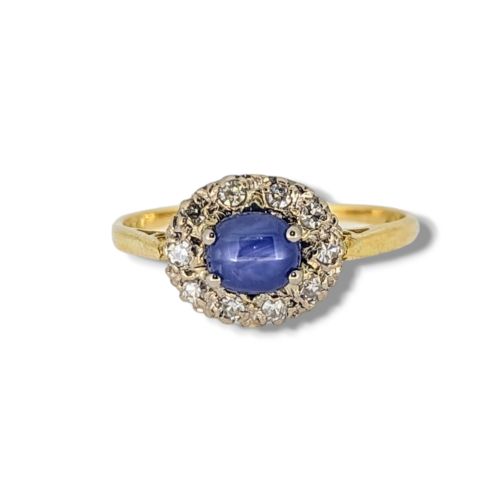
A gold star sapphire holds an optical phenomenon within its smooth dome, casting a six-rayed star across the stone when caught in the light.
Gold Star Sapphire
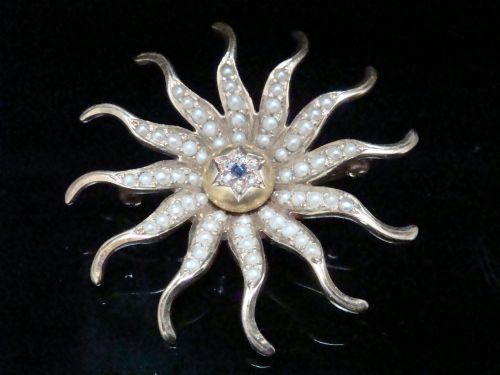
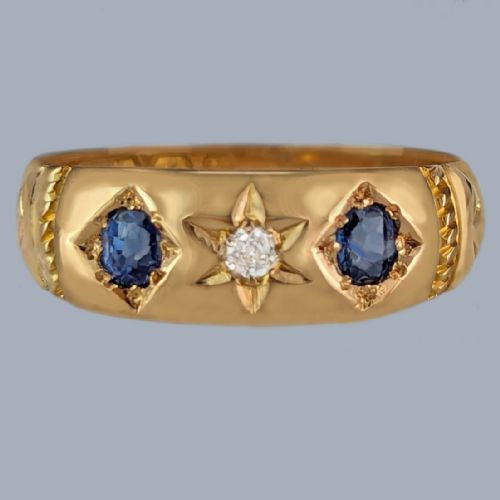
When you search for gold star sapphire, you are looking at rings, pendants, and bangles framed in gold and set with asteriated corundum alongside diamonds, rubies, and seed pearls. The pieces span the Victorian, Edwardian, and mid-century periods, showing both high-carat yellow gold and lighter gold alloys.
You are most likely to meet cluster rings and gypsy rings from the Victorian and Edwardian eras, alongside unheated Ceylon star sapphire rings from the nineteen-fifties and nineteen-sixties. These items range from delicate crescent pendants to substantial dress rings featuring old-cut diamonds and starburst motifs.
The stones themselves display varying degrees of natural asterism, often paired with ruby or diamond accents in boat settings, trilogy arrangements, and twist designs. Each piece reflects the decorative priorities of its specific decade, from the celestial themes of the late nineteenth century to the clean lines of the mid-century.
Materials and construction
These pieces utilise yellow gold in fifteen-carat and eighteen-carat standards, alongside platinum and silver-topped elements typical of older British jewellery manufacturing. Stones are secured in star settings, boat settings, and gypsy flush mounts designed to protect the vulnerable girdle of the natural corundum.
The primary gems are cabochon-cut sapphires exhibiting natural asterism, accompanied by old-cut and rose-cut diamonds, rubies, and seed pearls. Goldsmiths shaped the metal through casting, hand-forging, and hallmarking at regional assay offices such as Chester and Birmingham.
Pendants and bangles incorporate fine wirework, granulation, and matt yellow gold finishes that contrast sharply with the polished facets of surrounding diamonds. The construction relies on traditional bench techniques, ensuring the central optical phenomenon of the sapphire remains unobstructed by claws or bezels.
Gold Star Sapphire Retail Price Guide 2026
Typical asking prices for gold star sapphire among the pieces listed under this phrase on Sellingantiques today, from the lower quarter to the upper quarter. They describe what is for sale here now, not the wider market.
The recorded object forms are limited exclusively to rings, pendants, and bangles, incorporating sapphires, diamonds, rubies, and seed pearls.
Distinctions in quality
The strength and sharpness of the six-rayed star separate ordinary cabochons from exceptional specimens, as a crisp asterism requires precise needle-like inclusion alignment within the corundum. The mobility of the optical light across the dome under a single light source dictates the desirability of the central gem.
The weight, colour, and clarity of the supporting diamonds or rubies alter the overall balance of a cluster or trilogy ring, with old-cut stones adding distinct character compared to modern uniform cuts. Metalwork execution, from the crispness of a gypsy star engraving to the weight of an eighteen-carat gold shank, marks the difference between standard production and fine workshop output.
Original condition, including legible hallmarks and undisturbed settings, preserves the historical integrity of pieces originating from the Victorian period through to the mid-century. Alterations to the shank or replacement of secondary stones directly influence how closely a piece retains its original period character.
The Gold Star Sapphire Glossary
- Asterism
- The optical phenomenon displayed by star sapphires where microscopic needle-like inclusions reflect light in a intersecting multi-rayed pattern. This effect is best observed under a single directional light source.
- Cabochon
- A gemstone shaped and polished with a smooth convex dome rather than faceted surfaces. This cut is essential for displaying the moving star in asteriated stones.
- Gypsy setting
- A mounting style where the gemstone is flush with the metal surface, secured by pushing the surrounding gold over the girdle. This technique was widely favored in the late Victorian and Edwardian eras for daily wear rings.
- Old-cut diamond
- A hand-faceted diamond cut before the standardisation of the modern brilliant in the early twentieth century. These stones typically feature smaller tables, higher crowns, and open culets.
- Trilogy ring
- A ring set with three stones, often interpreted to represent the past, present, and future. In these listings, they frequently combine a central star sapphire with flanking diamonds or rubies.
Gold Star Sapphire: Frequently Asked Questions
How do I care for gold and sapphire jewellery?
Sapphire is an extremely hard gemstone, ranking nine on the Mohs scale, making it resilient for everyday wear in rings and pendants. However, the gold mountings and softer accompanying stones like pearls require gentler treatment.
Clean your pieces using warm soapy water and a soft brush, avoiding harsh chemical dips that can damage seed pearls or antique gold alloys.
How do I identify Victorian and Edwardian settings?
Victorian pieces often feature robust yellow gold shank construction, boat-shaped clusters, and heavy gypsy mounts designed for durability. Edwardian items tend to showcase lighter filigree work, platinum-topped gold, and delicate seed pearl accents.
Examining the structural geometry and consulting British hallmarks stamped on the interior of the band will usually confirm the exact period of manufacture.
Can these rings be resized?
Most gold rings from these periods can be adjusted by a skilled jeweller, provided the shank is sufficiently thick and does not feature continuous engraving or delicate gallery work around the shoulders.
It is wise to consult a specialist who understands antique construction methods to ensure any alteration preserves the integrity of the hallmarks and the security of the central star sapphire.