

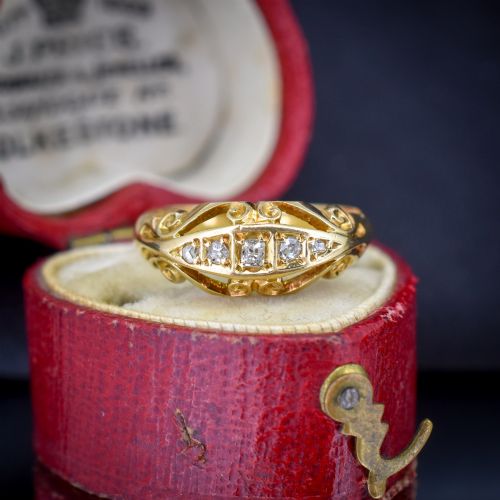
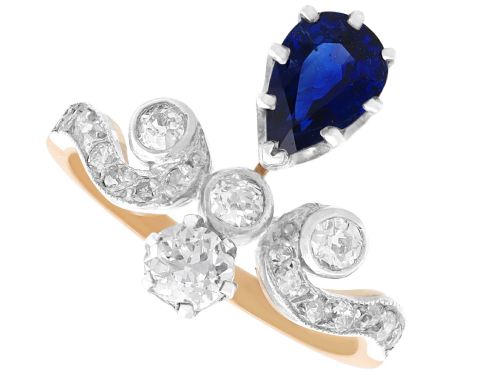
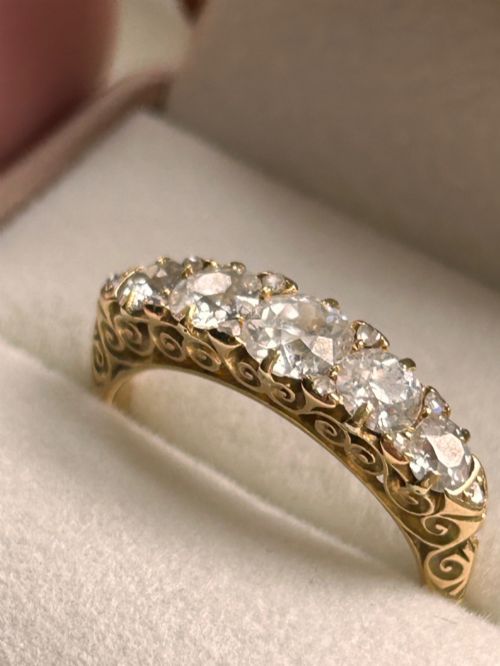
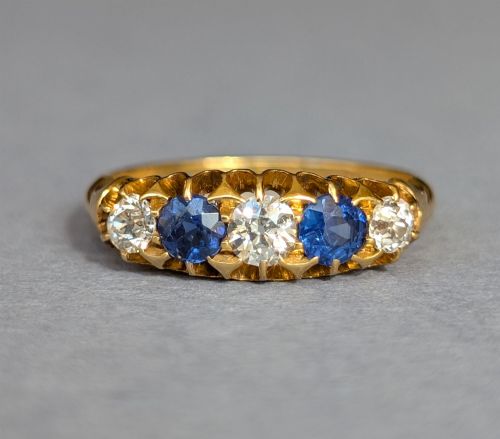


Gold Scrolled Band Ring
A gold scrolled band ring brings together patterned metalwork and precious stones, spanning Victorian, Edwardian and mid-century periods.
Gold Scrolled Band Ring
A gold scrolled band ring is defined by patterned metalwork and precious stones, appearing across Victorian, Edwardian and mid-century periods. These pieces encompass varied forms from boat rings and starbursts to multi-stone arrangements.
The versions most commonly met on this page combine yellow or white gold with diamonds, sapphires, rubies and turquoise. They range from nineteenth-century examples to later twentieth-century iterations.
Makers utilised distinct styles such as traditional Victorian motifs and clean Edwardian lines. Each piece presents specific period characteristics recorded across the listings.
Materials and construction methods
Makers constructed these rings primarily using nine-carat and eighteen-carat gold, incorporating both yellow and white varieties. Gemstones including diamonds, sapphires, rubies, turquoise and emerald paste were then set securely into the metal bands.
Techniques relied upon manual mounting and detailed scrollwork applied to the gold. Stones were arranged in starbursts, boat shapes, trilogies and swirl configurations by skilled jewellers.
Gold Scrolled Band Ring Retail Price Guide 2026
Typical asking prices for gold scrolled band ring among the pieces listed under this phrase on Sellingantiques today, from the lower quarter to the upper quarter. They describe what is for sale here now, not the wider market.
Assessing quality in gold scrolled band rings
The standard of a gold scrolled band ring rests on the crispness of the chased or scrolled metalwork and the security of the stone settings. Finer examples display precise detailing in the gold patterns alongside well-matched gemstones.
Weight and metal purity also distinguish different tiers, with eighteen-carat gold pieces generally representing a higher grade of manufacture than nine-carat equivalents. The integration of high-grade diamonds and coloured stones further elevates the work.
The Gold Scrolled Band Ring Glossary
- Boat ring
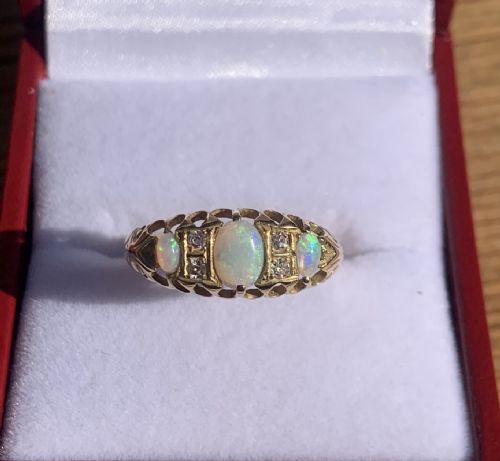
- A ring featuring a curved, boat-shaped setting that tapers towards the shoulders. This style gained popularity during the Victorian period.
- Gypsy set
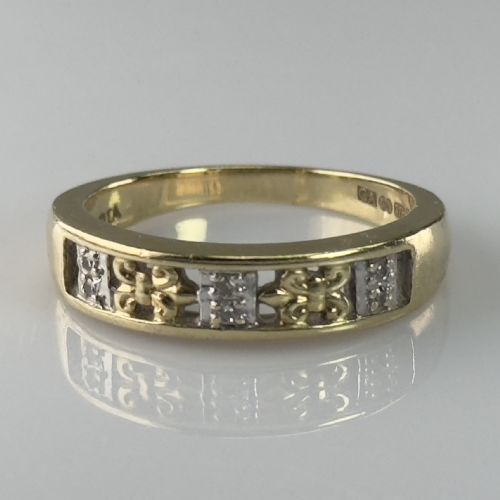
- A setting style where gemstones are flush with the surface of the gold band. The metal is pushed around the stone to hold it in place.
- Starburst
- A cluster design where stones radiate outwards from a central point, resembling a star. This formation often combines diamonds with rubies or sapphires.
- Trilogy ring
- A ring set with three stones placed in a row. They frequently represent a past, present and future theme.
- Paste
- Hand-cut glass used as a substitute for gemstones. It was shaped and polished to imitate diamonds or coloured stones in vintage jewellery.
Gold Scrolled Band Ring: Frequently Asked Questions
How do I date a gold scrolled band ring?
Dating relies on stylistic clues, mounting techniques and hallmarks stamped inside the band. Victorian and Edwardian examples often feature distinct gemstone arrangements and hand-carved motifs.
Later mid-century pieces shift towards simpler geometric patterns and white gold settings. Examining the cut of the diamonds also helps determine the era of production.
What gold purity should I expect?
These rings commonly appear in nine-carat and eighteen-carat gold, spanning both yellow and white variants. Hallmarks inside the shank confirm the exact metal standard.
Eighteen-carat gold is frequently seen in finer nineteenth and early twentieth-century pieces. Nine-carat gold appears across various decades of production.
How should I care for my ring?
Clean your ring gently using warm soapy water and a soft brush to remove everyday debris. Avoid harsh chemical dips, especially when turquoise or emerald paste is present.
Store the piece separately in a fabric-lined box to prevent scratching against other jewellery. Periodic checks by a jeweller ensure the stone settings remain secure.
Can I wear a scrolled ring daily?
Most of these rings are robust enough for regular daily wear provided the stone settings remain secure. Rings set with softer stones like turquoise require extra care during physical tasks.
Consider removing the ring during heavy manual work or gardening to protect the detailed scrollwork. Routine inspection of the claws and flush settings prevents accidental stone loss.
What gemstones are typical for these rings?
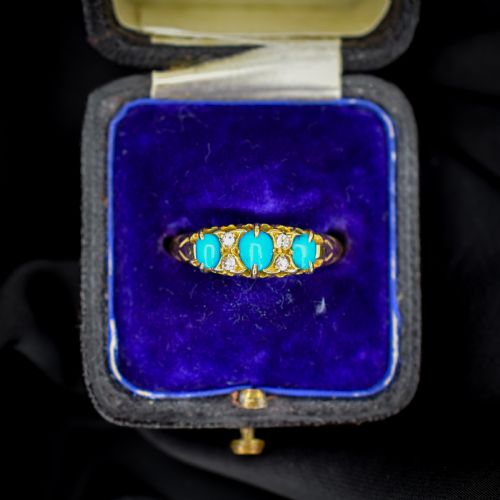
Diamonds and sapphires form the most common combination in these listings, often accompanied by rubies and turquoise. Victorian makers favoured colourful stone pairings.
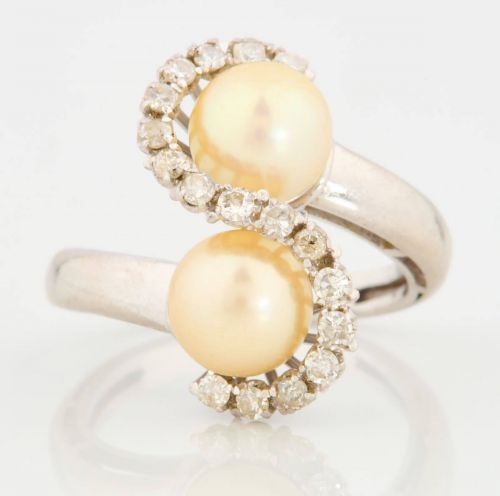
Later pieces sometimes introduce pearls or emerald paste into the design. Each gemstone was chosen to complement the gold band and period style.