


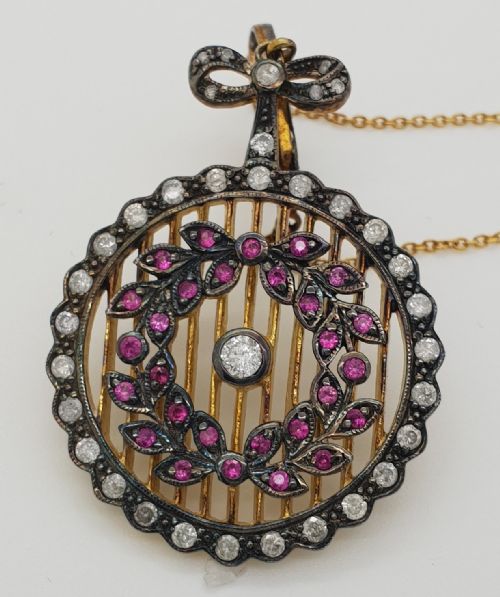


Gold Ruby Necklace Pendant
When you search for a gold ruby necklace pendant, you are looking for vibrant red gemstones set in precious metal drop ornaments.
Gold Ruby Necklace Pendant
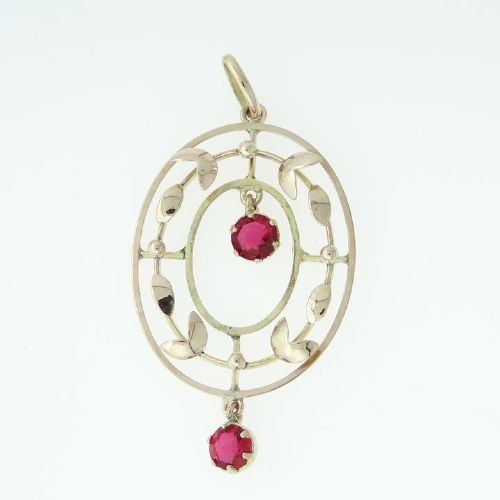
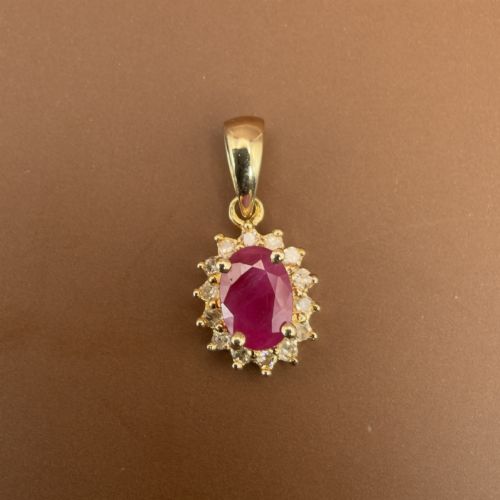
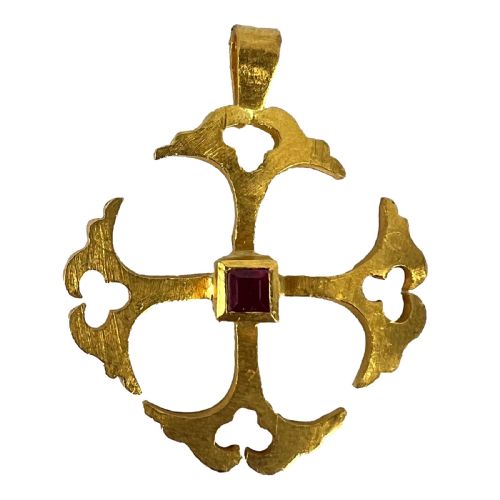
A gold ruby necklace pendant brings together rich red corundum and warm precious metal in wearable drops, crosses, and clusters. The pieces you encounter most often span the Victorian, Edwardian, and mid-century eras.
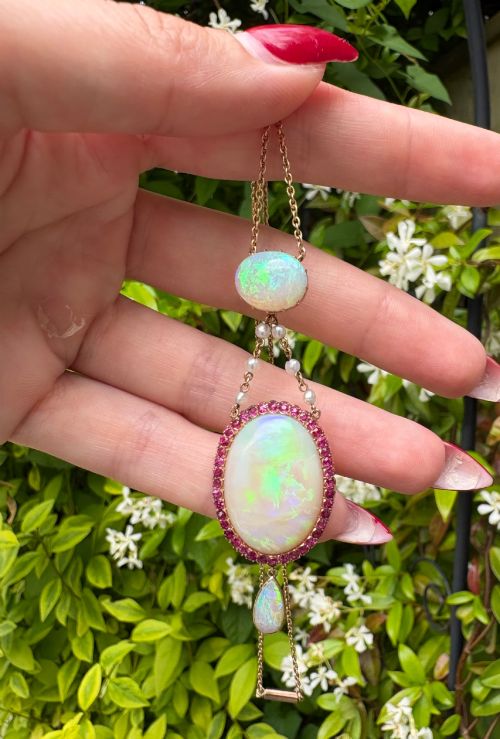
Victorian and Edwardian examples frequently combine rubies with seed pearls, diamonds, or opals in romantic motifs like hearts, snakes, and stars. Later twentieth-century versions often favour structured cluster forms or clean yellow gold settings.
Formats range from simple pendant drops hung on fine chains to versatile pendant brooches designed to pin to garments or suspend from necklaces. Forms also include crosses, floral clusters, and whimsical animal shapes.
Distinguishing quality
The standard of design and gemstone selection separates typical pieces from finer examples. Heavier gold weight and harmonious arrangements of rubies alongside well-matched diamonds elevate a piece.
Artisanal detail in period motifs, such as hand-carved snake or floral work, indicates higher workshop skill than mass-produced castings.
The Gold Ruby Necklace Pendant Glossary
- Cluster pendant
- A central gemstone surrounded by a border of smaller stones. This format maximises visual impact and light reflection.
- Pendant brooch
- A convertible jewel featuring both a pin mechanism and a loop for suspension. It allows the wearer to use the piece on a chain or fasten it to clothing.
- Seed pearl
- A tiny, naturally small pearl often used in Victorian and Edwardian cluster and border work. They provide a soft contrast to bright red rubies.
- Rose-cut diamond
- An antique diamond cut with a flat base and a faceted dome coming to a point. It offers a subtle, starry shimmer rather than modern brilliance.
Gold Ruby Necklace Pendant: Frequently Asked Questions
How do I wear a pendant brooch?
You can slide a chain through the integrated loop to wear it around the neck as a traditional pendant. Alternatively, you can secure the pin fastening directly onto the fabric of a lapel or dress.
Ensure the safety catch on the pin is secure before wearing it as a brooch. When hung on a chain, check that the bail accommodates your preferred chain thickness.
How do I date an antique pendant?
Examining the metal hallmarks, gemstone cuts, and overall motif style helps determine the era of manufacture. Victorian pieces often feature closed backs or ornate organic designs, while Edwardian items lean towards platinum-topped gold and delicate lace-like geometry.
Consulting professional assessments or examining construction techniques under magnification provides further clues. Fastening types and chain styles also offer helpful chronological context.
Are these rubies natural?
The selection includes both natural rubies and simulated or treated stones, depending on the period and maker. Edwardian and Victorian pieces frequently feature natural gems, while some later or alternative items utilise synthetic variants.
Reviewing item descriptions carefully reveals specific gemological findings. Independent testing notes often confirm stone origin and treatment status.
How do I care for my gold ruby jewellery?
Store each pendant separately in a lined box or soft pouch to prevent the harder diamonds from scratching the softer gold and rubies. Clean the metal and stones gently using warm soapy water and a soft brush.
Avoid harsh chemical cleaners or ultrasonic baths, particularly for pieces containing pearls, opals, or foiled backs. Regular checks by a jeweller ensure settings remain secure.