


Gold Peridot Drop Pendant
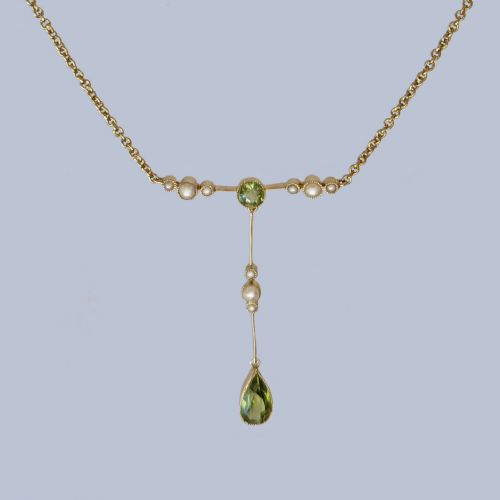
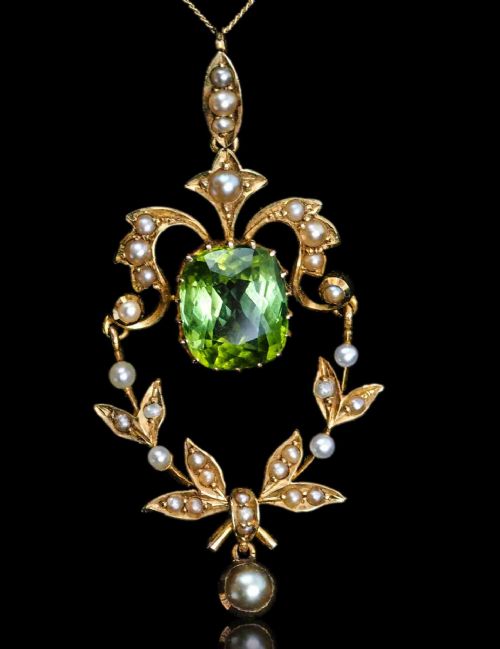
A gold peridot drop pendant brings the distinct chartreuse flash of late Victorian and Edwardian craftsmanship to the neckline.
Gold Peridot Drop Pendant
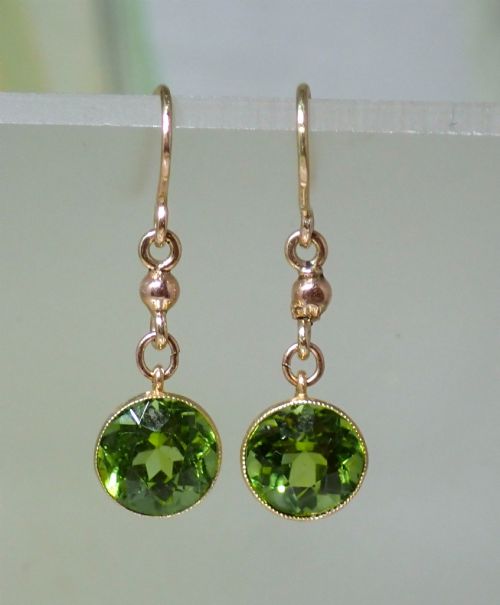
A gold peridot drop pendant centres on the vivid lime green of the peridot gemstone, suspended beneath fine metalwork. These pieces emerge chiefly from the Victorian and Edwardian eras, spanning the turn of the twentieth century. Buyers seeking this phrase encounter delicate work featuring cascading stones and swinging design elements.
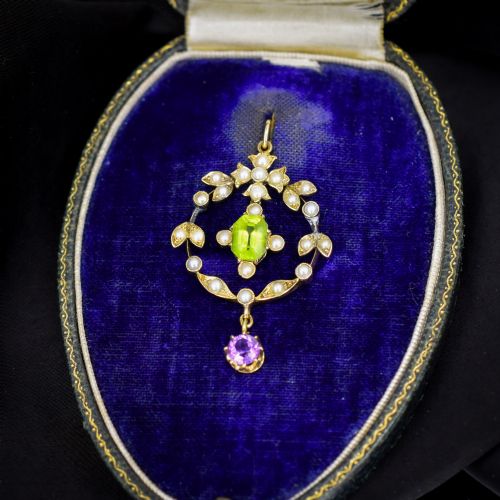
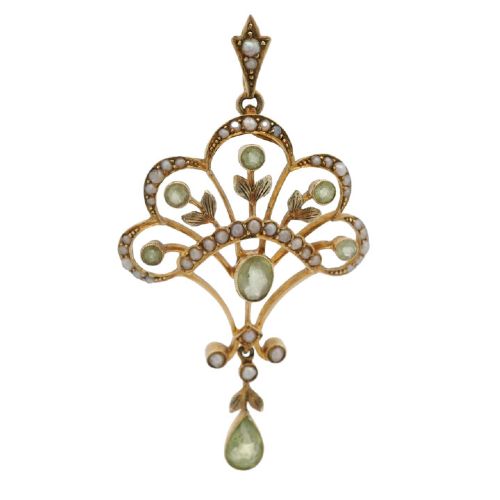
The dominant forms on this page include lavalier necklaces, traditional drop pendants, and convertible pendant brooches. Many incorporate seed pearls and subtle gemstone clusters alongside the central peridot. Originating in periods noted for botanical and linear motifs, these items reflect both traditional jewellery and the flowing curves of Art Nouveau and Arts and Crafts styles.
How they were made
Goldsmiths utilised both nine carat and fifteen carat gold to construct the delicate settings, occasionally incorporating platinum for specific details. The peridots are typically faceted in step or table cuts to maximise the natural olive luminescence of the stone. Artisans frequently secured tiny seed pearls in clusters or bezels using minute wirework and prongs.
The architecture of these drops relies on articulated joints and jump rings that allow the lower sections to sway with movement. Metalwork often displays pierced openwork frames typical of Edwardian workshops, mounting the peridot as the undisputed focal point of the composition.
Some Edwardian peridot pendants double as secret brooches, ready to abandon the chain at a moment's notice to scale a lapel.
What varies in quality
The distinction between ordinary and exceptional pieces lies in the crispness of the gold wirework and the depth of colour in the peridot. Finer examples display matched, vibrant green stones free from heavy inclusions, paired with meticulously balanced botanical or symmetrical gold motifs.
Workmanship on the reverse side of the pendant also signals quality, as superior makers finished internal galleries and prongs with equal care. The inclusion of original chains, fitted boxes, or documented maker marks elevates the standing of a pendant within its period.
Murrle Bennett
The Gold Peridot Drop Pendant Glossary
- Lavalier
- A necklace featuring a pendant drop that hangs below a symmetrical or asymmetrical chain arrangement, popular during the Edwardian period. This format often includes cascading pearls and peridots.
- Seed pearl
- A very small, naturally occurring or early cultured pearl, frequently drilled and strung or set en masse to accent gold peridot jewellery. They provide a soft, creamy contrast to the bright green peridot.
- Art Nouveau
- A design style spanning the late nineteenth and early twentieth centuries, characterised by flowing, organic lines and stylised natural forms. Pendants from this movement often use whiplash curves in the gold settings.
- Arts and Crafts
- A movement emphasising hand-craftsmanship and traditional metalworking techniques over mass production. Pieces from this tradition show visible hand-hammering and simpler, robust gold mounts.
- Suffragette jewellery
- Pieces designed using the colour triad of green, white, and violet, represented by peridots, pearls, and amethysts or sapphires. These stones spelled out the colours of the women's social and political union.
Gold Peridot Drop Pendant: Frequently Asked Questions
How do I wear a antique pendant?
Suspend the piece on a fine gold chain that matches the carat weight of the pendant itself. Pairing it with a simple neckline allows the articulated drop and peridot colour to catch the light properly.
Take care to remove the pendant before swimming, sleeping, or applying perfumes to protect the soft seed pearls and delicate gold connections from unnecessary wear.
Were these pieces worn as brooches too?
Many Edwardian and Victorian drop pendants were constructed with hidden bails and pin stems on the reverse. This dual functionality allowed the owner to pin the jewel to a lapel or suspend it from a ribbon.
Check the reverse of the setting to see if a hinged pin and catch are present alongside the suspension loop for the chain.
What is the difference between Edwardian and Victorian pieces?
Victorian peridot jewellery often employs heavier nine carat or fourteen carat gold settings with denser arrangements of seed pearls. The mood tends toward sentimental or traditional cluster designs.
Edwardian pieces shift toward lighter fifteen carat gold and platinum, utilising airy openwork, garlands, and flowing lines that lighten the visual weight of the pendant.