


Gold Pearl Bangle
A gold pearl bangle brings together lustrous pearls and rich gold in classic Victorian, Edwardian, and Art Deco designs.
Gold Pearl Bangle
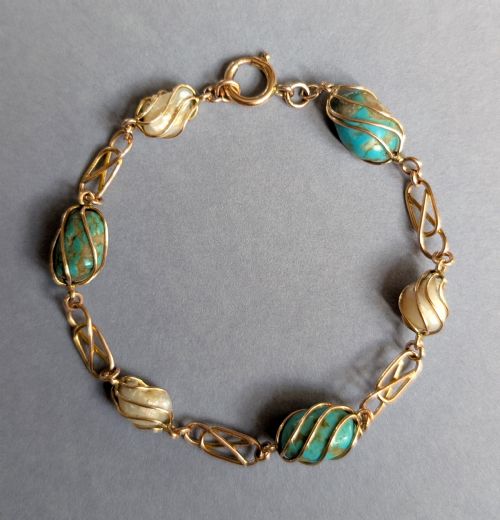
The selections on this page span solid gold bands in 9ct, 15ct, and 18ct purities, appearing in yellow, rose, and white gold variations. Many examples take the form of rigid hinged bangles, while others present as flexible link bracelets or double heart motifs.
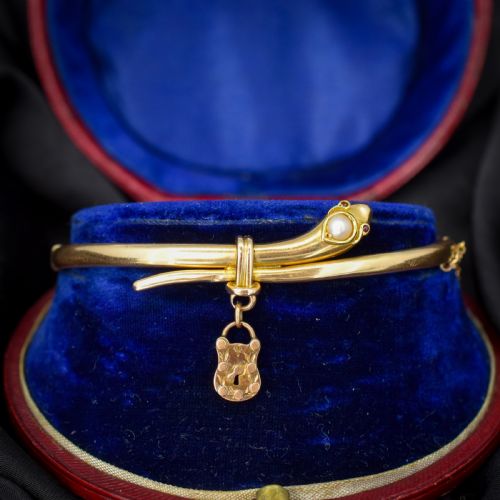
Victorian and Edwardian iterations dominate the selection, often showcasing intricate metalwork such as lovers knots, serpent designs, and floral clusters. Buyers also discover occasional French pieces featuring natural saltwater pearls and old-cut diamonds.
How they were made
Goldsmiths utilised varying purities of gold, casting and hammering the metal into solid bands, hollow tubes, or delicate wirework settings. Seed pearls and larger pearls were meticulously secured using tiny claw settings, peg mountings, or natural adhesives within gold floral and geometric frameworks.
Gemstones such as diamonds, turquoise, and moonstones were frequently integrated alongside pearls, set in silver-topped gold or directly into yellow and rose gold mountings. Jewellers applied chased details, engraving, and occasionally platinum highlights to enhance the visual depth of the pieces.
Several Victorian bangles secretly double as lockets, designed to keep a lock of a loved one's hair safely hidden inside.
What varies in quality
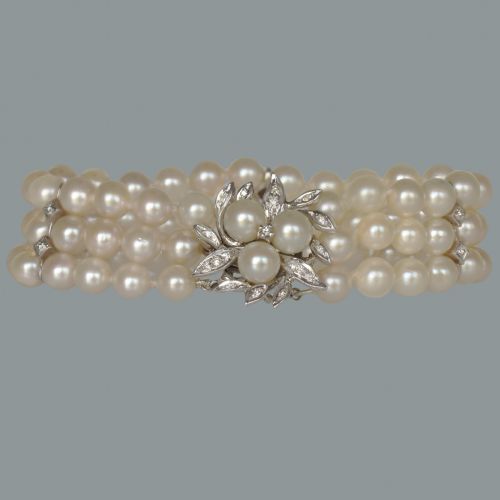
The quality of these jewels rests upon the weight and purity of the gold, alongside the uniformity and lustre of the pearls themselves. Higher-tier examples display intact natural or saltwater pearls with strong orient, securely mounted alongside well-matched coloured gemstones and clean diamonds.
Craftsmanship integrity distinguishes finer pieces, seen in robust hinge mechanisms, secure clasps, and minimal signs of historic repair to the delicate gold wirework or stone settings. Original fitted boxes also contribute to the distinction of superior surviving examples.
The Gold Pearl Bangle Glossary
- Seed pearl
- A very small natural pearl, typically uncultured, often used in clusters or pavé settings on antique jewellery.
- Bangle
- A rigid ring or bracelet worn around the wrist, which may be solid or fitted with a hinge and clasp for easy fastening.
- Curb bracelet
- A chain bracelet formed of interlocking uniform links that lie flat against the wrist.
- Lovers knot
- A decorative motif formed by two interlaced strands of metal, symbolising affection and commitment in Victorian design.
- Orient
- The delicate iridescent lustre shimmering on the surface of a pearl, caused by the light refracted through its nacre layers.
Gold Pearl Bangle: Frequently Asked Questions
How do I care for antique pearl jewellery?
Pearls are organic gems that require gentle handling, meaning they should be kept away from harsh chemicals, perfumes, and cosmetics.
Cleaning is best done with a soft, damp cloth after wearing, avoiding immersion in water or ultrasonic cleaning solutions.
Were these bangles worn daily in the past?
Victorian and Edwardian women wore such bracelets both for daytime elegance and evening gatherings, depending on the richness of the gemstones.
Robust 15ct and 18ct gold examples with secure box clasps were built for regular wear, whereas delicate seed pearl pieces demanded more careful treatment.
How can I tell a Victorian bangle from an Edwardian one?
Victorian pieces often feature warmer rose gold, heavier metalwork, and sentimental motifs like snakes, lovers knots, and turquoise clusters.
Edwardian items frequently utilise lighter yellow or white gold, platinum accents, diamonds, and airy Belle Epoque lace-like geometric patterns.
What is the difference between seed pearls and cultured pearls?
Seed pearls are naturally occurring tiny pearls harvested historically from oysters without human intervention, prized in antique multi-stone clusters.
Cultured pearls are grown with human assistance by introducing a nucleus into the mollusc, a method more common in later mid-century jewellery.