

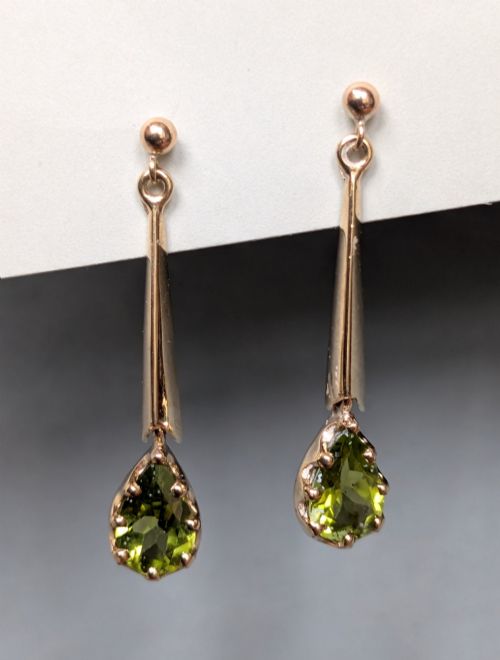
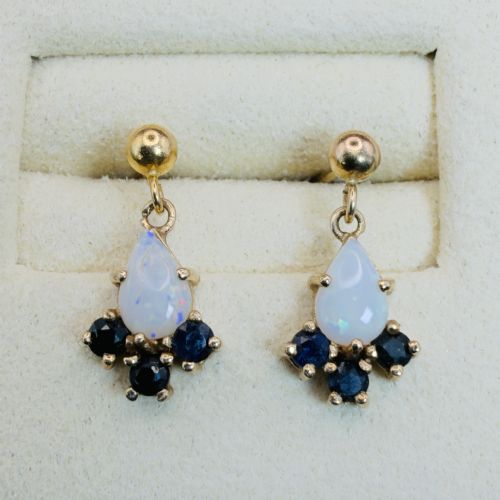
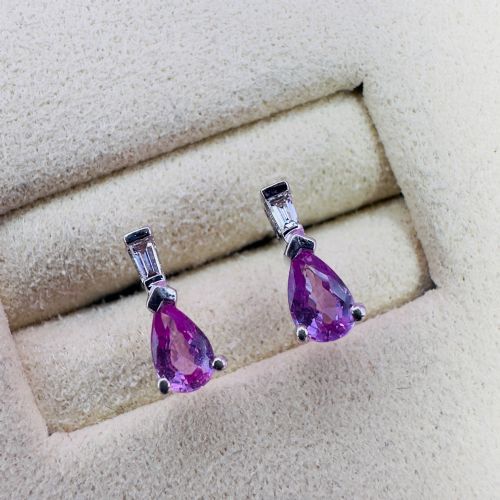
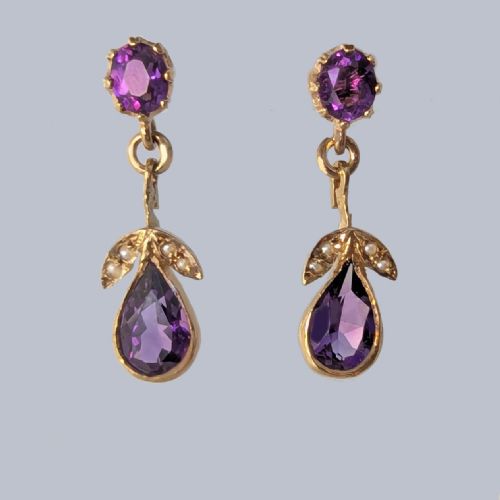




Gold Pear Gemstone Earrings
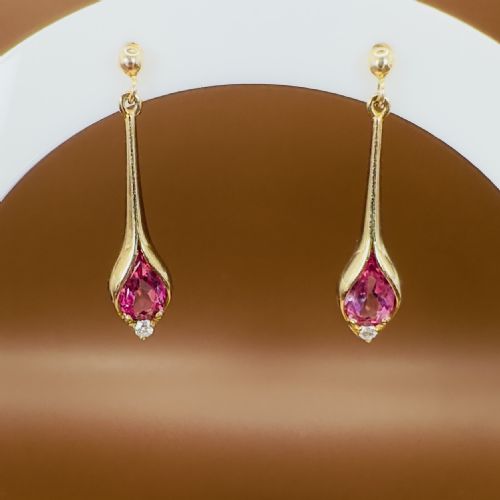
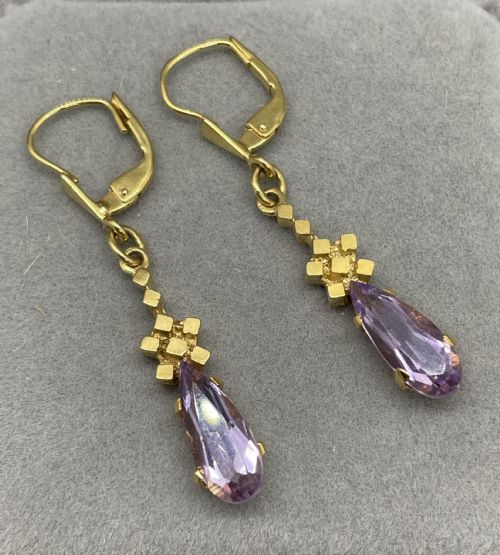
Gold pear gemstone earrings bring together teardrop stones and warm precious metals, offering a classic drop silhouette that flatters the wearer.
Gold Pear Gemstone Earrings
Gold pear gemstone earrings combine faceted or smooth teardrop stones with precious metal settings, creating a distinct drop or cluster profile. These pieces appear across multiple eras, including Victorian, Edwardian, Art Deco, and mid-century modern periods.
The selection ranges from early twentieth-century peridot and nineteenth-century amethyst designs to later twentieth-century topaz, garnet, and aquamarine creations. Drop earrings and drop stud configurations dominate the forms, utilising hinged lever backs, screw-backs, and standard posts.
Yellow gold and white gold provide the primary metal framework, often paired with contrasting gems such as seed pearls or diamonds. Buyers encounter both authentic period pieces and later revivals inspired by Victorian and Art Deco aesthetics.
Materials and Construction
The construction relies primarily on nine-carat yellow or white gold, alongside occasional fourteen-carat and fifteen-carat variants, housing stones such as amethyst, garnet, aquamarine, peridot, and topaz. Gemstones are shaped into pear or teardrop cuts to catch the light from multiple angles.
Metalwork techniques involve secure prong settings for faceted stones, bezel frames for opaque materials like black onyx and opal, and delicate cluster arrangements incorporating accent diamonds or seed pearls. Findings range from traditional screw-backs on nineteenth-century examples to modern post and hinged lever back closures.
Gold Pear Gemstone Earrings Retail Price Guide 2026
Typical asking prices for gold pear gemstone earrings among the pieces listed under this phrase on Sellingantiques today, from the lower quarter to the upper quarter. They describe what is for sale here now, not the wider market.
Listings incorporate gold in nine-carat, fourteen-carat, and fifteen-carat variations, paired with stones ranging from aquamarine and amethyst to garnet and black onyx.
Distinctions in Quality
Quality rests on the depth of colour and clarity within the central pear stones, alongside the precision of the facet cuts that govern light return. Heavier gold weight in the settings and mounts provides durability and substance to the drop movement.
Execution of the metalwork, from secure claw placement to tidy cluster integration with accent gems like diamonds, separates standard production from finer workmanship. Original hallmarks and intact period mechanisms further elevate a piece.
The Gold Pear Gemstone Earrings Glossary
- Pear cut
- A modified brilliant-cut gemstone featuring a rounded end and a single tapered point, resembling a teardrop. This shape elongates the appearance of the earlobe when worn as a drop.
- Drop earrings
- Earrings that suspend stones or metal motifs below the earlobe rather than sitting directly on the pierced hole. They move freely with the wearer.
- Lever back
- A secure earring closure featuring a hinged curved wire that clasps behind the earlobe into a small catch. This mechanism prevents accidental loss.
- Cluster
- An arrangement of smaller gemstones grouped tightly around a central stone or metal focal point. This technique maximises overall visual presence.
Gold Pear Gemstone Earrings: Frequently Asked Questions
How do I care for antique gold gemstone earrings?
Clean these pieces gently using warm soapy water and a soft cloth, avoiding harsh ultrasonic cleaners that can damage softer stones like opal or pearl. Store them individually in lined boxes to prevent metal friction and stone scratching.
Check the security of the settings and clasps periodically, especially on hinged or screw-back mechanisms, to ensure the stones remain firmly anchored during wear.
What periods do these earrings come from?
The pieces span from the late nineteenth-century Victorian era through the Edwardian period and the Art Deco years of the 1920s. Later mid-century and vintage styles from the 1950s and 1960s also appear frequently.
Revival styles mimicking earlier Victorian and Art Deco motifs are common among mid-century productions, combining older design cues with newer manufacturing hallmarks.
Are all these earrings made of solid gold?
The listings feature nine-carat yellow gold, nine-carat white gold, fourteen-carat white gold, and fifteen-carat gold standards. Hallmarks stamped onto the metal components typically confirm the specific gold purity.
Makers utilised different alloy compositions to achieve varying yellow and white metal tones suited to particular gemstone colours.
How do I distinguish vintage from antique pairs?
Antique designations apply to items created over a century ago, such as Victorian and Edwardian examples featuring period-specific findings like screw-backs. Vintage pieces generally refer to items from the mid-twentieth century onward, including 1950s and 1960s productions.
Examination of the hallmarks, style characteristics, and fastener types helps establish the approximate decade of manufacture.