
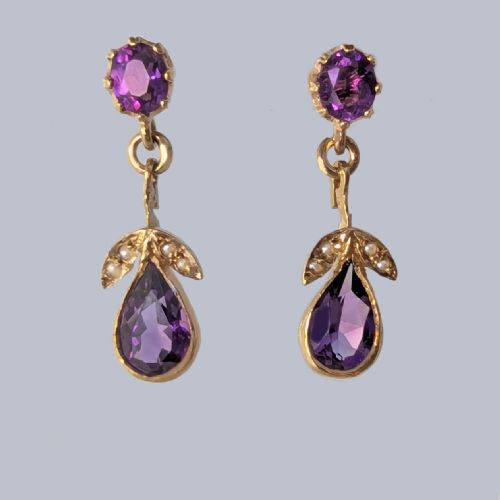
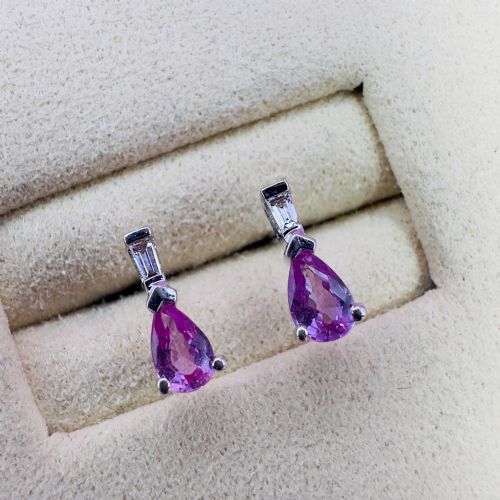
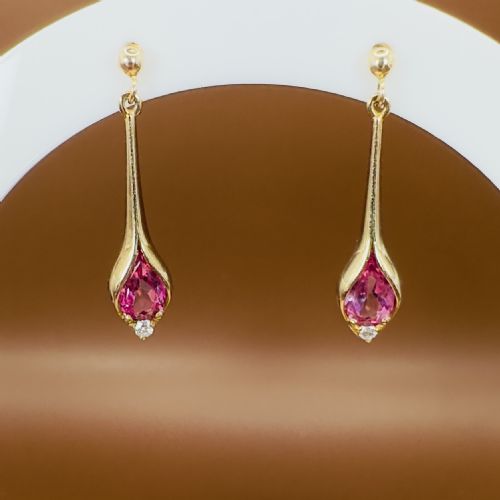


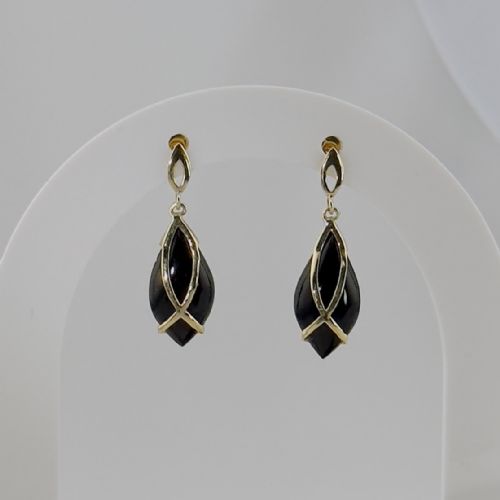


Gold Pear Cut Earrings
These gold pear cut earrings bring together centuries of gemstone cutting and precious metal work in drop and stud forms.
Gold Pear Cut Earrings
Gold pear cut earrings combine a teardrop gemstone profile with precious metal settings spanning the Victorian, Edwardian, Art Deco, and mid-century periods. These pieces appear frequently as drop earrings, dangling styles, and secure studs.
The selection ranges from early revival works to later twentieth-century designs. Buyers encounter yellow gold, white gold, and rose gold foundations paired with colourful gemstones and diamonds.
Materials and construction
Craftsmen construct these earrings using nine-carat, fourteen-carat, and eighteen-carat gold alongside platinum settings for specific white metal designs. Gemstones including amethyst, garnet, aquamarine, topaz, and ruby are shaped into pear cuts and secured with claws or bezels.
Many pairs incorporate supporting stones such as diamonds, seed pearls, and spinels to accent the central pear cut. Techniques span traditional hand-cutting of gems to precise metal casting and hallmarking.
The listings feature pieces spanning the Victorian era through the mid-twentieth century, utilising amethysts, garnets, aquamarines, and diamonds set in nine, fourteen, and eighteen-carat gold.
Quality factors
Superior examples demonstrate precision in the symmetry and facets of the pear cut gemstone, ensuring light reflects evenly across the stone. The clarity of accompanying diamonds and the depth of colour in stones like amethyst and ruby elevate the overall standard.
The integrity of the gold work, including secure stone settings and robust fastenings like screw-backs or sturdy posts, distinguishes finer pieces. Maker marks and crisp hallmarks also reflect the care taken during initial production.
The Gold Pear Cut Earrings Glossary
- Pear cut
- A modified brilliant-cut stone featuring a rounded end tapering to a single sharp point. This hybrid shape resembles a teardrop and maximises sparkle.
- Drop earrings
- Earrings that hang below the earlobe rather than sitting directly on the pierced hole. They often incorporate articulated joints for movement.
- Hallmark
- An official stamp struck into precious metal indicating its purity and origin. These marks provide evidence of metal standard and assay office.
- Screw-back
- A mechanical earring fastening utilising a threaded post and nut. This design secures non-pierced or pierced ears safely.
- Cabochon
- A gemstone shaped and polished with a smooth, convex surface rather than flat facets. This style highlights the natural colour of stones like opal and garnet.
Gold Pear Cut Earrings: Frequently Asked Questions
How do I care for gold pear cut earrings?
Clean your earrings gently using warm water, mild soap, and a soft cloth to protect softer gems like pearls and opals. Store each pair separately in a lined box to prevent scratching between stones.
Avoid wearing them during vigorous physical activities or exposing them to harsh household chemicals. Periodic checks by a jeweller ensure the pear cut stones remain secure in their settings.
How can I tell the period of an antique pair?
Examine the metal colour, the style of the stone cutting, and any accompanying hallmarks stamped on the gold. Victorian and Edwardian pieces often utilise distinct claw arrangements and older diamond cutting styles.
Comparing construction techniques with documented examples from the archive helps confirm dating. Consulting a specialist provides definitive verification of the era.
What is the difference between drop and stud earrings?
Stud earrings sit directly on the earlobe with minimal movement, whereas drop earrings extend downward. Drop styles incorporate links that allow the pear cut stones to sway.
Both forms utilise the same gold standards and gemstone varieties. The choice depends entirely on personal preference and how the piece drapes against the wearer.