

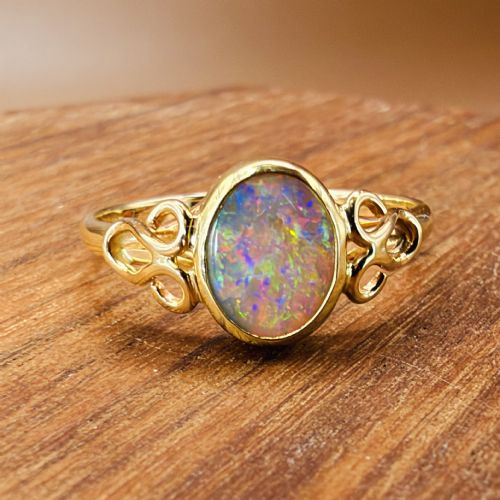
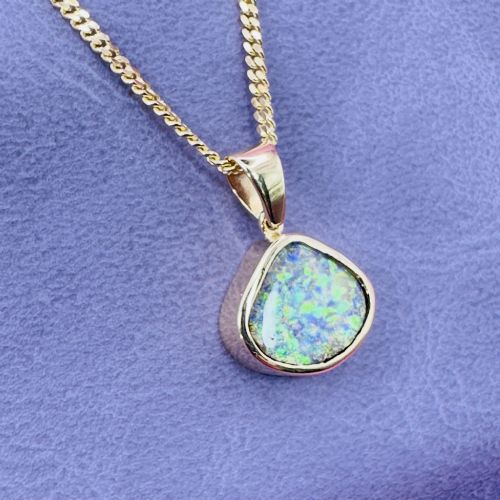


Gold Opal Solitaire
A gold opal solitaire brings together fire and gold, offering a single captivating stone set in yellow, white, or standard gold.
Gold Opal Solitaire
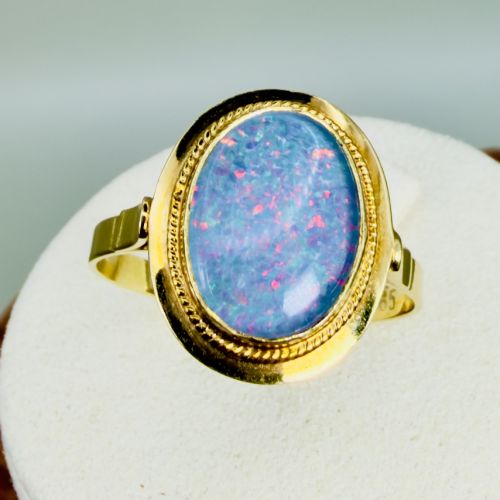
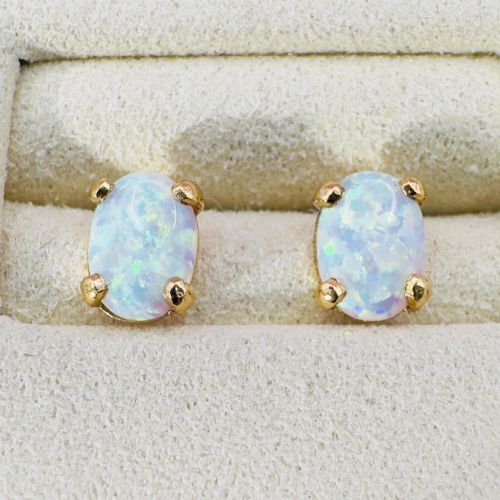
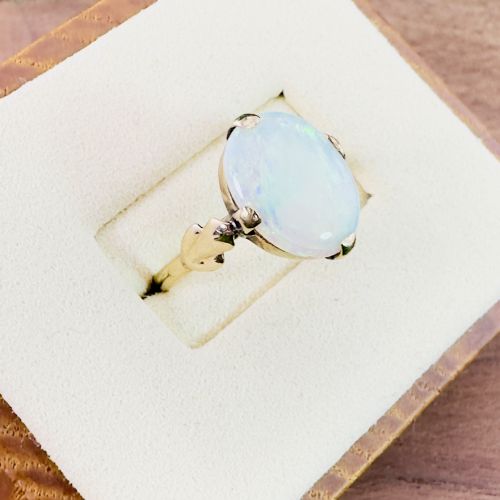
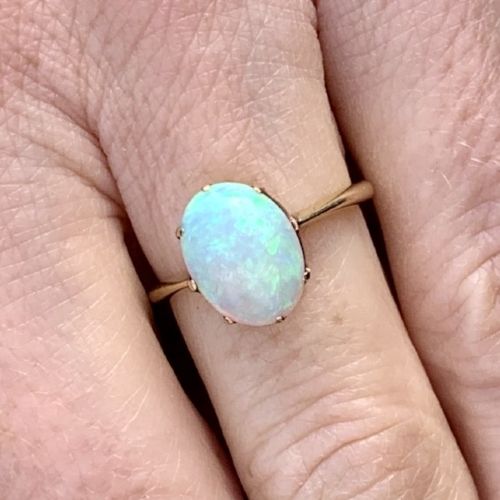
When you search for a gold opal solitaire, you encounter jewellery focused on a single prominent gemstone, most frequently seen as rings, pendants, and necklaces. These pieces span multiple eras, with Victorian, Edwardian, Art Deco, and mid-century examples appearing across the selection.
The most common forms on this page are rings featuring cabochon or oval cut stones, alongside pendant necklaces set in nine carat or eighteen carat gold. Stones range from white opals to dark black boulder opals, mounted in plain collets, claws, or bezels.
Materials and construction
Goldsmiths shape these pieces using nine carat, fourteen carat, and eighteen carat gold, working the metal into classic claws, bezels, and filigree frames. Stones are selected for their play of colour, often shaped into cabochons to display the internal flash.
Makers occasionally accent the central gem with small diamond clusters or twist details, though the solitaire remains focused on the single opal. Metalwork techniques vary from simple twentieth-century cast mounts to Victorian claw settings.
Gold Opal Solitaire Retail Price Guide 2026
Typical asking prices for gold opal solitaire among the pieces listed under this phrase on Sellingantiques today, from the lower quarter to the upper quarter. They describe what is for sale here now, not the wider market.
The listings span from Victorian and Edwardian eras through to the 1950s and 1960s, utilising nine carat, fourteen carat, and eighteen carat gold.
Distinctions in quality
Quality rests in the optical play of the stone, the stability of the mounting, and the weight of the gold used in the chassis. A superior opal displays a vibrant, shifting play of colour across the entire face rather than remaining dull in direct light.
Construction details separate standard production from finer work, visible in the snugness of a bezel or the clean lines of a claw setting. Heavier eighteen carat gold mounts generally indicate a more substantial piece of jewellery than lighter nine carat settings.
The Gold Opal Solitaire Glossary
- Solitaire
- A piece of jewellery featuring a single gemstone as the primary focus, without accompanying side stones. This setting draws the eye entirely to the central opal.
- Cabochon
- A gemstone shaped and polished with a smooth, rounded surface rather than faceted edges. This style suits opals by highlighting their internal play of colour.
- Bezel
- A method of stone setting where a thin metal collar wraps entirely around the girdle of the gem. It holds the stone securely while giving a clean outline.
- Boulder opal
- An opal found embedded in its host ironstone matrix, often showing dark body tones and bright flashes. The natural backing adds strength and depth to the stone.
- Filigree
- Delicate ornamental work consisting of twisted wire soldered together in open patterns. This technique appears on vintage pendant necklaces and frames.
Gold Opal Solitaire: Frequently Asked Questions
What is a gold opal solitaire?
A gold opal solitaire is a ring or pendant featuring one standalone opal set in gold metal. The design keeps attention on the central stone.
These pieces use yellow or white gold in various purities, holding cabochon cut opals that display shifting spectral colours.
How do I care for my opal?
Opals contain water within their structure and require gentle handling to prevent drying out or cracking. Avoid harsh chemicals and ultrasonic cleaners.
Store your jewellery away from extreme heat sources and direct sunlight for extended periods to preserve the stone.
How do I date a piece?
Dating relies on stylistic clues like Victorian claw settings, Art Deco geometric lines, or mid-century modernist forms. Hallmarks stamped inside the band also help identify the metal purity and origin.
Comparing the mount style to known periods provides a reliable estimate of the decade of manufacture.
Can I wear these every day?
Opals have a moderate hardness compared to diamonds, meaning they demand care during daily wear. Rings benefit from being removed before heavy manual work.
Pendants and earrings experience less physical impact, making them simpler to wear regularly without worry of scratching the stone.