

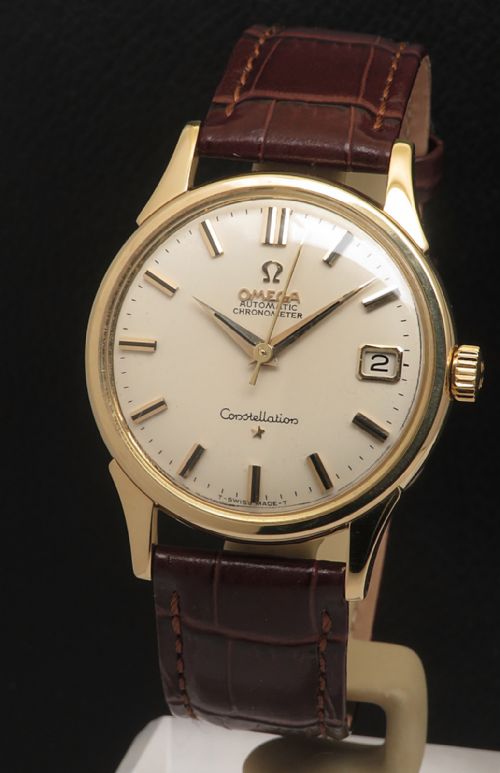


Gold Omega Automatic
When collectors search for a gold omega automatic, they seek mid-century mechanical wristwatches combining precious metal cases with self-winding movements.
Gold Omega Automatic
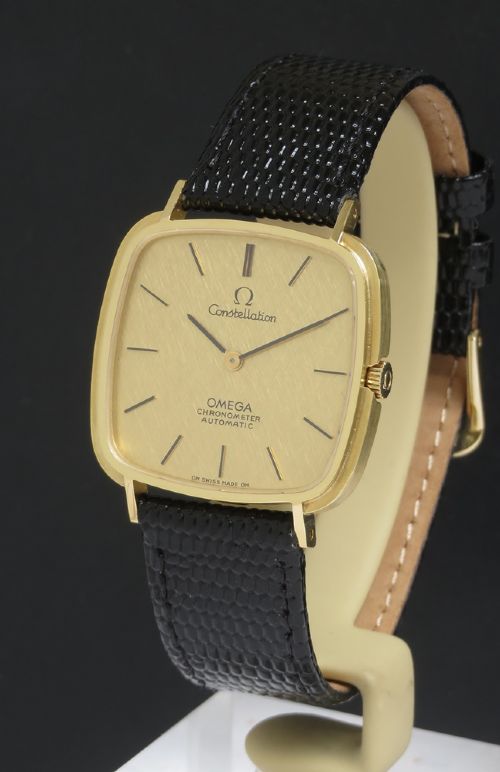
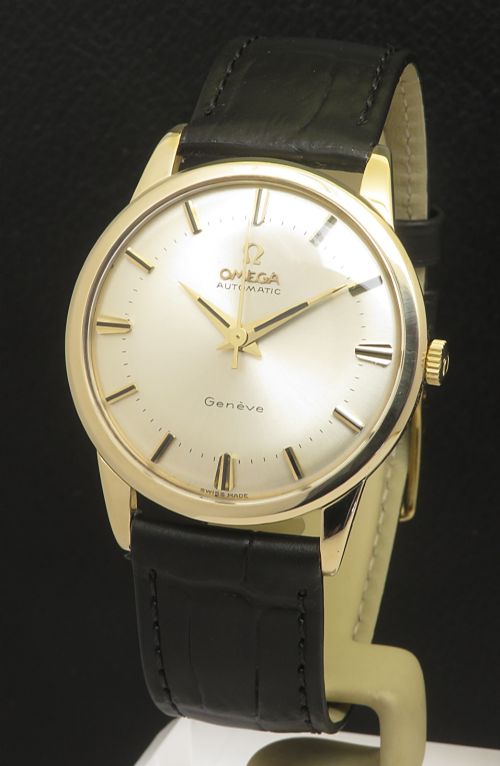
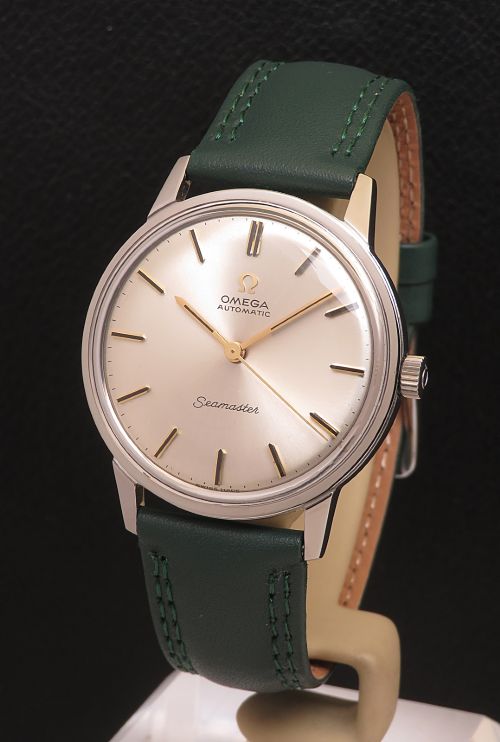
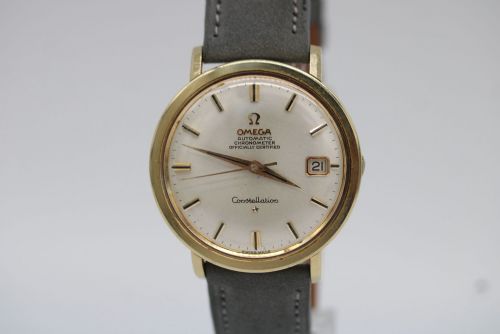
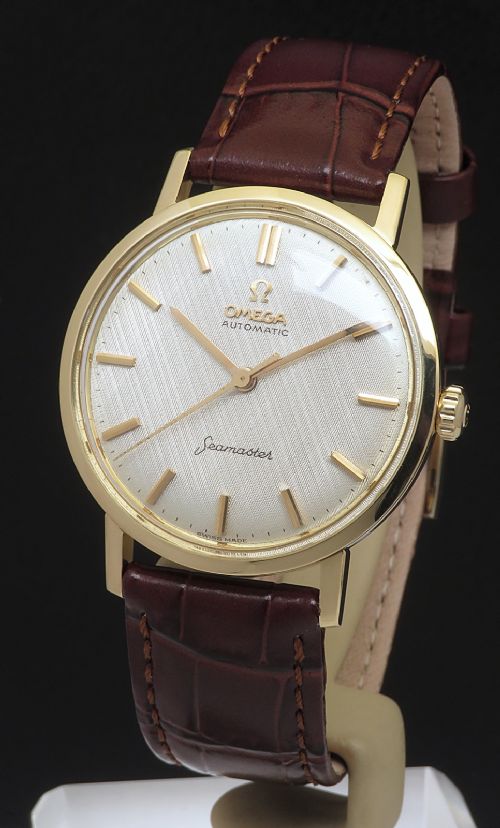
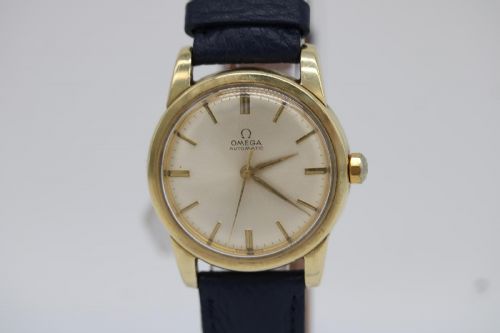
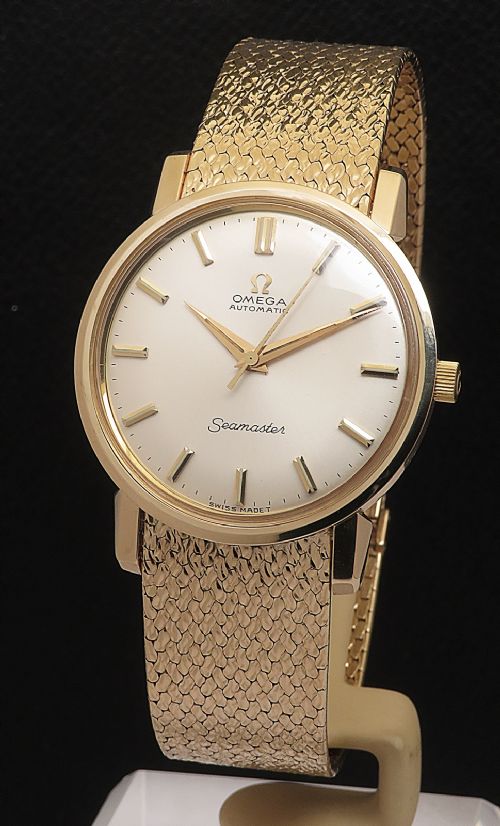
A gold omega automatic encompasses mid-century gents wristwatches produced primarily across the 1950s and 1960s. These pieces include well-known lines such as the Seamaster, Constellation, Geneve, and DeVille.
The horological output spans solid 9ct, 14ct, and 18ct yellow and rose gold, alongside gold-plated and gold-filled variations. Most examples adopt mid-century modern styling, housing automatic calibres ranging from early bumper movements to later rotor-wound mechanisms.
How they were made
Cases were forged from solid precious metals or plated over base metals, paired with acrylic glass crystals protecting the dials. Movements relied on precision mechanical engineering, utilising oscillating weights or bumper springs to wind the mainspring automatically through wrist movement.
Dials received applied metal markers, intricate text printing, and specialised finishes like champagne tones or two-tone configurations. Straps were typically fashioned from genuine leather or integrated solid gold mesh bracelets.
Listings feature Swiss-made automatic movements housed in solid 9ct, 14ct, and 18ct gold, alongside gold-plated finishes and acrylic crystals.
What varies in quality
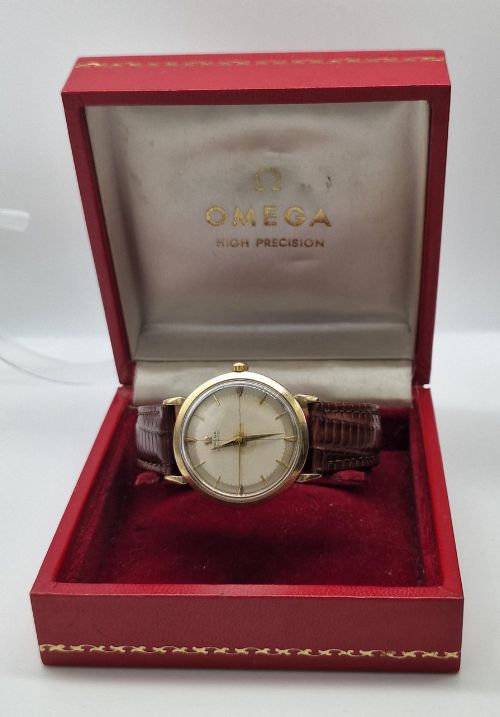
The grade of a gold omega automatic depends heavily on the purity and weight of the metal used for the case, with solid 18ct gold models sitting at the upper echelon. Originality of components - such as signed crowns, matching boxes, papers, and untouched dials - substantially elevates the desirability of a specimen.
Movement preservation and mechanical complexity, such as chronometer certification or early bumper calibres, separate standard dress variants from higher-tier horological examples.
Omega
The Gold Omega Automatic Glossary
- Automatic
- A self-winding mechanical watch movement that uses a rotating rotor to wind the mainspring using the wearer's wrist motion. This system eliminated the need for daily manual winding.
- Bumper automatic
- An early form of self-winding movement where the rotor swings back and forth within a restricted arc, hitting spring buffers. Collectors prize these mechanical predecessors for their distinct tactile feedback on the wrist.
- Chronometer
- A high-precision watch movement that has passed rigorous accuracy tests conducted by an official observatory. These pieces represent the pinnacle of mid-century timekeeping reliability.
- Gold-plated
- A manufacturing method where a thin layer of gold is bonded to a base metal core such as stainless steel. This technique provided the visual appeal of precious metal at a lower production cost.
- Pie pan
- A distinctive multi-faceted dial design with a sloped edge resembling an inverted kitchen utensil, found primarily on high-end Constellation models.
Gold Omega Automatic: Frequently Asked Questions
What is a bumper automatic movement?
A bumper automatic is an early self-winding mechanism where the weighted rotor does not spin a full three hundred and sixty degrees. Instead, it swings back and forth within an arc, hitting internal springs that give a gentle tap to the wrist.
This technology bridges manual-winding watches and fully rotor-driven automatic calibres found in later mid-century timepieces.
How do I identify the production year?
Production dates are typically determined by examining the serial number engraved on the internal movement mechanism against manufacturer production ledgers. Case backs may also contain hallmarks or reference numbers that narrow down the active manufacturing period.
Many vintage pieces from the nineteen fifties and sixties also feature accompanying original paperwork that records the exact sale date.
Are these watches suitable for daily wear?
These vintage mechanical pieces can be worn regularly provided they receive appropriate care and periodic professional servicing. Acrylic crystals and mid-century gold cases require mindfulness regarding water exposure and hard impacts.
Pairing the watch with a quality leather strap or a secure solid gold bracelet ensures comfortable everyday use.
What distinguishes a Seamaster from a Constellation?
The Seamaster line was originally conceived as a robust, water-resistant watch suited for versatile daily wear across various environments. Constellation models were positioned as the flagship dress and high-precision line, often featuring chronometer-grade movements and elevated case finishing.
Both families shared advanced automatic calibres but targeted different segments of the mid-century market.