



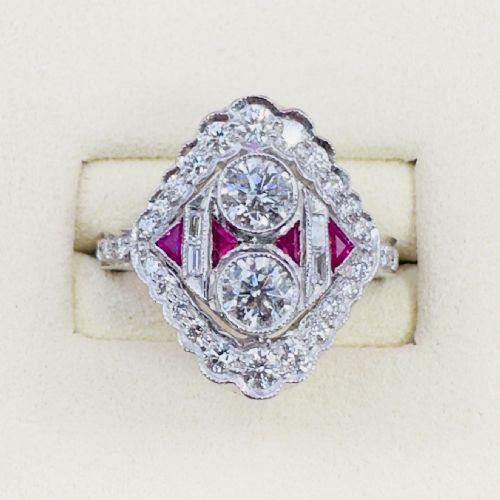

Gold Marquise Ring
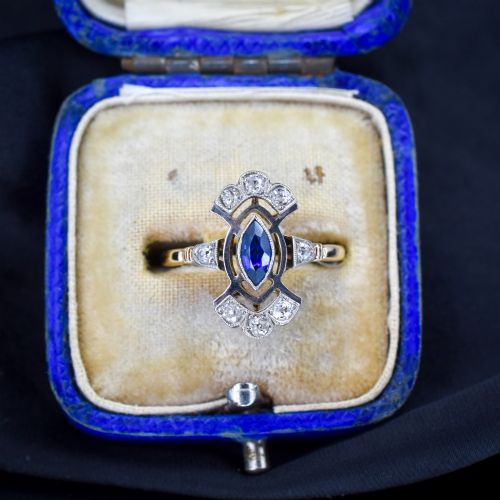
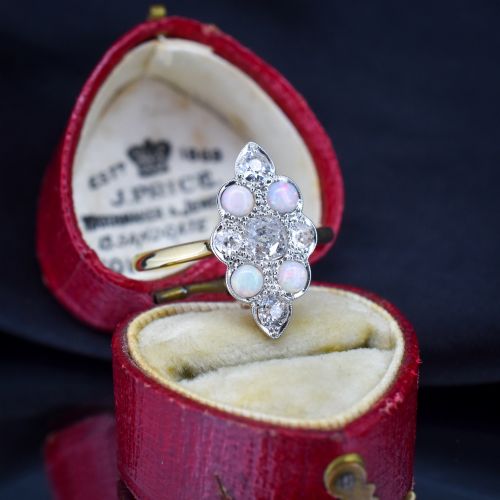
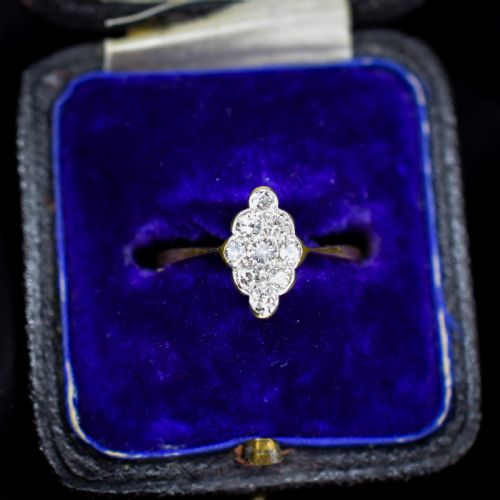
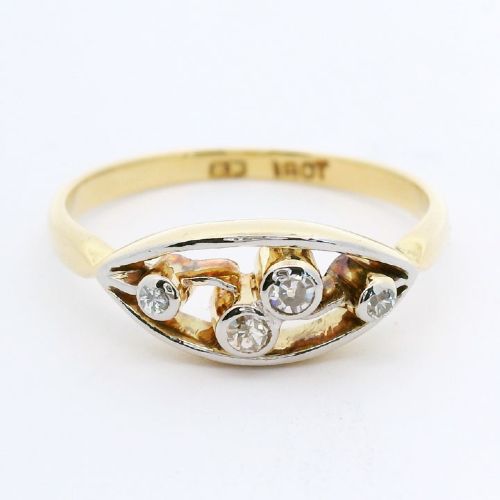
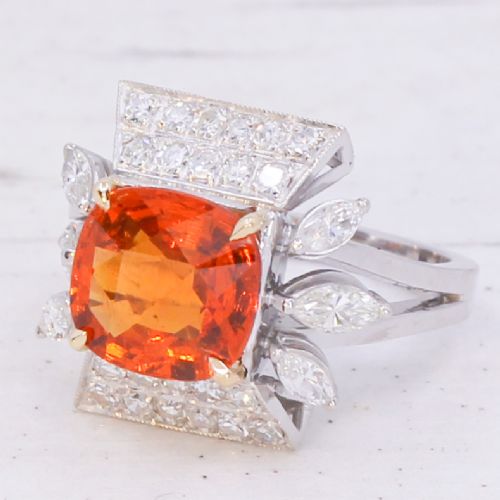
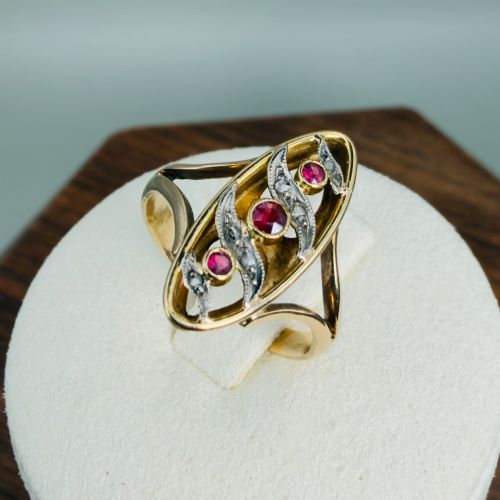
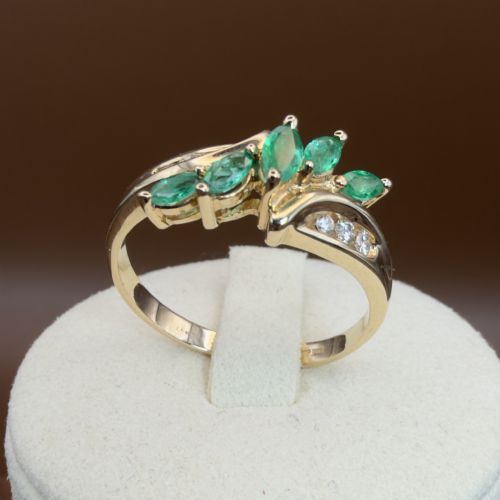
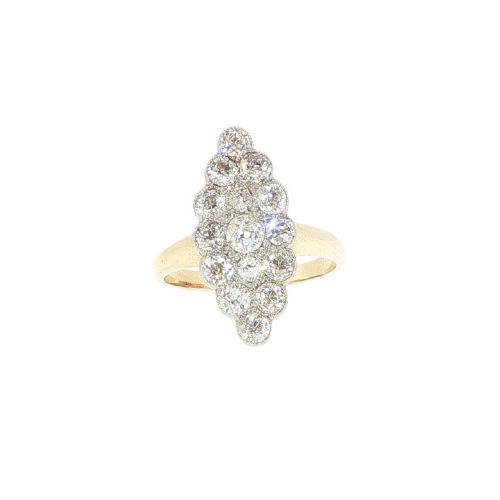
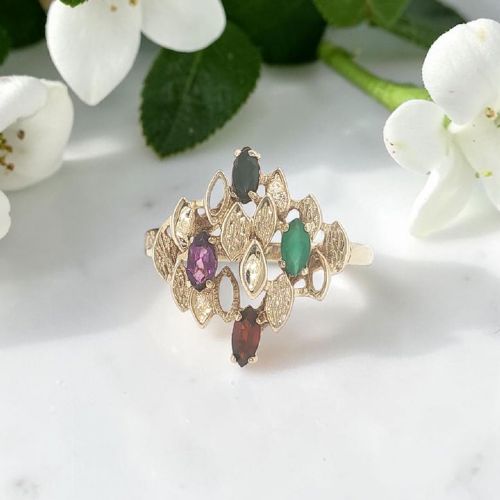
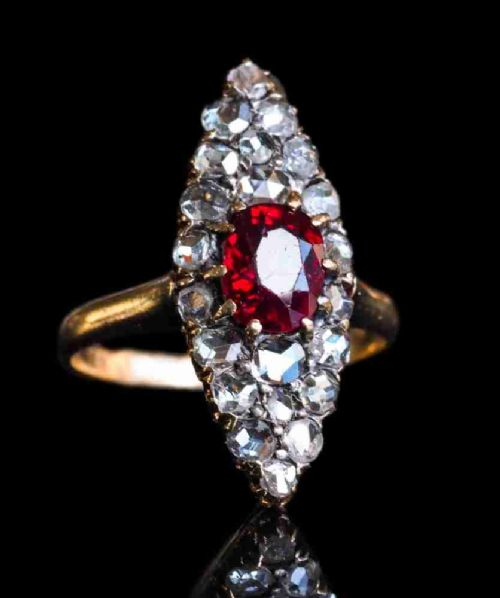
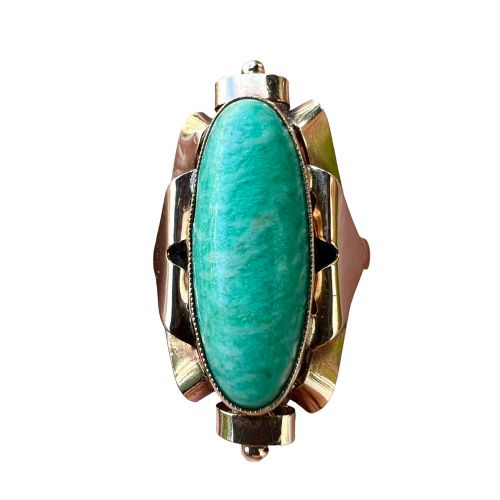
A gold marquise ring stretches across the finger with an elongated boat shape set with diamonds, rubies, sapphires, and emeralds.
Gold Marquise Ring
A gold marquise ring sits low upon the hand, employing a pointed boat or navette profile that creates a distinct visual presence. The form dates across multiple periods, with Victorian, Edwardian, and Art Deco examples appearing alongside mid-century cocktail iterations.
Most pieces met on this page combine yellow gold, white gold, or platinum with clusters of old cut diamonds flanked by coloured gemstones such as rubies, sapphires, and emeralds. These rings function primarily as dress or cocktail jewellery, designed to draw the eye along the length of the hand.
Materials and Construction
Metals span 18ct yellow gold, 18ct white gold, platinum, and occasionally 9ct or 14ct variations. Jewellers combined these metals to support intricate multi-stone settings, pairing platinum with yellow gold to accentuate the brightness of old cut diamonds.
Gemstone selections incorporate diamonds alongside natural sapphires, Burmese rubies, emeralds, pearls, opals, and coral. Stones are typically arranged in cluster configurations that trace the pointed contour of the navette outline.
Gold Marquise Ring Retail Price Guide 2026
Typical asking prices for gold marquise ring among the pieces listed under this phrase on Sellingantiques today, from the lower quarter to the upper quarter. They describe what is for sale here now, not the wider market.
Listings span the late Victorian period, Edwardian era, Art Deco years, and mid-century modern designs, executed in yellow gold, white gold, and platinum.
Judging Quality
The refinement of the mounting separates standard work from superior examples, particularly where platinum prongs secure close-set clusters of old cut diamonds. Proportion dictates the grace of the silhouette, ensuring the pointed ends taper symmetrically without bulk.
Gemstone matching and origin contribute significantly to the distinction of a piece, as seen in certified natural rubies, unheated sapphires, and uniform diamond selections. The integration of the band to the central cluster reveals the care taken by the original workshop.
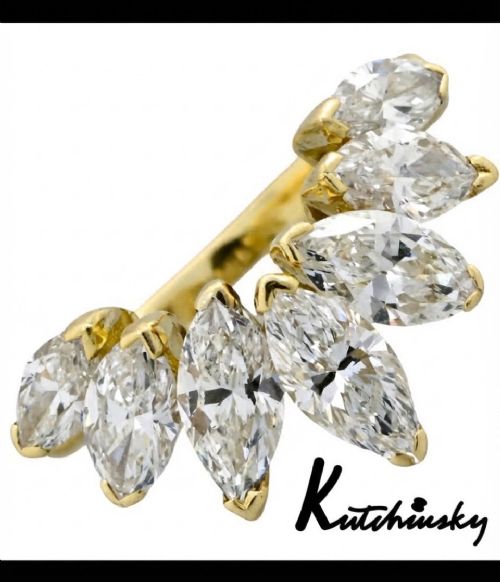
Kutchinsky
The Gold Marquise Ring Glossary
- Navette
- A boat-shaped gemstone setting or ring design with pointed ends, synonymous with the marquise form.
- Old cut
- A diamond facet style featuring a smaller table, higher crown, and open culet, typical of pieces predating the modern brilliant cut.
- Cluster ring
- A ring design featuring a central stone surrounded by a border of smaller gems.
- Cocktail ring
- A large, prominent ring worn to catch attention, frequently set with substantial gemstones and diamonds.
- Platinum
- A dense, durable white metal utilised in Edwardian and Art Deco mountings to hold delicate stone settings securely.
Gold Marquise Ring: Frequently Asked Questions
What is a gold marquise ring?
A gold marquise ring is an elongated cluster ring shaped like a pointed boat or navette. This distinctive silhouette spans Victorian, Edwardian, Art Deco, and mid-century periods.
The design places multiple gemstones along a central axis, making the hand appear slender and displaying considerable sparkle through varied diamond and coloured stone combinations.
How do I date an antique gold marquise ring?
Dating relies on material combinations, gemstone cuts, and hallmark evidence where present. Edwardian and Victorian pieces frequently utilise old cut diamonds set in yellow gold with platinum tops.
Art Deco examples introduce geometric precision in white gold or platinum, while mid-century iterations feature bolder cocktail styling with alternative gem varieties like garnets or coral.
Are these rings suitable for everyday wear?
Many buyers wear these pieces daily, though the elongated navette shape requires some care regarding knocks and catches. Older settings with fine claws or delicate shoulders benefit from occasional inspection by a jeweller to ensure stones remain secure.
Removing the ring during heavy manual tasks preserves the integrity of the gold work and protects softer gems like pearls, opals, or emeralds.
What stones are typically set in these rings?
Diamonds form the primary brilliance in these designs, often paired with deep blue sapphires, red rubies, and green emeralds. Victorian and Edwardian examples also incorporate pearls, turquoise, and opals.
Later mid-century pieces expand the palette to include orange garnets, amethyst, aventurine, and coral within yellow or white gold settings.