


Gold Gilt Crystal
Gold gilt crystal pieces combine brilliant cut glass with lustrous metallic mounts to illuminate rooms with historical elegance.
Gold Gilt Crystal
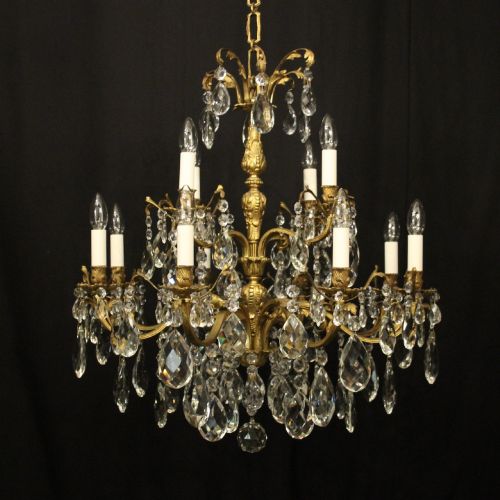
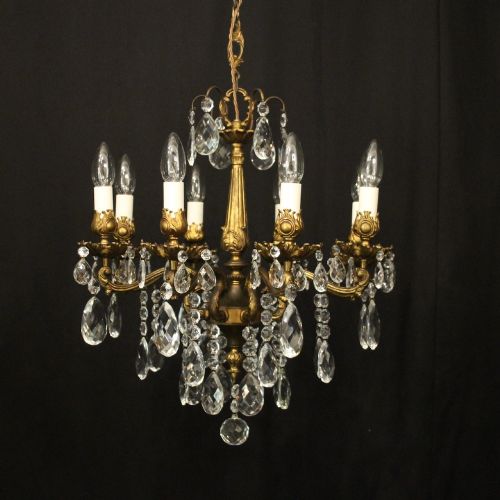
Gold gilt crystal encompasses lighting and decorative objects designed to reflect light through polished glass and gilded frames. Buyers seeking gold gilt crystal encounter nineteenth and twentieth-century items, predominantly originating from French and Italian workshops.
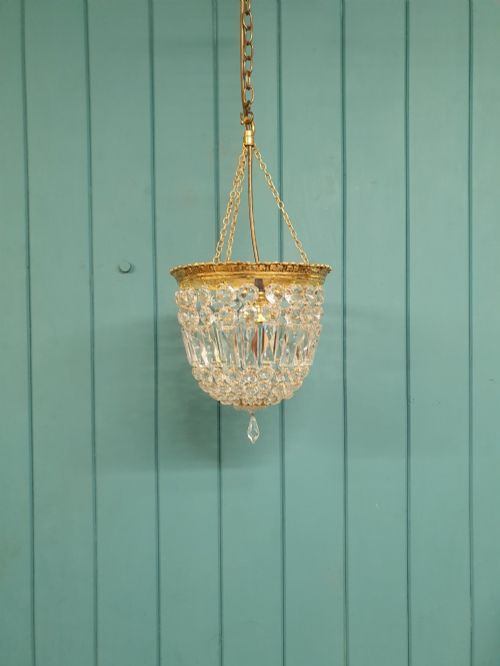
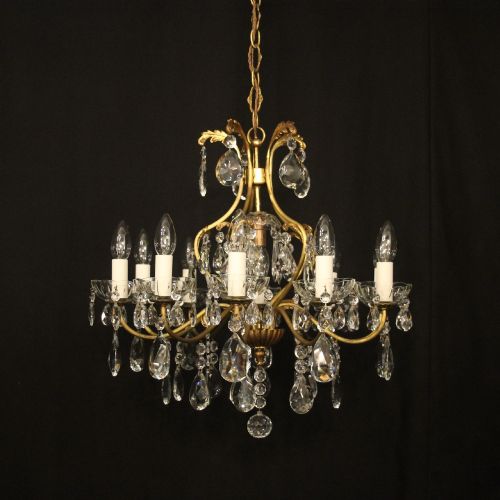
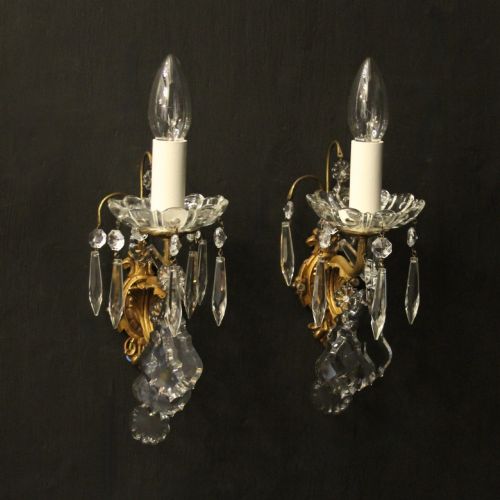
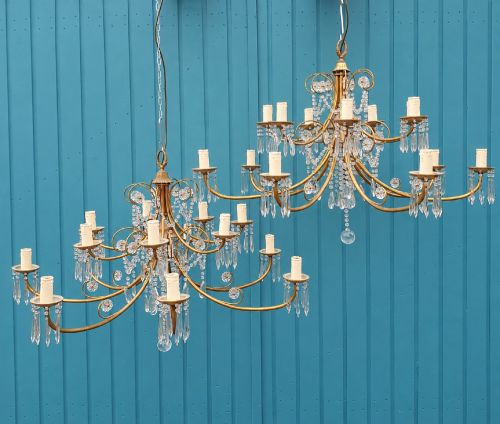
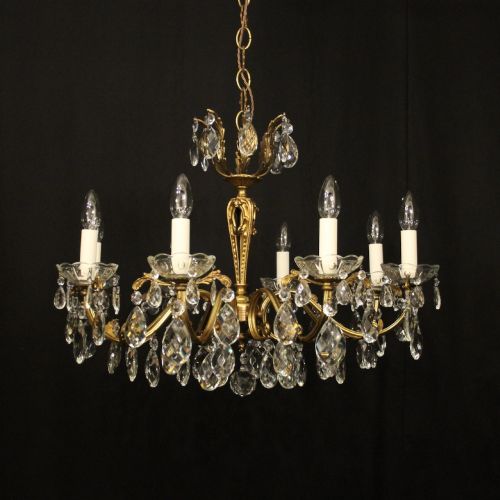
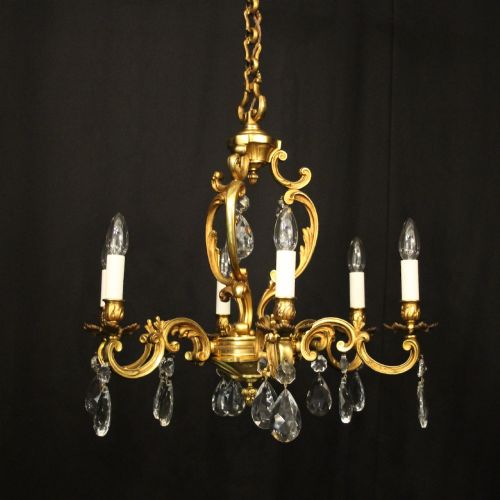
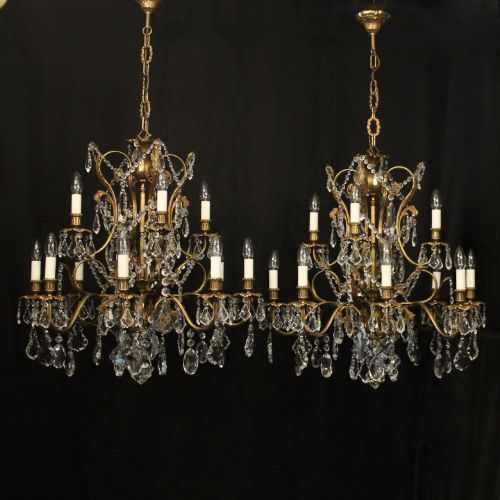
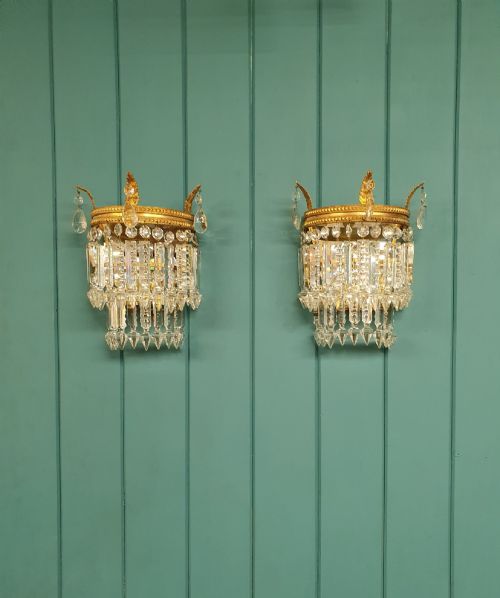
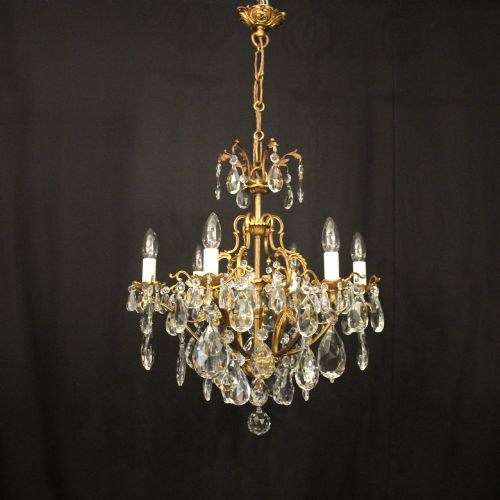
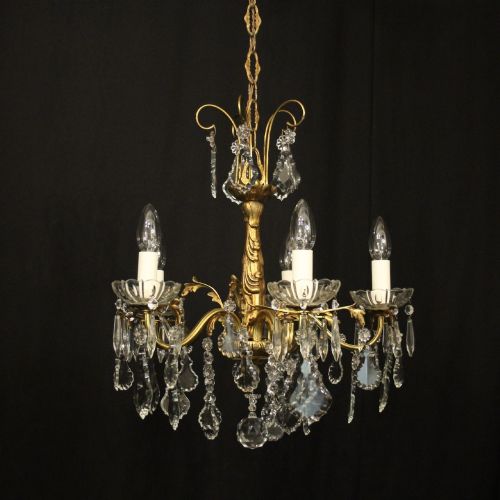
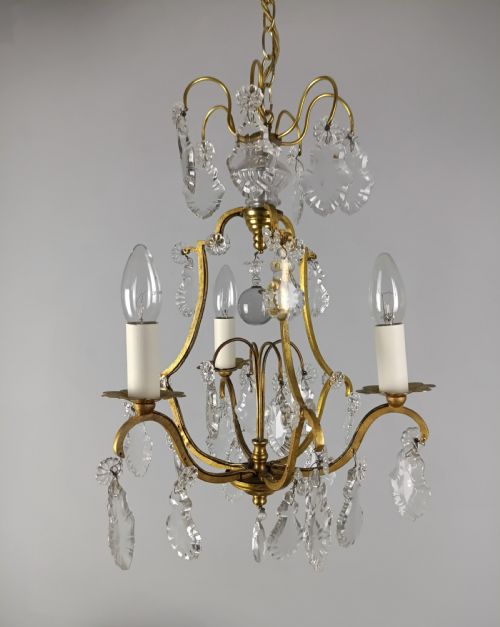
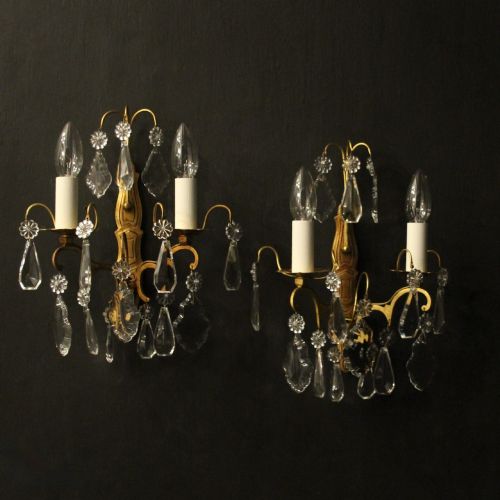
The selections on this page feature elaborate chandeliers, wall lights, and candelabras alongside sculptural centrepieces and table lamps. French Rococo revival designs and Italian Florentine forms dominate the available lighting fixtures.
Smaller items such as candlesticks and regulator clocks complete the spectrum of domestic metalwork and glass assemblies. These objects range from compact wall sconces to multi-tiered chandeliers spanning several arms.
Materials and construction
Makers constructed these pieces using cast brass, bronze, and gilt metal frameworks combined with cut glass and crystal components. Gilded finishes were applied to metal surfaces to provide a durable golden lustre that complemented the clear or tinted glass drops.
Cut glass crystal elements were shaped and faceted by hand to maximise light refraction across chandeliers and wall sconces. Metal armatures were secured with pinned joints and threaded screws to support the heavy weight of suspended crystal pendants and drops.
Gold Gilt Crystal Retail Price Guide 2026
Typical asking prices for gold gilt crystal among the pieces listed under this phrase on Sellingantiques today, from the lower quarter to the upper quarter. They describe what is for sale here now, not the wider market.
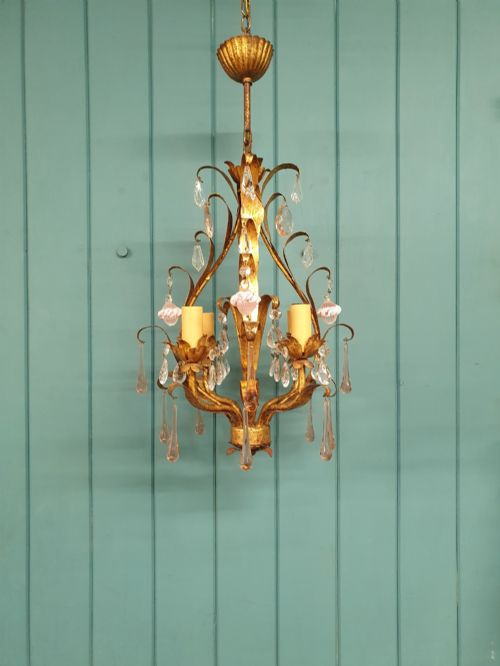
Several chandeliers hide cheerful pink glass drops and mischievous winged cherubs among their glittering crystal cascades.
Assessing quality
Quality in these objects rests upon the depth of the metal chasing and the clarity of the crystal components. Superior pieces exhibit crisp detail in cast bronze or brass mounts, where ornamental motifs remain sharp and well-defined.
The complexity of the glass cutting and the uniformity of the crystal drops distinguish finer items from standard productions. Heavier gauge metal frames and integrated figural elements, such as cherubs or winged cupids, indicate higher manufacturing ambition.
Ansonia New York
The Gold Gilt Crystal Glossary
- Ormolu
- A golden metallic finish applied to bronze mounts, historically achieved through mercury gilding techniques. This treatment creates a rich surface appearance on nineteenth-century decorative metalwork.
- Birdcage chandelier
- A lighting form constructed with an internal cage-like metal frame from which numerous crystal drops and glass strings are suspended. The structure tapers toward the top and bottom.
- Regulator clock
- A precision pendulum clock housed within a glass and gilt bronze or brass case. These timepieces display the internal mechanical movement clearly.
- Toleware
- Painted tin or metalware utilised in specific chandelier and wall light components. It often appears alongside crystal drops to introduce coloured accents.
- Candelabra
- A branched candlestick designed to hold multiple candles simultaneously. These pieces frequently incorporate crystal pendants hanging from the bobeches.
Gold Gilt Crystal: Frequently Asked Questions
How do I clean gold gilt crystal?
Dust metal frames gently with a soft cloth and wash crystal pendants individually using warm water and mild soap. Avoid harsh chemical cleaners that strip the gilded surface from the brass or bronze armature.
Dry every glass component thoroughly before reattaching it to the frame to prevent moisture damage. Ensure the lighting fixture is disconnected from the electrical supply before undertaking any maintenance.
Were these chandeliers electrified originally?
Most nineteenth-century and early twentieth-century lighting fixtures were designed exclusively for candles or gas before later conversion to electricity. Rewiring is standard for older chandeliers to meet modern safety standards.
Professional electricians can adapt internal wiring without altering the exterior gilt metal and crystal structure. This preserves the historical integrity of the metalwork while ensuring safe domestic operation.
How do I date a gilt bronze piece?
Dating relies upon stylistic markers, casting techniques, and the composition of the metal alloys used in the frame. Nineteenth-century examples often display heavier bronze casting with deeper hand-chasing compared to later twentieth-century productions.
Examination of assembly methods, such as the type of screws and nuts securing the arms, provides further chronological context. Maker marks or stamps on the bronze chassis help narrow down the period of manufacture.