
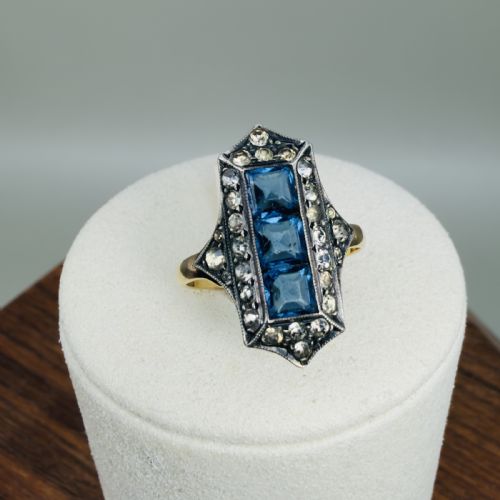


Gold Geometric Sapphire Ring
A gold geometric sapphire ring brings together sharp architectural lines and vibrant blue stones, offering distinct period character for everyday wear.
Gold Geometric Sapphire Ring
A gold geometric sapphire ring combines the sharp symmetry of the Art Deco style with the deep blue hues of natural sapphires, framed by contrasting diamonds and precious metals. When hunting for a gold geometric sapphire ring, you are most likely to encounter pieces originating from the 1920s and 1930s, alongside later revivals.
The silhouettes span cluster, plaque, target, and panel configurations, frequently incorporating calibre cut stones that sit flush to create clean angles. These designs rely on meticulous placement of stones to form squares, rectangles, and concentric patterns that define the aesthetic of the period.
Originating predominantly from French workshops and British makers of the early twentieth century, these rings reflect a major shift away from flowing Victorian curves toward rigid geometric discipline. Platinum tops paired with 18ct white or yellow gold shanks are a frequent structural choice among the surviving examples.
Materials and Construction Techniques
Craftsmen utilised 18ct white gold, yellow gold, rose gold, and platinum, often combining platinum settings with gold shanks to ensure secure, bright mountings for the stones. This dual-metal approach allowed artisans to present a brilliant white face to the gems while maintaining the warmth and durability of gold underneath.
The stones themselves include calibre cut sapphires shaped specifically to fit tight channel settings, alongside old cut diamonds and occasional white paste stones. Hand-cut faceting and precise bezel or cluster arrangements anchor the stones firmly within their angular metal frameworks.
Some Edwardian workshops secretly used silver for the top faces of their rings because it tarnished slower against skin oils than base alloys.
Evaluating Quality and Execution
Quality rests heavily on the precision of the stone cutting and the tightness of the geometric metalwork. Superior pieces display perfectly matched calibre cut sapphires with uniform colour saturation that align seamlessly without visible gaps in the setting.
The sophistication of the handiwork separates standard productions from masterworks, particularly in how finely the platinum or white gold is pierced and milled around the diamonds. Original structural integrity and minimal wear to the delicate millgrain edges also dictate the standing of an individual piece.
The Gold Geometric Sapphire Ring Glossary
- Calibre cut
- A gemstone cut specifically and geometrically to fit a precise channel or setting without standard faceting rules. This technique creates continuous lines of colour in Art Deco jewellery.
- Plaque ring
- A ring featuring a flat, often circular or rectangular face covered in stones and intricate piercing. It sits low on the finger and showcases elaborate geometric metalwork.
- Target ring
- A concentric ring design featuring a central stone surrounded by one or more circular or square halos of contrasting gems. This layout mimics the appearance of a target.
- Old cut diamond
- A diamond cut by hand before modern machinery standardised proportions, typically featuring a smaller table and larger culet. These stones catch candlelight with a softer, broader flash than modern brilliant cuts.
- White paste
- A dense, highly polished glass composition used historically as a diamond substitute. It offers high refractive brilliance in antique settings.
Gold Geometric Sapphire Ring: Frequently Asked Questions
How do I care for my ring?
Clean your ring gently using warm soapy water and a soft brush, avoiding harsh chemical dips that can damage antique settings. Regular professional checks ensure the old claws and platinum settings remain secure.
Store the piece separately from other hard jewellery to prevent scratching the softer gold shanks and delicate stone facets.
Are these rings suitable for daily wear?
Many examples are robust enough for everyday use, provided they are inspected periodically by a jeweller for loose stones. Platinum and 18ct gold offer good durability against normal daily friction.
Consider removing the ring during heavy manual work or strenuous exercise to protect the precise geometric metalwork and channel-set sapphires.
How can I tell an original period piece?
Look for authentic construction methods such as hand-cut old diamonds, calibre cut sapphires, and combined platinum-on-gold fabrication typical of the early twentieth century. Maker marks and traditional hallmarking stamped inside the shank also provide clues to the origin.
Wear patterns should match the stated age, showing natural softening of sharp edges rather than modern casting textures.
What is the difference between Edwardian and Art Deco?
Edwardian jewellery relies on lace-like platinum work, garlands, and flowing botanical motifs with a predominantly white and diamond-focused palette. Art Deco shifts sharply toward rigid geometry, strong colour contrasts, and symmetrical abstracts.
Transition pieces often blur these boundaries, retaining delicate milgrain work while adopting bolder, angular stone arrangements.