



Gold Gemstone Locket
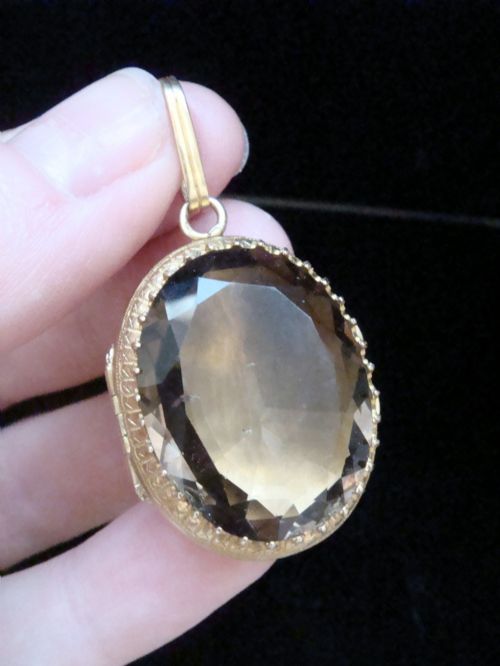
A gold gemstone locket is a hinged pendant designed to hold a miniature portrait or keepsake, combining precious metalwork with coloured stones.
Gold Gemstone Locket
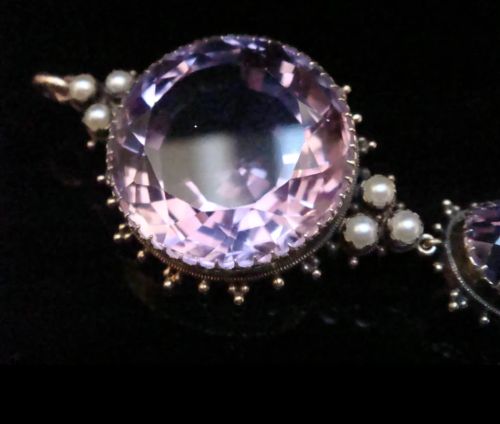
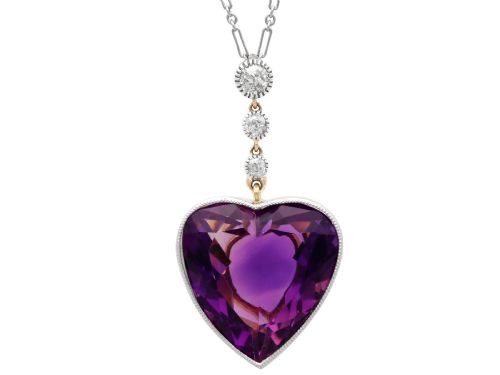
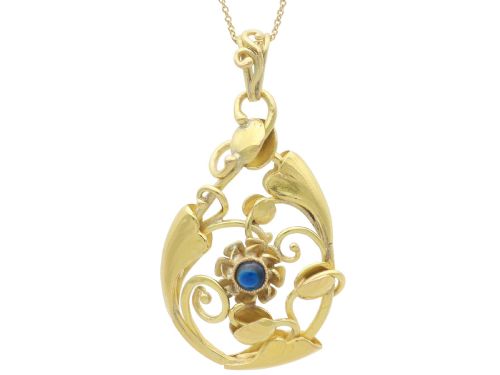
When searching for a gold gemstone locket, buyers encounter jewellery from the Victorian, Edwardian, and Art Nouveau periods. These pieces combine precious metals such as 9ct, 14ct, and 18ct yellow gold with stones including amethyst, sapphire, emerald, garnet, and tourmaline.
The forms range from heart-shaped pendants and sunburst motifs to floral designs incorporating pearls and seed pearls. Most examples date from the nineteenth and early twentieth centuries, spanning Victorian, Edwardian, Belle Epoque, and Arts & Crafts styles.
The selection on this page shows a strong representation of amethyst set in yellow gold, alongside sapphire, ruby, and moonstone variants. Pieces function as both lockets and pendants, often featuring articulated drops or integrated necklaces.
Materials and construction
Goldsmiths constructed these pieces using yellow gold in various carat weights, ranging from 9ct to high carat standards, combined with bezel or prong settings for the central gems. Amethysts, sapphires, garnets, and emeralds are frequently accompanied by seed pearls or small diamonds to accent the design.
Techniques from the period include detailed chased or repoussé work in gold, particularly visible in French sunburst and floral motifs. Hinged compartments and secure glass bezels were integrated into the pendant bodies to preserve enclosed mementos.
Gold Gemstone Locket Retail Price Guide 2026
Typical asking prices for gold gemstone locket among the pieces listed under this phrase on Sellingantiques today, from the lower quarter to the upper quarter. They describe what is for sale here now, not the wider market.
Listings feature Victorian, Edwardian, and Art Nouveau periods, with gold karats spanning 9ct, 14ct, and 18ct alongside diverse gemstones.
Distinctions in quality
Quality in these pieces rests upon the depth of the metalwork and the saturation of the chosen gemstones, such as deep purple amethysts or vivid blue sapphires. Heavier gauge gold and crisp detailing in styles like Art Nouveau or Arts & Crafts separate finer examples from standard production.
The integrity of the hinged compartment and the original setting of the stones also dictate the standard of survival. Superior items retain their original glass inserts and secure latches without replacement parts.
John Paul Cooper
The Gold Gemstone Locket Glossary
- Carat
- A unit of measurement expressing the proportion of gold in an alloy, where 24 carats represents pure gold. Lower carat marks such as 9ct or 14ct indicate higher alloy content for increased durability in everyday jewellery.
- Bezel setting
- A method of holding a gemstone in place by means of a narrow metal strip that encircles the stone's perimeter. This technique protects the girdle of the gem and provides a smooth outline.
- Repoussé
- A metalworking technique where the metal is hammered from the reverse side to form a raised design in relief. It allows intricate floral and sunburst patterns to stand out on the surface of the locket.
- Seed pearl
- A very small natural or saltwater pearl, often pierced and threaded onto wire or glued into position. They are frequently clustered around central coloured stones in Victorian and Edwardian jewellery.
Gold Gemstone Locket: Frequently Asked Questions
How were these lockets used historically?
Historically, owners placed miniature portraits, locks of hair, or dried flowers inside the internal compartment of the locket. They were worn close to the heart on chains or ribbons as personal tokens of remembrance.
The combination of precious stones and concealed spaces allowed the wearer to display outward beauty while keeping private sentiments hidden.
How do I distinguish Victorian from Edwardian pieces?
Victorian pieces often feature heavier gold weights, substantial amethysts, and dense ornamentation such as closed-back settings or hair compartments. They date from the nineteenth century and tend to display robust, romantic motifs.
Edwardian and Belle Epoque pieces, produced after nineteen hundred, generally utilise lighter frameworks, platinum accents, and brighter stones like diamonds and sapphires to achieve an airy aesthetic.
How should I care for an antique gold locket?
Clean these items gently with a soft dry cloth, avoiding harsh chemical dips that can damage softer stones like pearls or amethysts. Store them individually to prevent scratching the gold surfaces and gemstone facets.
Check the hinge and clasp mechanisms periodically to ensure the security of the internal compartment and the safety of the pendant when worn.