


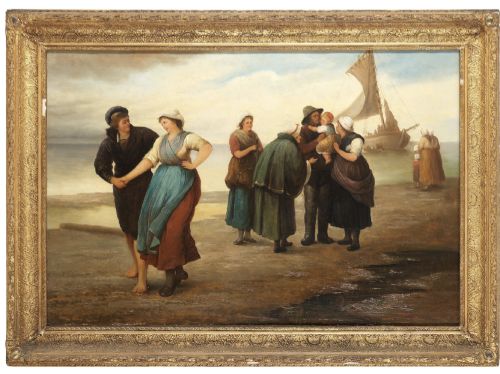
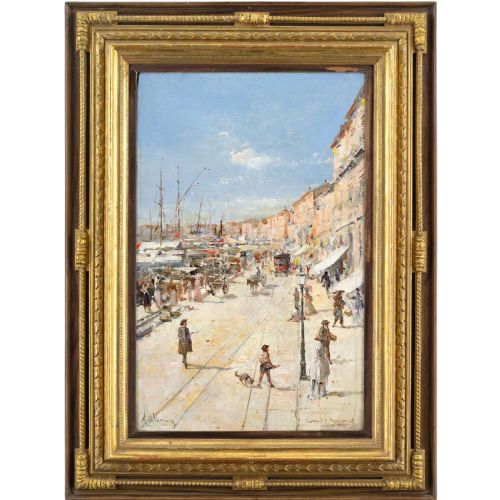

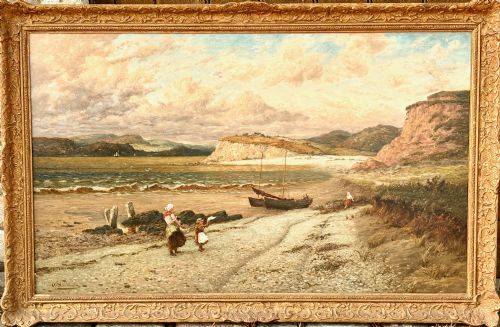

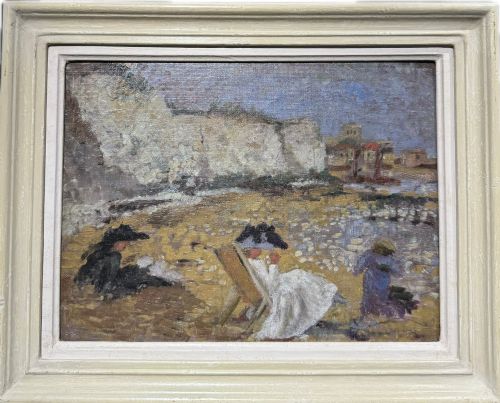
Gold Framed Coastal Landscape
Gold framed coastal landscape works bring the sea indoors, pairing maritime views with period gilt surrounds.
Gold Framed Coastal Landscape
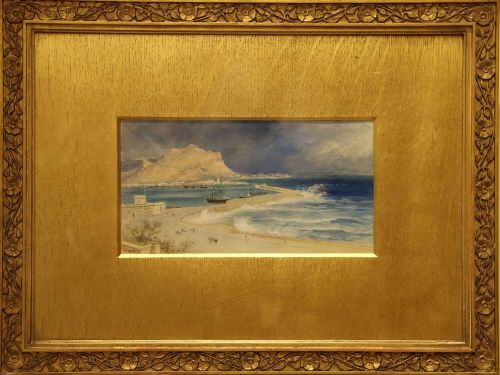
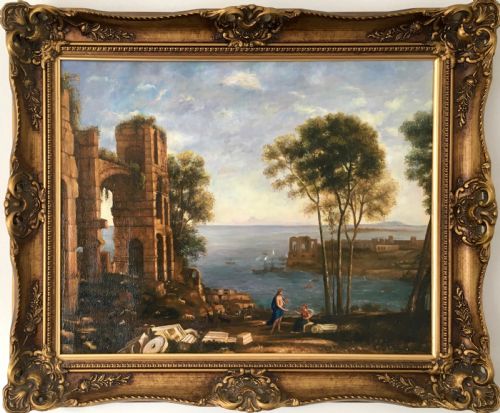
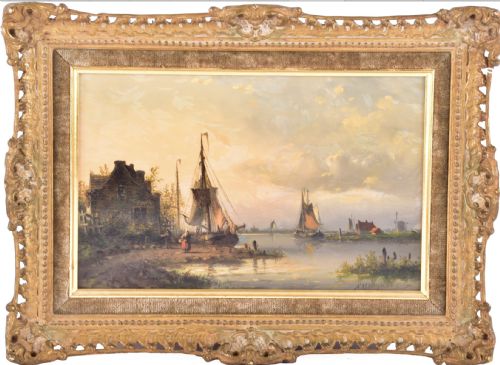
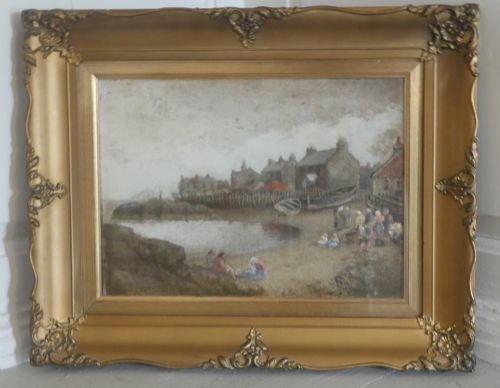
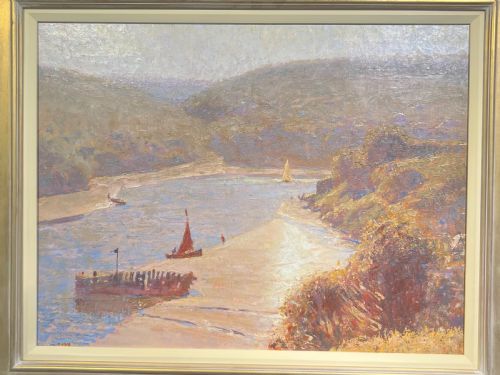
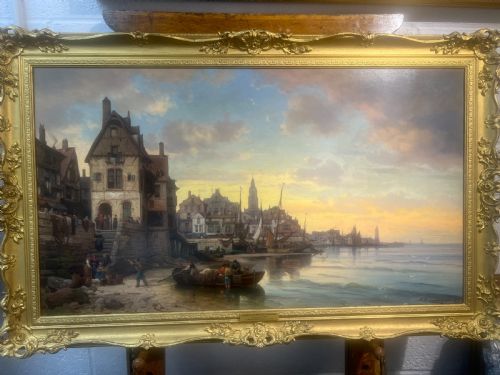
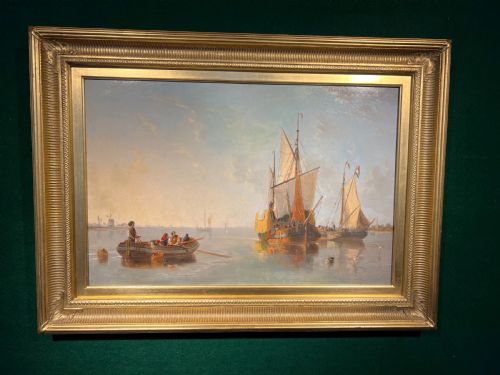
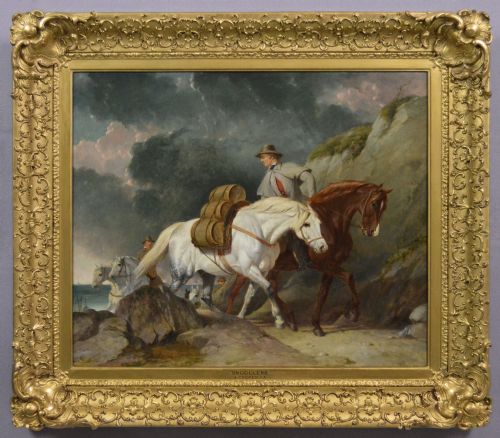
A gold framed coastal landscape captures maritime views, harbour scenes, and shorelines, presented within gilt wood surrounds. These works record nineteenth-century and early twentieth-century vistas ranging from Cornish ports to Dutch gales.
Buyers encounter oil paintings on canvas and board alongside watercolours on paper. Many pieces reflect Victorian maritime traditions and post-impressionist interpretations of the shore.
The format spans smaller cabinet watercolours to large scale canvases depicting cliffs, beaches, and shipping lanes. Period frames in giltwood complete the presentation, often matching the era of the paint layer.
Materials and construction
Painters applied oil paint or watercolour onto prepared canvas, wood board, or heavy paper. Canvases stretch over wooden frames while boards provide a rigid support for detailed coastal scenes.
Surrounds utilise gilt wood and carved giltwood, providing a reflective metallic border that complements the luminous quality of sea and sky. Gesso and gold leaf applications define the ornamented frames typical of the period.
Several canvases capture turbulent Dutch gales and quiet Cornish fishing ports, proving artists preferred dramatic weather over calm holidays.
Assessing quality and execution
Quality rests in the handling of light on water and the atmosphere of the coastal air. Finer works display confident brushwork in rendering waves, shipping vessels, and shifting light along the shoreline.
The relationship between the artwork and its gilt frame matters significantly. Original or period-matched giltwood surrounds with crisp moulding elevate the piece above works housed in later or mismatched replacements.
Edward Mills·William Banks Fortescue·Augusto Alberici·Bernard Benedict Hemy·John Wilson Carmichael·Abraham Cooper RA·Joseph Farquharson·William Henry Williamson·John Holland·John Moxon·John Bedloe Goddard·William Edward Webb·Gustave Vidal·George Turland Goosey·Gustave De Bréanski·Pieter Cornelis Dommersen·Stanley Leader·Eugene Joseph Verboeckhoven
The Gold Framed Coastal Landscape Glossary
- Giltwood
- Wood carved and coated with gold leaf or metallic powder. This finish creates the bright border characteristic of period frames.
- Oil on Canvas
- Pigment mixed with drying oil applied to a woven fabric stretched across a wooden support. It allows for rich texture and deep colour layering.
- Watercolour
- Pigments suspended in a water-soluble vehicle applied to paper. This medium creates translucent washes suitable for luminous skies and coastal atmospheres.
- Post-Impressionism
- An art style following impressionism that emphasises expressive forms and symbolic use of colour. Works in this vein break from strict naturalism.
Gold Framed Coastal Landscape: Frequently Asked Questions
How do I hang a heavy framed painting safely?
Ensure your wall fixings anchor directly into solid brickwork or secure wooden studs. Heavy giltwood frames require robust picture wire and sturdy brass D-rings mounted firmly into the sides of the strainer frame.
Distribute the weight evenly across two wall hooks rather than a single central point. This keeps the artwork level and reduces strain on the hanging hardware over time.
What is the best lighting for oil paintings?
Display oil works away from direct, harsh sunlight to prevent the pigments and canvas from degrading. Low-heat LED picture lights mounted above the frame provide gentle illumination without risking heat damage.
Position the light source at an angle that avoids glare reflecting off the varnished surface of the canvas. This lets the texture and brushwork remain clearly visible.
How should I clean a giltwood frame?
Dust the carved surfaces gently using a soft, dry artist brush or a clean feather duster. Avoid using water, chemical cleaners, or abrasive cloths, as these can strip away the delicate gold leaf.
Professional conservators should handle any repairs to flaking gesso or damaged gilding. Regular light dusting prevents particulate buildup in the intricate carved recesses.
Can I tell where a coastal scene was painted?
Artists often inscribed titles, locations, or signatures directly onto the reverse of the canvas, stretcher bars, or paper backing. Details such as specific lighthouses, harbour walls, or geological formations can also identify the exact coastal region.
Examine the style of dress worn by figures in the foreground for clues about the era. Regional architecture depicted in harbour villages further narrows down the geographic origin.