
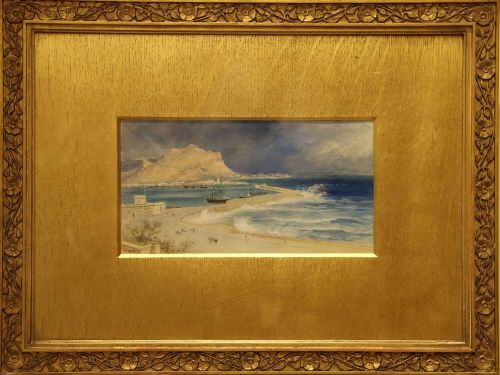
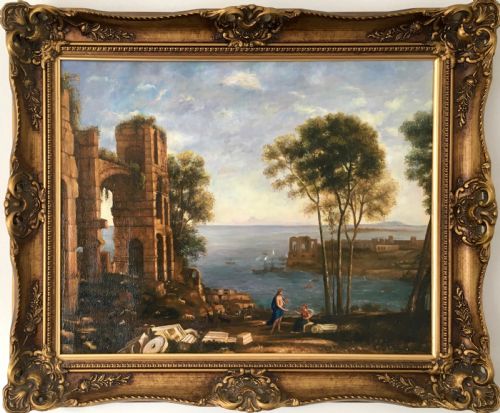
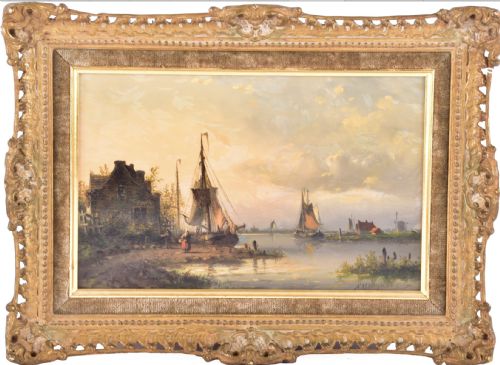

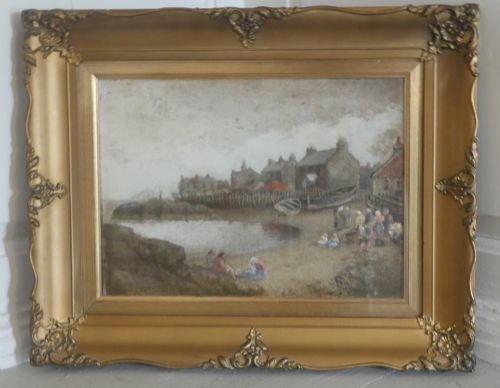

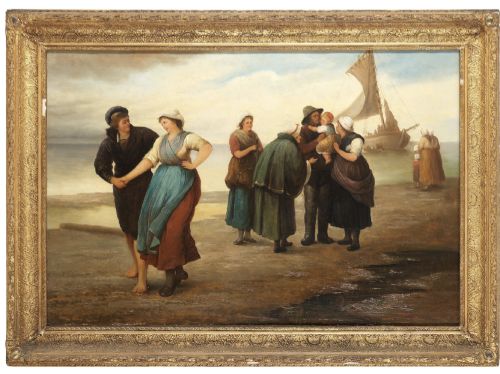
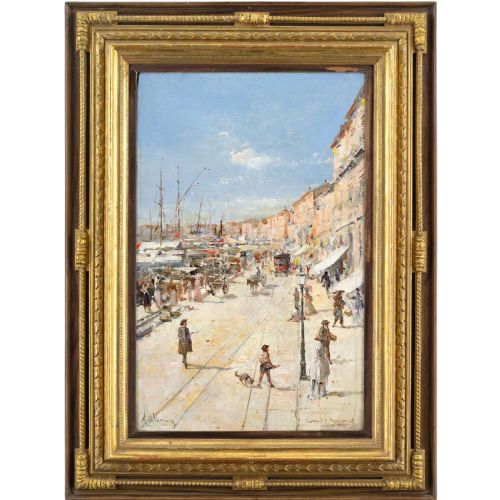
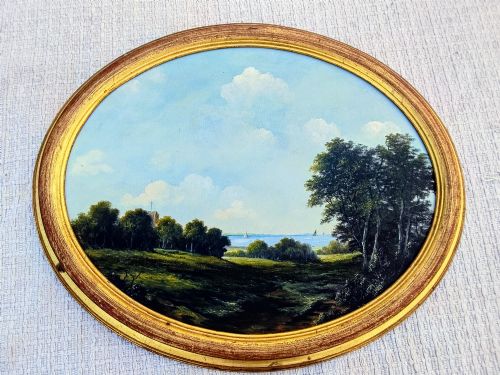
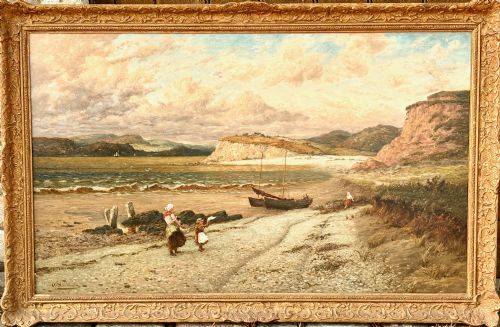

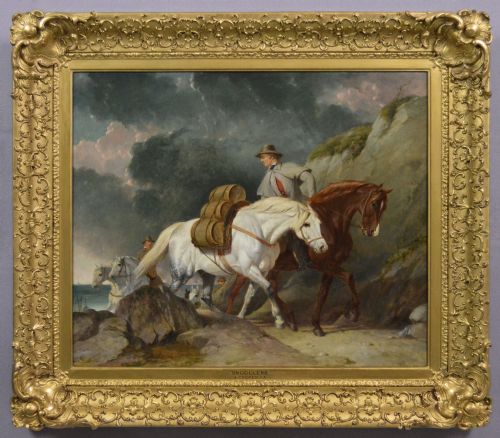
Gold Frame Coastal Landscape
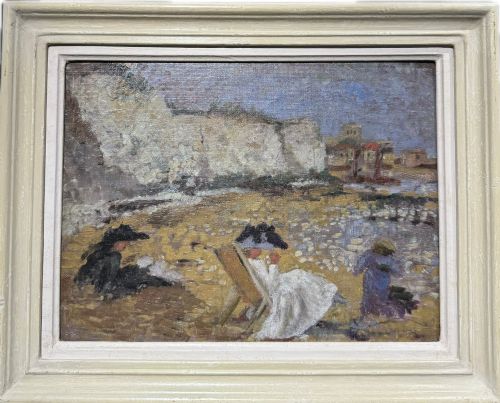
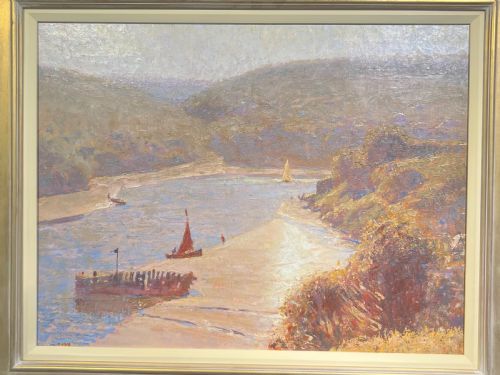
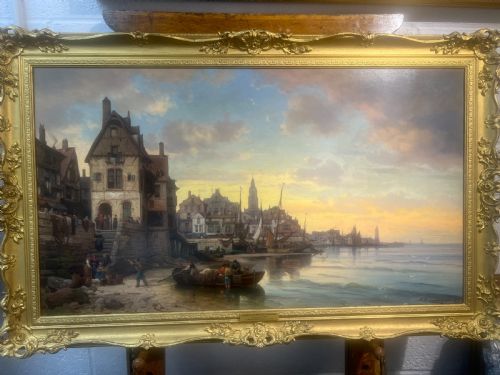
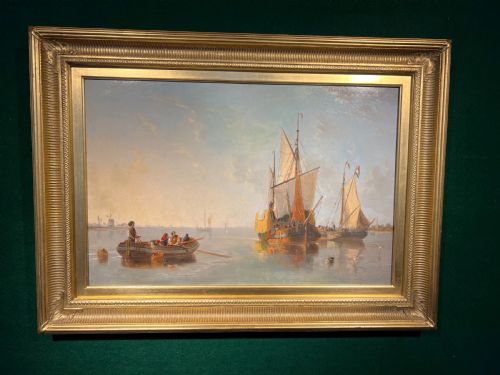
These gold frame coastal landscape paintings capture the shifting light of shores and harbours through centuries of oil and watercolour.
Gold Frame Coastal Landscape
A gold frame coastal landscape brings maritime scenes and seaside views into domestic interiors, spanning from grand nineteenth-century oils to quieter twentieth-century watercolours.
You will encounter works framed in heavy gilt wood surrounding canvas or board, depicting harbours, cliffs, and fishing boats.
The selection ranges from Victorian Scottish coasts to French school beach scenes, united by their marine subjects and metallic surrounds.
Materials and technique
Painters applied oil paint or watercolour onto canvas, paper, or board, capturing atmospheric effects along shores and estuaries.
Several canvases feature stubborn grains of actual seaside sand trapped deep within the ancient oil layers.
Evaluating the standard
Quality rests in the handling of light and water, where confident brushwork separates accomplished maritime observation from generic studio output.
The integration of the frame matters deeply; a period gilt wood surround that matches the era of the canvas elevates the entire object.
Edward Mills·William Banks Fortescue·Augusto Alberici·Bonaventura Peeters·Bernard Benedict Hemy·Ethel Sands·Cecil Allan Mould·Charles Euphraisie Kuasseg·John Wilson Carmichael·Abraham Cooper·Joseph Farquharson·Erich Mercker·William Henry Williamson·John Holland·John Moxon·John Bedloe Goddard·Raymond Moritz·William Edward Webb·Gustave Vidal·George Turland Goosey·Gustave De Bréanski·Pieter Cornelis Dommersen·Adrian Van Porten·Stanley Leader·Eugene Joseph Verboeckhoven
The Gold Frame Coastal Landscape Glossary
- Giltwood
- Wood carved and coated with gold leaf or a gold-coloured metallic finish. It provides the bright, ornate border characteristic of traditional framing.
- Marine painting
- Art depicting ships, harbours, and coastal views. This genre flourished through the nineteenth century as artists recorded maritime commerce and leisure.
- Watercolour
- A paint consisting of pigment suspended in a water-based solution, typically applied to paper. It offers translucent washes ideal for capturing shifting sea mists.
- Oil on canvas
- Pigment bound in oil applied to a woven fabric stretched over a wooden frame. This medium allowed artists to build rich texture and deep colour palettes.
Gold Frame Coastal Landscape: Frequently Asked Questions
How do I date a gold frame coastal landscape?
Dating relies on stylistic clues in the painting technique, the costume of any figures depicted, and the construction methods of the wooden stretcher or frame.
Examining the back of the canvas or board often reveals old exhibition labels, dealer stamps, or handwritten inscriptions that narrow down the decade of creation.
Where were these maritime paintings displayed?
Historically, these works hung in the reception rooms and parlours of nineteenth-century homes, bringing distant shores and bustling ports into urban residences.
Collectors valued them as reminders of maritime trade, naval power, or seaside holidays spent along British and European coasts.
Are watercolours as durable as oil paintings?
Waterworks on paper require careful protection from direct sunlight to prevent the pigments from fading over time, unlike robust oil paints on canvas.
Proper framing behind conservation glass ensures that delicate coastal watercolours survive in stable condition for generations.
How do I match a frame to the period?
Original frames generally share the exact period aesthetic of the artwork, showing matching wear, corner joinery, and gilding techniques.
Swapping a frame requires attention to proportion, ensuring the weight of the gilt moulding does not overpower the composition of the canvas.