

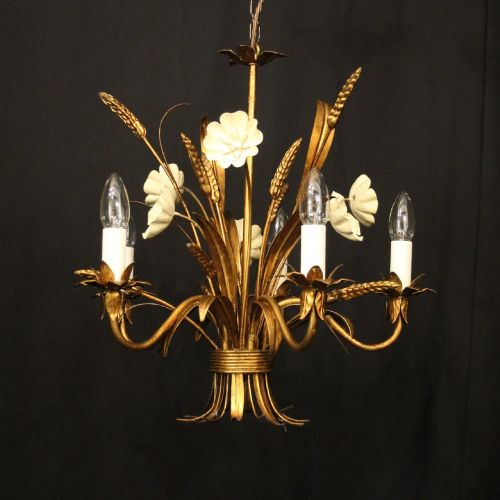
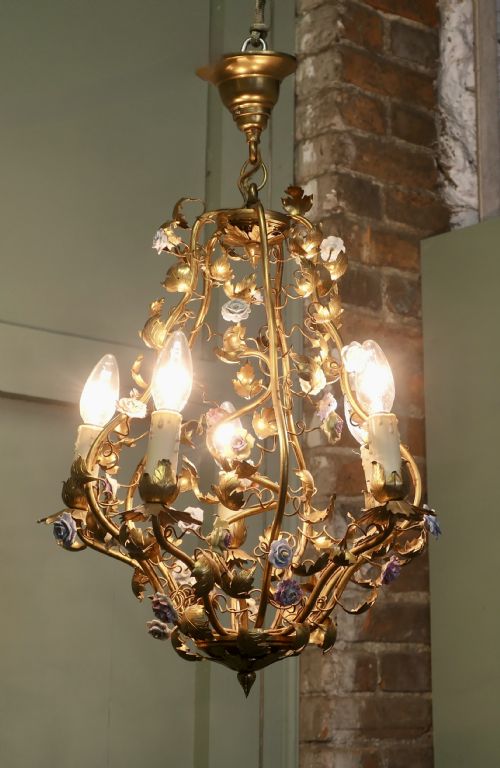


Gold Floral Light Fitting
These gold floral light fitting pieces bring botanical form and warm illumination together, offering a decorative presence that anchors a period interior.
Gold Floral Light Fitting
A gold floral light fitting brings together botanical motifs and gilt metal finishes to illuminate a room with period character. These pieces range from multi-bulb chandeliers with ceramic flowers to table lamps and chandelier bowls.
Most examples encountered on this page originate from European workshops spanning the nineteenth century through the nineteen-thirties. Forms vary from Italian Florentine multi-light fixtures to French toleware designs incorporating porcelain blooms.
How they were made
Construction relies heavily on gilt metal, brass, and iron to form the structural branches and leaves of each botanical arrangement. Artisans mounted ceramic, porcelain, or frosted glass elements to represent petals and blossoms across the metal frames.
Finishing techniques include silver gilding and applied surface colouring to give the metalwork its characteristic golden tone. Crystal components are frequently integrated alongside glass bowls to catch and refract the light.
Gold Floral Light Fitting Retail Price Guide 2026
Typical asking prices for gold floral light fitting among the pieces listed under this phrase on Sellingantiques today, from the lower quarter to the upper quarter. They describe what is for sale here now, not the wider market.
Some floral chandeliers feature hand-painted ceramic petals designed to fool the eye from a distance.
What varies in quality
The sophistication of the botanical modeling distinguishes finer examples from simpler production. Hand-shaped porcelain or ceramic flowers show a delicacy and variation that mark out superior craftsmanship.
The depth and application of the gilding further separate standard pieces from the finest work. Rich surfaces and integrated crystal elements contribute to a more resolved overall aesthetic.
The Gold Floral Light Fitting Glossary
- Toleware
- Painted or lacquered metalware, frequently shaped into botanical forms and floral motifs for decorative light fittings. This technique allows for vibrant surface colour and durable construction.
- Florentine
- A regional Italian style known for ornate gilt work and naturalistic leaf and flower carvings. Pieces from this tradition often feature layered metal foliage.
- Capodimonte
- An Italian porcelain tradition associated with detailed ceramic modeling, often utilised for floral components on lighting fixtures. These elements introduce tactile texture to the metal framework.
- Gilt metal
- Base metal treated with a gold-colored finish, leaf, or wash to simulate solid gold. It provides the necessary structural rigidity for multi-bulb chandeliers while maintaining a bright appearance.
Gold Floral Light Fitting: Frequently Asked Questions
How do I clean a gilt metal chandelier?
Dust the structure gently with a soft brush to protect the delicate gilt surface and attached floral elements. Avoid harsh chemical cleaners that can strip the gold finish from the metal.
Take care around glass and crystal components, wiping them with a damp cloth before drying thoroughly. Regular maintenance preserves the original lustre of the metalwork.
Are these light fittings heavy?
Many examples incorporate solid metal frames, multiple glass bowls, and ceramic flowers, which add considerable weight. Proper ceiling support is essential for safe installation.
Consult a qualified electrician to ensure the mounting point can bear the specific load of the fixture. Larger multi-bulb chandeliers require secure anchor points.
Can I use modern LED bulbs?
Modern LED alternatives can generally be used provided they match the voltage and base requirements of the original sockets. Choose warm colour temperatures to replicate the traditional glow.
Verify the maximum wattage recommendations of the fitting before installing replacement bulbs. This protects vintage wiring and components from excessive heat.
How do I date an Edwardian fitting?
Dating relies on stylistic markers, construction methods, and materials consistent with the early twentieth century. Edwardian pieces often balance ornate floral elements with lighter structural proportions.
Compare the specific brass or gilt metal treatments with documented examples from the same period. Consulting maker details or catalogue references provides additional chronological context.