





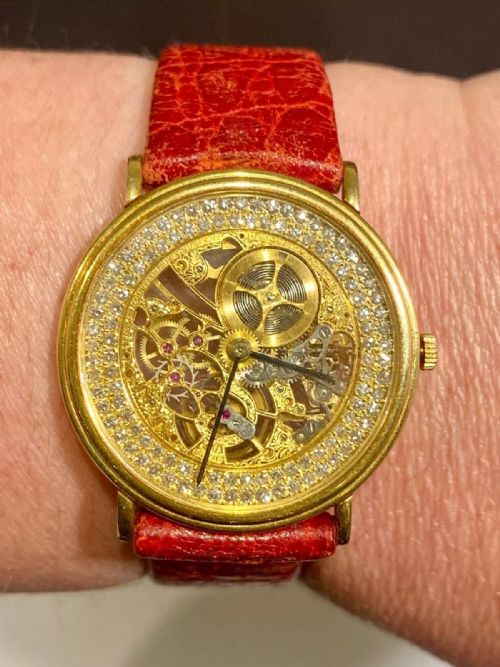
Gold Diamond Watch
When you search for a gold diamond watch, you step into a world of brilliant cocktail timepieces and intricate dress designs crafted to catch the light.
Gold Diamond Watch
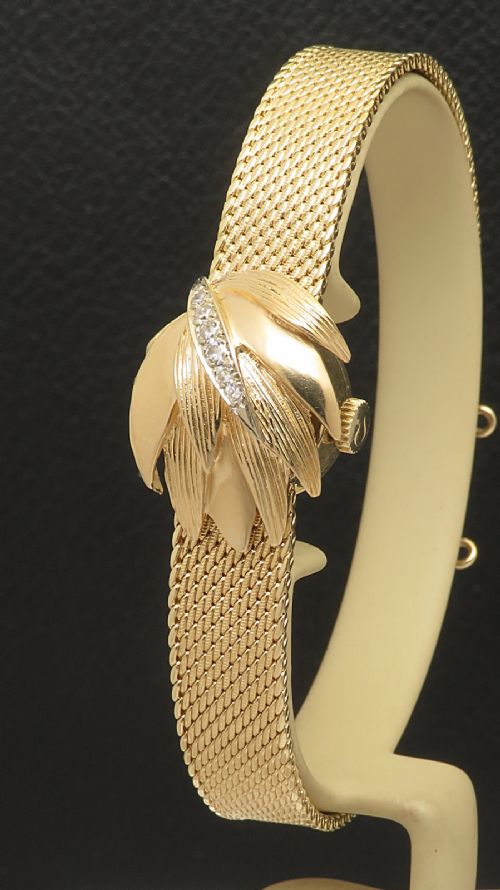
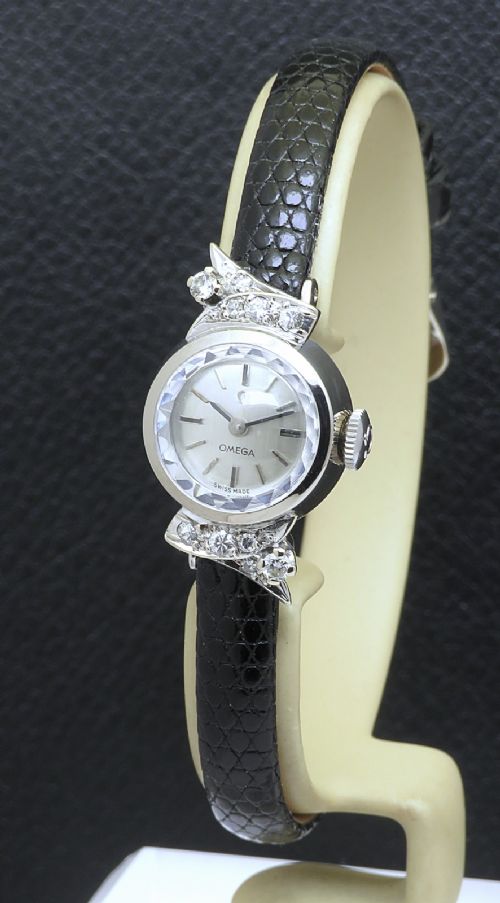
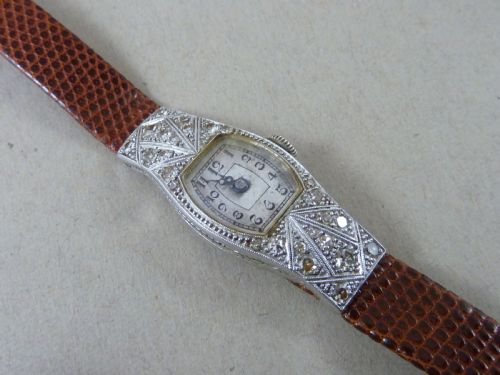
A gold diamond watch brings together precious metal and glittering gemstones in forms that range from dainty cocktail models to bold wristwatches. When exploring this selection, buyers frequently encounter mid-century creations alongside striking Art Deco designs from the 1930s.
The category encompasses wristwatches, specialised cocktail watches, and pocket watches, with occasional appearance of related chains. Pieces emerge from periods spanning the 19th century through the Edwardian era and deep into the 1960s.
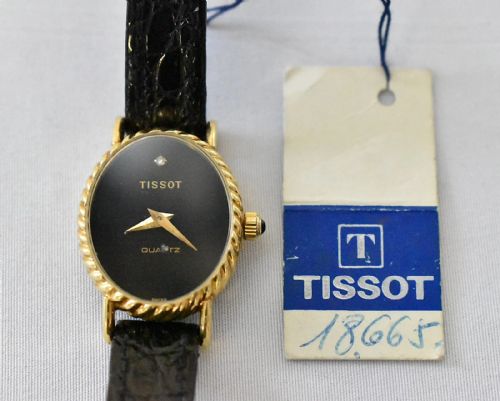
The predominant format is the ladies' cocktail watch, often built from 18ct white gold or 14ct gold and paired with integrated mesh bracelets or leather straps. These objects served as evening wear accessories where timekeeping shared importance with jewellery design.
Materials and Construction
Makers relied heavily on 18ct white gold, 14ct white gold, and platinum to set diamonds securely while maintaining a bright, reflective backdrop. These precious metals were shaped into mesh bracelets, textured hoods, and geometric bezels.
Gems were selected for their sparkle, with brilliant-cut and rose-cut diamonds flush-set or pavé-set into the casing. Manual-wind mechanical movements powered these small marvels, housed within solid gold cases designed to conceal the functional mechanics beneath ornamental facades.
Some pocket watches house minute repeaters, chiming the hours and quarters into the silence of a Victorian evening.
Evaluating the Pieces
Quality rests upon the harmony between the watchmaking mechanism and the jewellery craft, separating standard production from exceptional luxury output. Pieces featuring signed movements from notable houses paired with substantial gold weight and well-matched diamond pavé sit at the upper end of the scale.
The integration of the bracelet into the case design dictates the aesthetic success of a cocktail watch. Articulated mesh work that flows seamlessly around the wrist demonstrates a higher standard of craftsmanship than rigid or mass-produced mountings.
Omega·Tissot·Bucherer·Movado·Vertex·Longines·Invicta·Audemars Piguet·Rolex·Baume and Mercier·Mappin and Webb·Girard Perregaux·IWC·Tudor·Jaeger-LeCoultre
The Gold Diamond Watch Glossary
- Cocktail watch
- A small ladies' dress watch designed primarily for evening wear, where the dial is often concealed beneath a decorative cover or integrated into a gemstone bracelet.
- Mesh bracelet
- A flexible strap woven from fine strands of precious metal, offering a smooth texture that wraps comfortably around the wrist.
- Manual wind
- A mechanical watch movement that requires the wearer to turn the crown by hand to tension the mainspring, rather than depending on self-winding rotor weights.
- Backwinder
- A timepiece equipped with a secondary winding or setting mechanism positioned on the case back instead of the traditional side crown, preserving the clean lines of the bezel.
- Platinum
- A dense, durable white metal utilised in high-end jewellery to hold small diamond pavé settings securely without discoloration.
Gold Diamond Watch: Frequently Asked Questions
How do I wind a vintage watch?
Turn the crown gently between your thumb and forefinger in a clockwise direction until you feel slight resistance. Stop immediately to avoid over-tensioning the internal spring.
Most manual-wind movements require daily attention if kept running. Set the time carefully and avoid forcing the hands backward if the mechanism resists.
Are these watches suitable for daily wear?
Cocktail and dress watches were engineered for evening occasions rather than rigorous daily tasks. Their delicate metal mesh and small gemstone settings require gentle handling.
Water resistance is rarely present in vintage pieces of this era. Keep them away from moisture, heavy impacts, and chemical lotions to preserve the metal and stones.
How do I identify the period of a piece?
Examine the case shape, typography on the dial, and mounting style for clues. Edwardian examples lean toward delicate platinum lacework, while 1960s models embrace textured gold and bolder geometric bracelets.
Internal movement engravings and case serial numbers often provide direct reference points for dating the creation.