

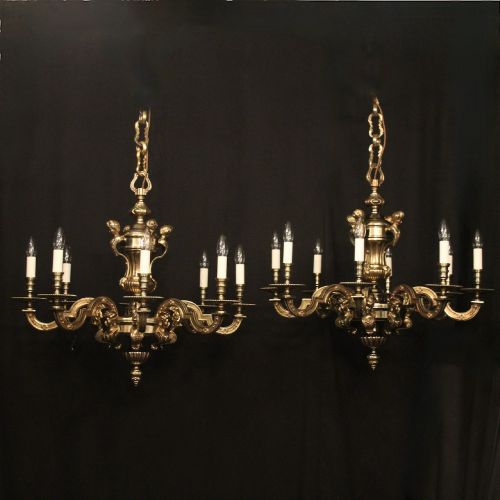
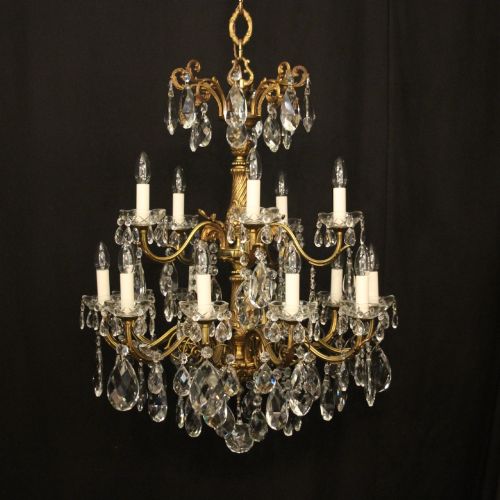
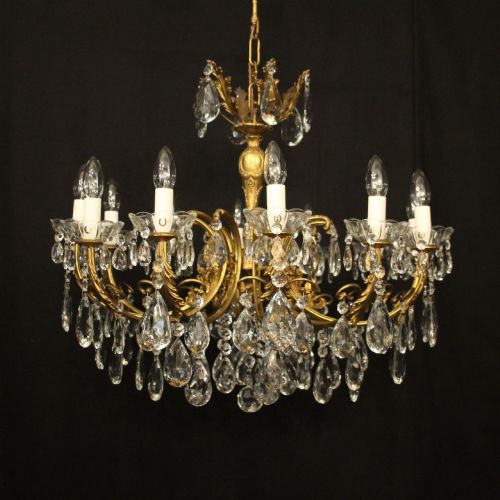
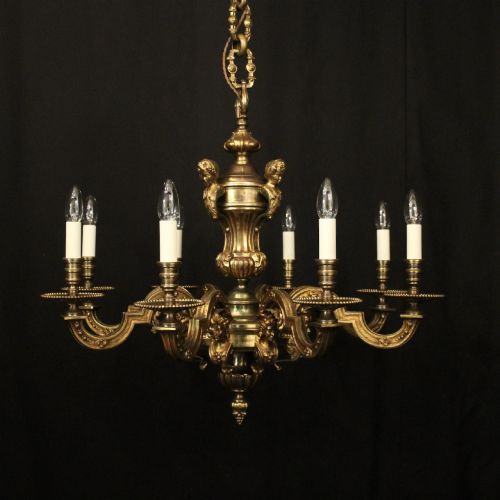
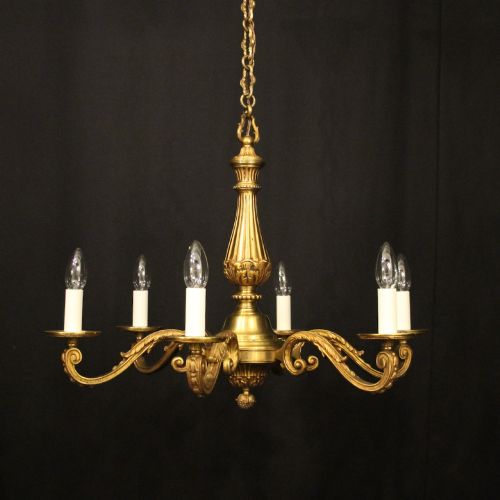
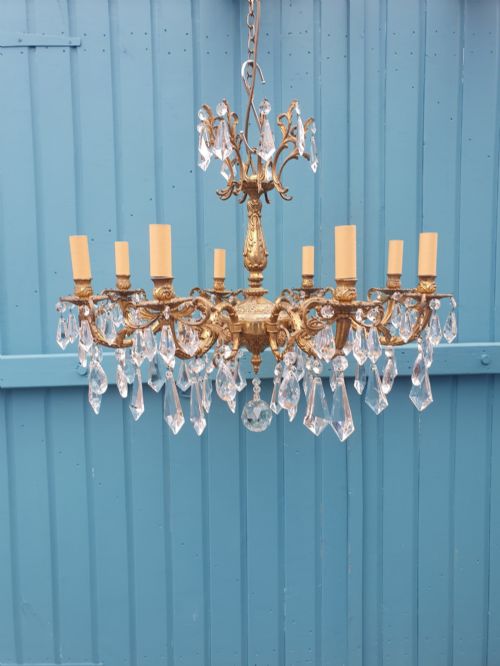
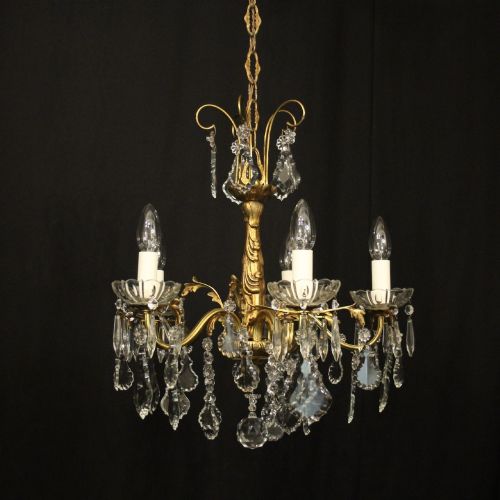
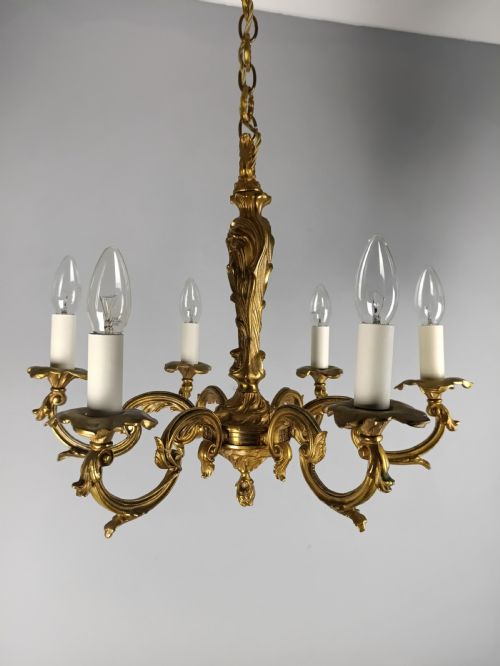
Gold Bronze Ceiling Fixture
A gold bronze ceiling fixture brings warmth and French elegance to a room, casting intricate light through crystal drops and gilded metal.
Gold Bronze Ceiling Fixture
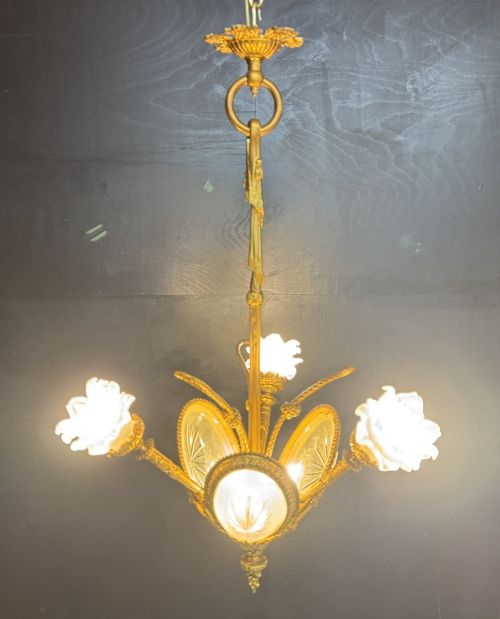
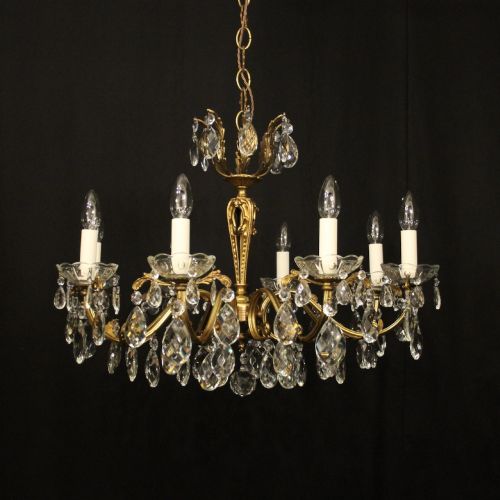
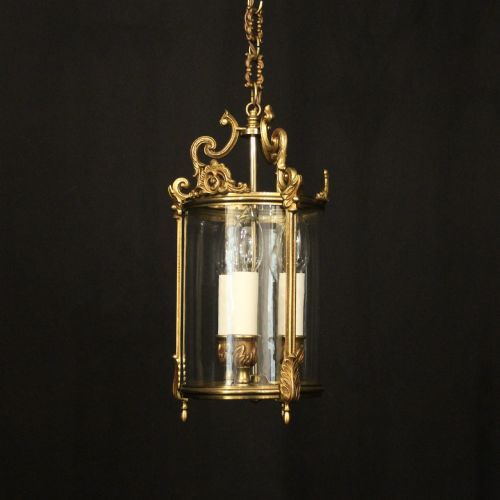
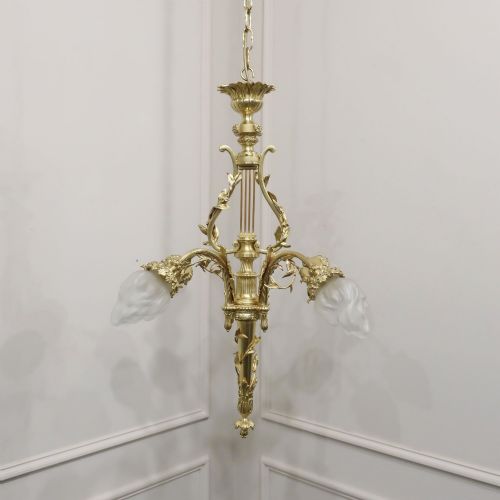
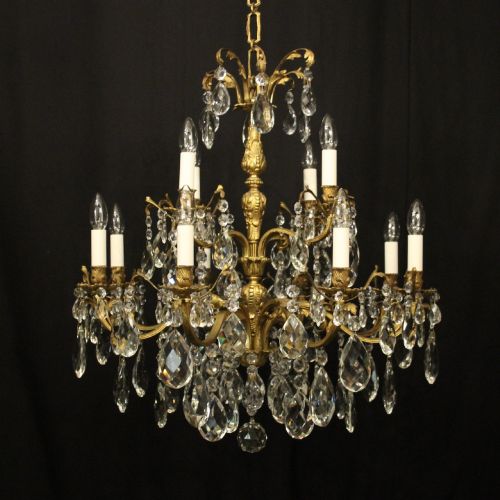
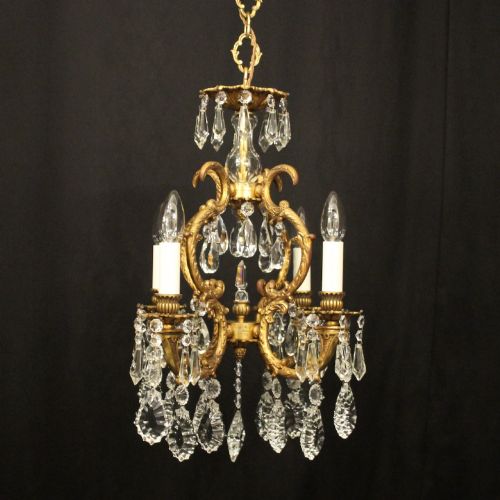
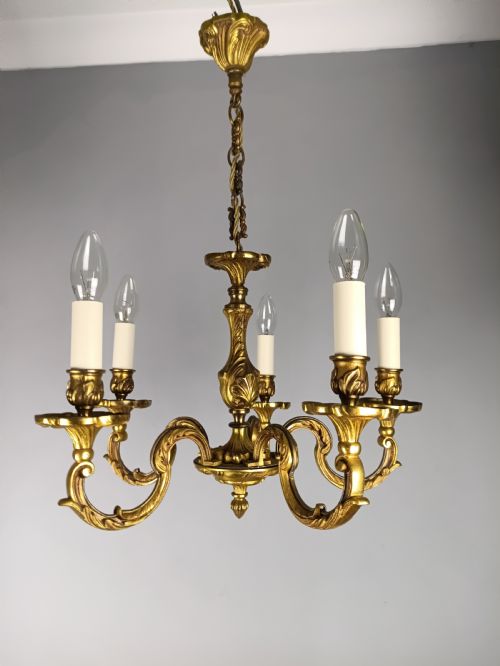
A gold bronze ceiling fixture encompasses elaborate hanging lights designed to illuminate grand spaces with period character. Buyers exploring this selection will primarily encounter multi-light chandeliers and hall lanterns originating from France, spanning the nineteenth century through the early twentieth century.
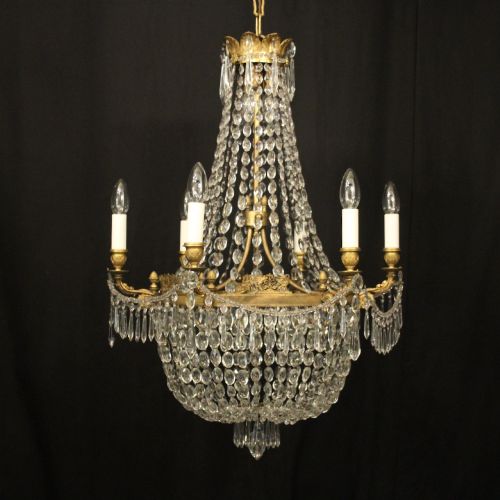
The assortment on this page relies heavily on French designs, ranging from empire styles to rococo and neoclassical influences. Common forms include birdcage chandeliers, tent and waterfall arrangements, and convex lanterns fitted for multiple candle or bulb lights.
Makers and designers from periods such as the Victorian era and the nineteen-twenties produced these works using gilt bronze, brass, and cut crystal. Each piece reflects the decorative tastes of French chateaux and formal European salons.
Assessing Quality and Craftsmanship
The distinction between standard and superior pieces rests on the depth of the casting work and the richness of the gilding. Heavier metal frames with sharply rendered decorative motifs indicate greater skill in the workshop.
The quality of the glass components also defines the tier of the piece, with heavily cut crystal drops and complex multi-arm configurations commanding higher regard. Consistency in the original gilding and the integrity of the structural frame determine the overall substance of the fixture.
Gold Bronze Ceiling Fixture Retail Price Guide 2026
Typical asking prices for gold bronze ceiling fixture among the pieces listed under this phrase on Sellingantiques today, from the lower quarter to the upper quarter. They describe what is for sale here now, not the wider market.
Materials recur primarily as gilt bronze, brass, and cut crystal across various chandelier and lantern formats.
The Gold Bronze Ceiling Fixture Glossary
- Gilt Bronze
- Metal cast and coated with a thin layer of gold or gold-coloured alloy. This technique provides the durable golden finish seen on French chandeliers.
- Tent and Waterfall
- A specific configuration where crystal strands form an upper tent shape above a cascading waterfall of drops. This style maximises light refraction across a room.
- Hall Lantern
- An enclosed ceiling light designed for corridors or entranceways. These often feature convex glass panels within a gilded metal frame.
- Spelter
- An alloy of zinc used as a substitute for bronze in decorative figures. It allowed makers to cast detailed ornaments more economically.
Gold Bronze Ceiling Fixture: Frequently Asked Questions
How do I clean an antique crystal chandelier?
Cleaning requires a soft cloth and a mild solution applied directly to the glass rather than dipping the entire frame. Care must be taken around old gilded surfaces to preserve the finish.
Individual crystal drops can be gently wiped while attached, or unhooked for thorough washing. Avoid harsh chemical cleaners that might strip the historic gilding from the bronze or brass.
Were these fixtures originally wired for electricity?
Most pieces from the nineteenth and early twentieth centuries were originally configured for candles. They were subsequently adapted for electric lighting as homes modernised.
Rewiring is common to meet contemporary safety standards while retaining the original sockets and decorative arms. Professional installation ensures the heavy metal frames are safely supported from the ceiling.
How do I determine the correct size for my room?
Proportion depends on the ceiling height and the floor area of the space it will illuminate. Larger multi-arm fixtures require substantial clearance to hang appropriately without dominating the room.
Consider the diameter and the drop length listed for each piece against your ceiling dimensions. Hall lanterns suit narrower spaces, whereas multi-tier chandeliers require wider clearance.
What is the difference between gilt bronze and gilt brass?
Gilt bronze involves a copper and tin alloy that accepts fine detail work during casting. Gilt brass uses a copper and zinc mixture that typically has a slightly brighter tone.
Both materials received a gold surface treatment, but bronze generally offers a heavier and more robust structure. Historic French pieces frequently utilised bronze for its superior casting properties.