
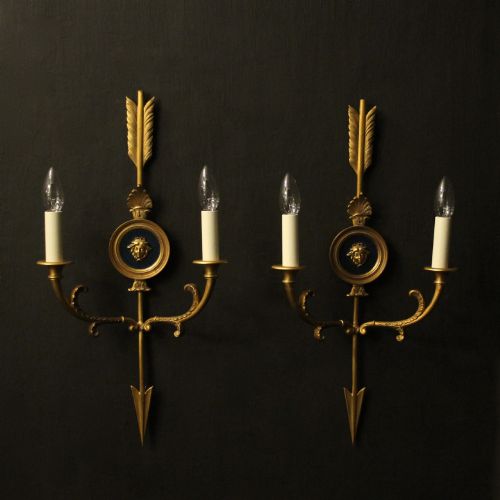
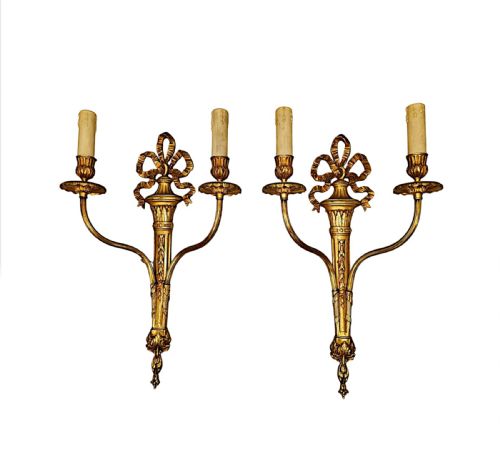
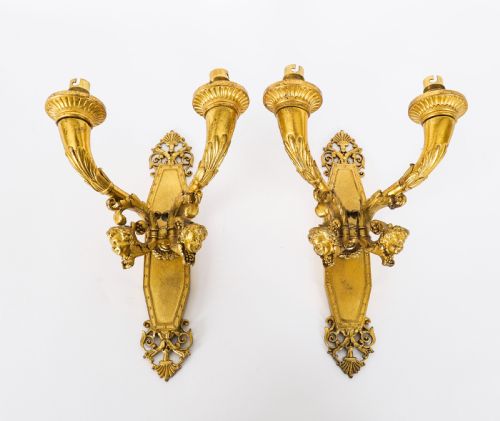
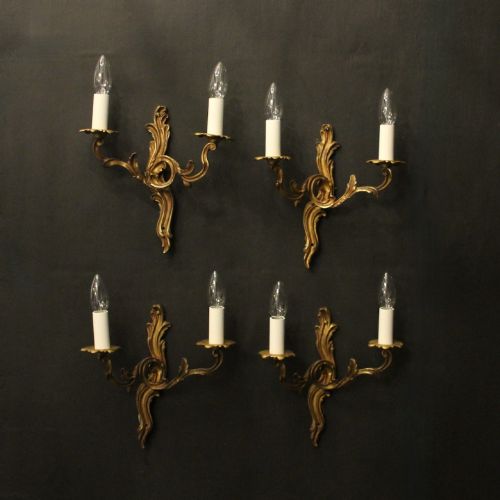

Gold Brass Sconce Pair
A gold brass sconce pair brings warm metal reflection to a wall, offering balanced illumination through period forms.
Gold Brass Sconce Pair
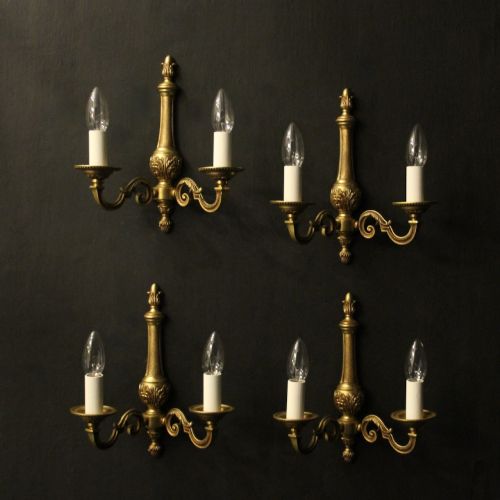
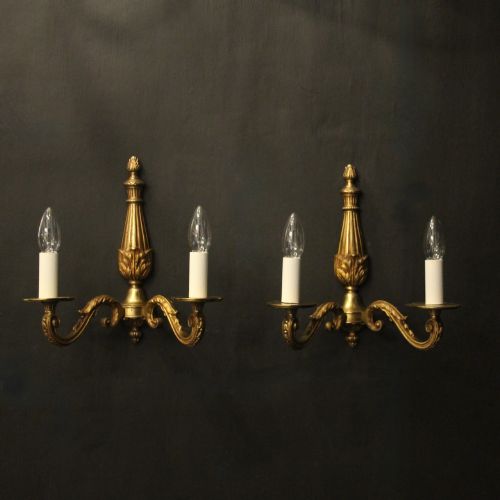
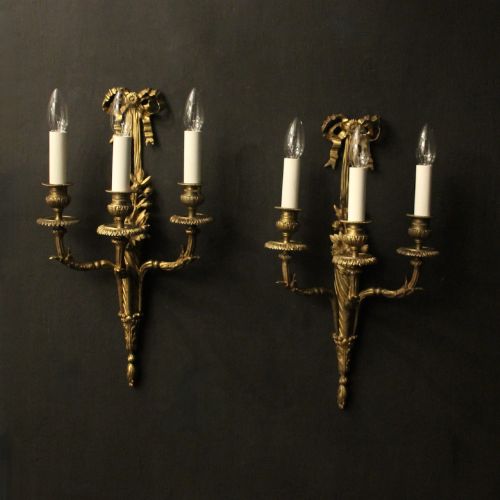
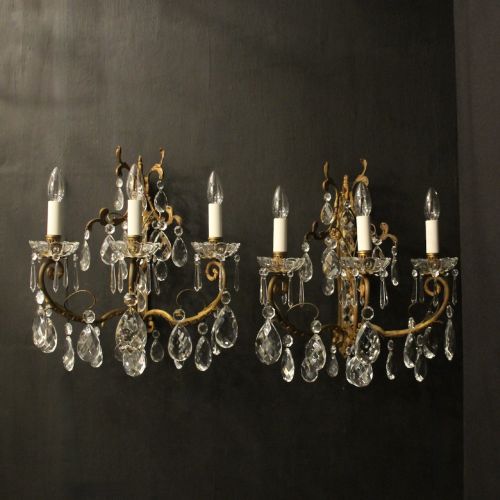
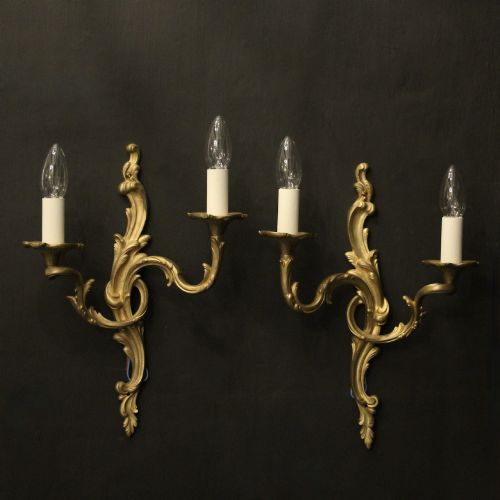
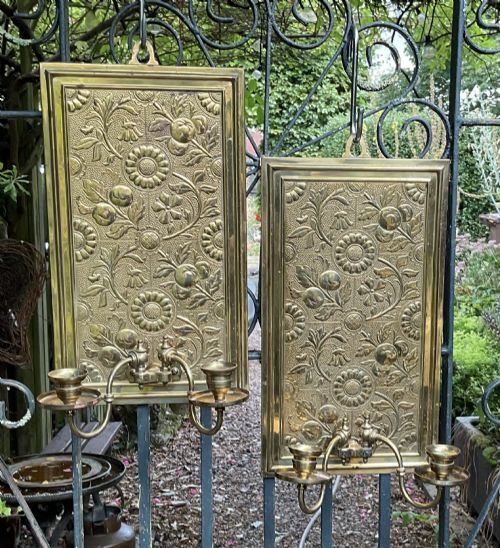
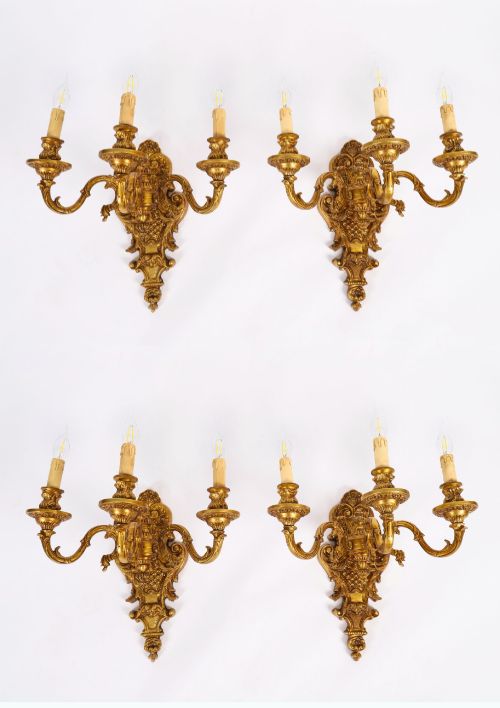
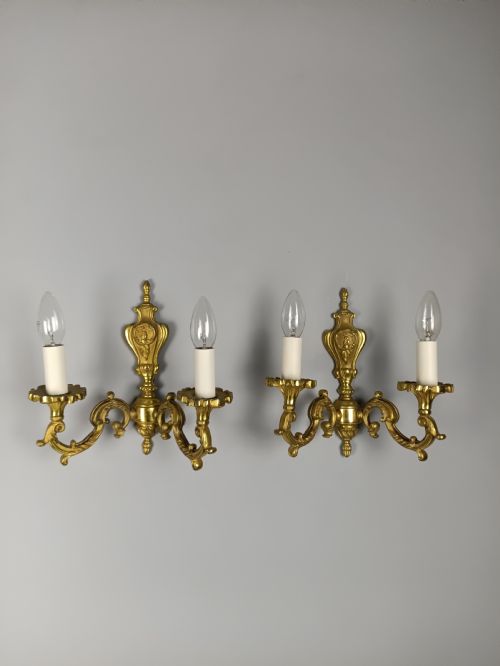
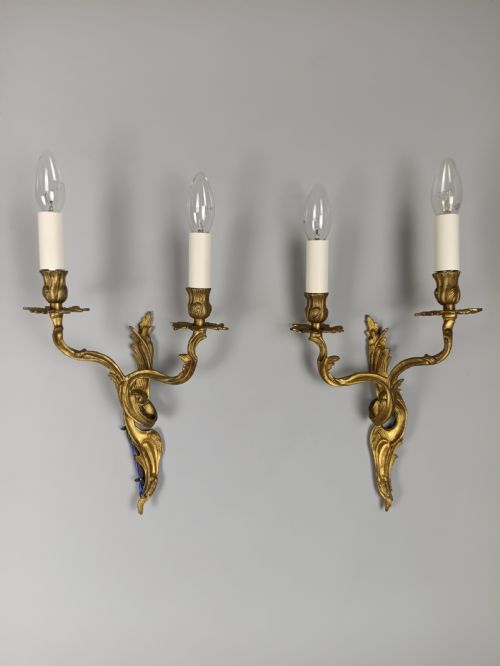
A gold brass sconce pair comprises matching wall-mounted light fittings designed to hold candles or electric bulbs, typically encountered in twin-arm, triple-arm, or single-arm configurations. These decorative fixtures originate predominantly from French workshops across the nineteenth and early twentieth centuries, spanning periods from Georgian and Regency eras up to the nineteen-thirties.
Buyers seeking this phrase encounter various wall-mounted forms, including appliques, half lanterns, and mirror-backed designs that reflect ambient light. Many examples embody classic continental aesthetics, drawing heavily on French Rococo, Louis XVI, and Neoclassical vocabularies characterised by scrolling arms and cast ornamentation.
How they were made
Construction relies on foundry casting of brass, bronze, and ormolu, shaping heavy metal components into structural backplates and branching arms. Artisans then applied mercury gilding or surface plating to achieve the characteristic gold finish associated with high-status interior metalwork.
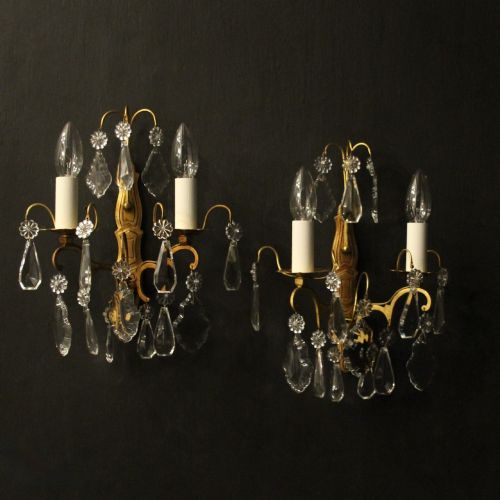
Detailing often incorporates hand-chasing after casting to sharpen foliage, ribbons, and sculptural motifs, occasionally paired with cut crystal drops or mirrored glass panels to enhance illumination.
Listings feature items dated across the nineteenth century, Georgian period, and nineteen-thirties using brass, ormolu, and glass.
What varies in quality
Quality rests principally in the crispness of the metal casting and the depth of the subsequent gilding or ormolu finish. Superior examples display sharply defined botanical or scrollwork details executed by hand after the initial cast cools, whereas lesser pieces rely on softer, shallower factory moulding.
Substantial gauge metalwork and robust mechanical joints ensure the arms support candles or wiring securely without sagging, distinguishing high-grade architectural brackets from lighter decorative alternatives.
Casier·W A S Benson·Bruce Talbert
The Gold Brass Sconce Pair Glossary
- Ormolu
- Gilded bronze produced by applying a mercury and gold amalgam to a bronze base and firing it to drive off the mercury. This technique yields a deep, enduring metallic lustre found on many nineteenth-century French wall lights.
- Applique
- A wall-mounted light fixture designed to hold candles or lamps, functioning as a decorative bracket. The term frequently appears interchangeably with wall sconce in continental metalwork.
- Rococo Revival
- A nineteenth-century design movement resurrecting the asymmetric, scroll-laden motifs of the mid-eighteenth century. Pieces in this style utilise swirling leafwork and organic asymmetry.
- Campana
- A vase-shaped candle cup resembling an inverted bell, commonly seen atop arms and candlesticks. This classical profile supports the candle or acts as a drip pan.
- Gilt Bronze
- Bronze metal treated with a gold leaf or gold wash finish to simulate solid gold. It provides durability alongside a bright, reflective surface.
Gold Brass Sconce Pair: Frequently Asked Questions
How do I clean old brass sconces?
Dust gently with a soft dry cloth to remove surface particles without disturbing historical patination.
Avoid abrasive metal polishes that strip thin gilding or ormolu surfaces from the brass base.
Were these lights originally for candles?
Many nineteenth-century examples started life holding wax candles before undergoing later conversion to electricity.
Original drip pans and candle cups remain visible even on pieces adapted for modern wiring.
How do I date a sconce pair?
Examine the casting quality, fixing screws, and stylistic markers such as Rococo scrolls or Neoclassical symmetry.
Period characteristics align with nineteenth-century French manufacturing standards and twentieth-century reproductions.
Can these sconces be wired for electricity?
Most hollow arms and backplates accommodate careful rewiring by a qualified professional electrician.
Internal channels often permit discreet cord routing while preserving the exterior decorative metalwork.