

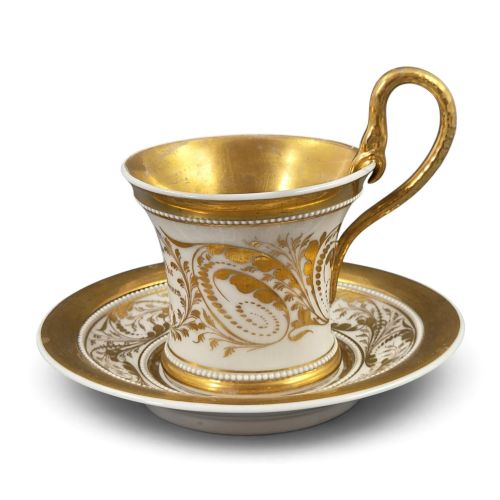


Gold and White Teacup
A gold and white teacup brings cabinet elegance to the table, pairing crisp porcelain bodies with rich gilding.
Gold and White Teacup
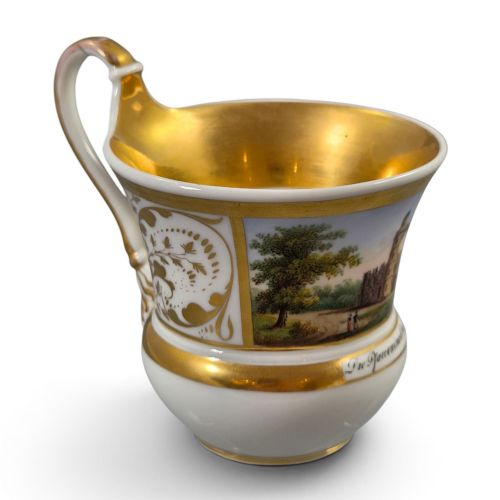
When a search for a gold and white teacup brings up results, buyers look at functional sets, cabinet cups, and individual duos spanning Georgian, Regency, and Victorian periods. The pieces range from grand KPM Berlin topographical cabinet cups to everyday bone china tea sets by makers like Royal Albert and Coalport.
Most items meeting this description date from the nineteenth century into the early twentieth century, incorporating forms such as the Shrewsbury shape and demitasse. Surviving examples appear as single tea bowls and saucers, full tea services, or miniature cabinet pieces painted with landscapes and floral motifs.
How they were made
Potters formed these items using hard-paste porcelain, soft paste, and bone china, often shaping them on a wheel or in moulds before firing. Artisans then applied enamel colours and gold leaf or gilding by hand, securing the metallic decoration through subsequent kiln firings.
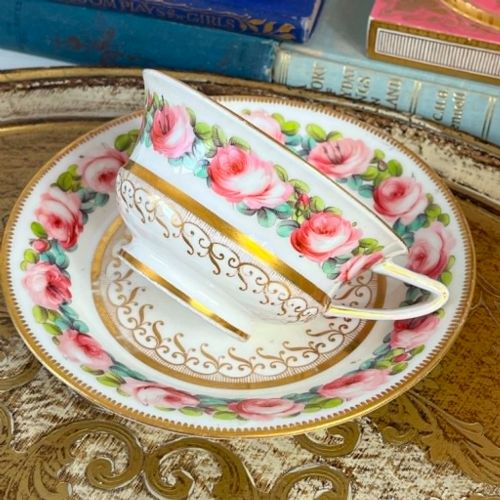
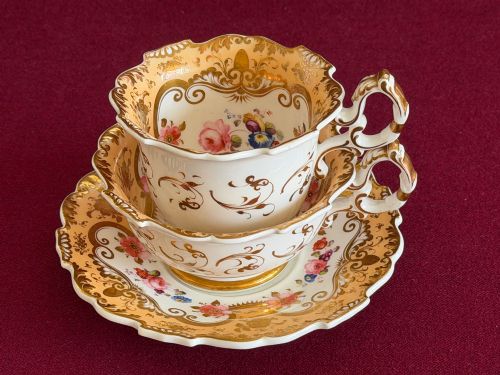
Factories like KPM Berlin and Davenport employed skilled painters to execute intricate details such as pink cabbage roses and topographical scenes. The application of gold leaf varied from fine linear gilding to heavy gilt borders framing hand-painted panels.
Gold and White Teacup Retail Price Guide 2026
Typical asking prices for gold and white teacup among the pieces listed under this phrase on Sellingantiques today, from the lower quarter to the upper quarter. They describe what is for sale here now, not the wider market.
Listings feature hard-paste porcelain and bone china from the Georgian, Regency, and Victorian eras, decorated with gold leaf and hand-painted enamels.
What varies in quality
The standard of a gold and white teacup rests upon the crispness of the porcelain body and the finesse of the hand-painting. Pieces featuring finely rendered landscapes or delicate floral studies display superior artistic execution compared to standard factory patterns.
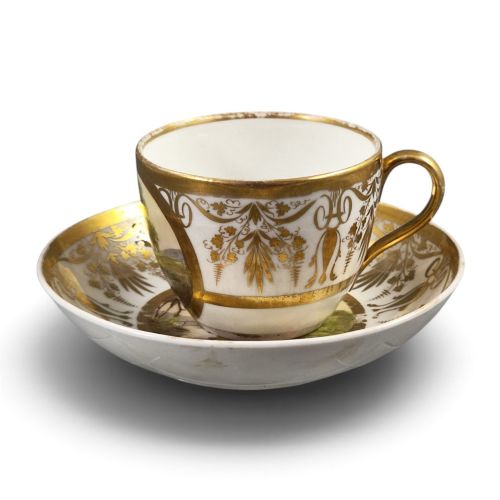
The application and preservation of the gilding further distinguish the tiers of quality. Heavy, burnished gold leaf that retains its bright finish indicates higher workshop standards than thin or rubbed gilt accents.
A H & R Daniel·Davenport·KPM Berlin·Coalport·Royal Albert Crown China·Worcester·Hirsch Dresden
The Gold and White Teacup Glossary
- Cabinet Cup
- A decorative cup intended for display in a cabinet rather than for drinking tea. These pieces often feature detailed topographical paintings or elaborate gilding.
- Hard-paste Porcelain
- A dense ceramic material composed of kaolin and petuntse fired at high temperatures. It provides a durable, bright white body ideal for fine gilding.
- Demitasse
- A small cup used for serving strong black coffee or espresso. They frequently appear in cabinet sizes alongside matching saucers.
- Gilding
- The application of gold leaf or gold powder to the surface of porcelain. This technique highlights rims, handles, and painted reserves.
- Trio
- A matching set comprising a teacup, a saucer, and a matching tea plate. These sets formed standard components of nineteenth-century tea services.
Gold and White Teacup: Frequently Asked Questions
Can I use antique gold and white teacups?
Many nineteenth-century teacups remain structurally sound for gentle use, though hand washing is necessary to protect the fragile enamels and gold leaf.
Cabinet cups and miniature pieces serve better as display items due to their delicate handles and historical value.
What is the difference between a tea bowl and a teacup?
Tea bowls lack handles and followed eighteenth-century Chinese export conventions, where drinkers held the small vessel in both hands.
Teacups with applied handles emerged later as European tea-drinking habits shifted toward Western table service designs.
How should I store my collection?
Display cups and saucers in secure cabinets away from direct sunlight to prevent fading on hand-painted enamel landscapes and floral motifs.
Stack saucers carefully with felt dividers between them, and keep cups unstacked to avoid chipping the gilded rims.