



Gold Agate Pendant
These gold agate pendant selections span Georgian and Victorian work, offering hardstone interest set in gold.
Gold Agate Pendant
A gold agate pendant brings together natural hardstone panels and precious metal mounts, frequently appearing in Victorian and Georgian designs. Buyers examining this page encounter pieces that range from carved crosses to spinning fobs and portrait mountings.
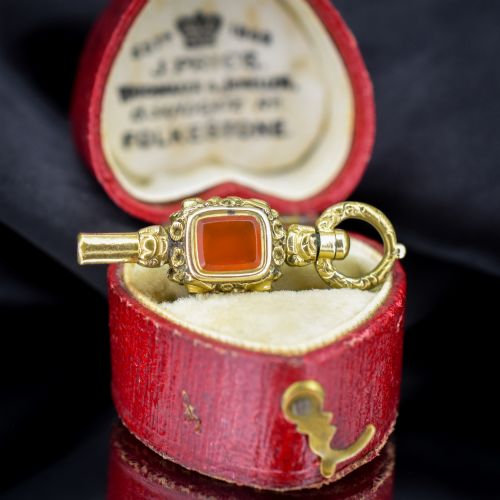
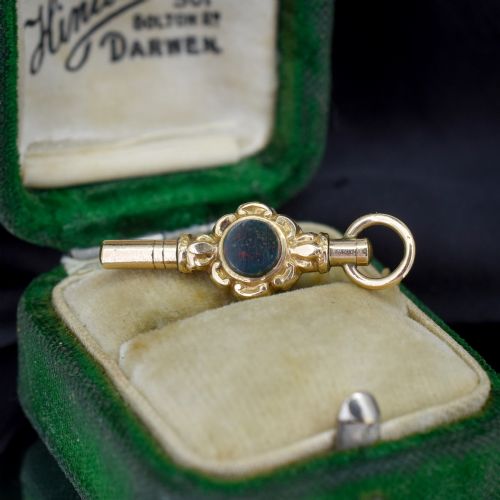
The category incorporates items created across several centuries, including 18th century examples and 19th century creations. Many pieces utilise specific varieties of quartz such as carnelian, bloodstone, and banded agate.
Forms extend beyond simple drop ornaments into functional items adapted for wear, including watch keys, seals, and lockets. Scottish designs and continental Italian cameos also feature among the configurations available.
How they were made
Metals span standard and high karat thresholds, utilising 9ct gold, 15ct gold, 18ct gold, silver, and gold gilt settings to house the stones. Goldsmiths shaped bezels and mounts to follow the natural contours of the hardstone panels.
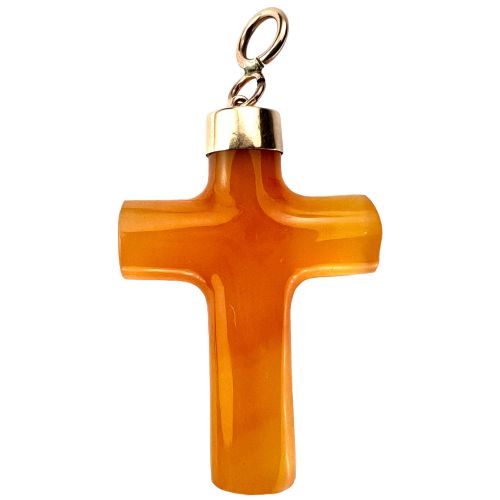
Stones like agate, carnelian, and bloodstone underwent careful cutting and polishing to display their internal banding and rich colouration. Artisans carved specific pieces into dimensional forms such as crosses, cameos, and equestrian motifs.
Gold Agate Pendant Retail Price Guide 2026
Typical asking prices for gold agate pendant among the pieces listed under this phrase on Sellingantiques today, from the lower quarter to the upper quarter. They describe what is for sale here now, not the wider market.
Pigs, ivy leaves, and bugles dangle from split rings alongside hardstone seals, proving the Victorians turned almost anything into a charm.
What varies in quality
Quality depends upon the depth of the stone carving and the crispness of the gold mount work. Superior items display clean lines in engraved details and secure, well-integrated settings that protect the hardstone.
The natural patterning and colour contrast of the agate itself influence the overall impact of the piece. Better examples showcase vibrant banding or sharp cameo relief work without structural compromise.
The Gold Agate Pendant Glossary
- Agate
- A variety of chalcedony quartz known for its distinctive natural banding and colour variations. It appears frequently in 19th century jewellery mounts.
- Fob
- A small ornament attached to a pocket watch ribbon or chain, often featuring swivel panels of bloodstone and carnelian. Many survive converted into pendants.
- Cameo
- A method of carving where a raised design stands out from a contrasting background layer of stone. Italian and Victorian examples utilise this technique.
- Chalcedony
- A cryptocrystalline form of silica that includes agate, carnelian, and bloodstone within its family. It provides the primary material base for these pendants.
- Intaglio
- A gem carving technique where the design is incised into the stone surface rather than raised. These were traditionally utilised as seals for wax impressions.
Gold Agate Pendant: Frequently Asked Questions
What is a gold agate pendant?
A gold agate pendant is a piece of jewellery combining natural quartz hardstone with a precious metal setting. These items often originate from the Georgian and Victorian periods.
They encompass various functional and decorative forms, including crosses, lockets, and swivel fobs originally designed for pocket watches.
How do I date a piece?
Dating relies upon stylistic markers, metal hallmarks, and the specific fabrication techniques employed in the mount. Georgian pieces often show distinct closed-back settings and foiled stones.
Victorian and Edwardian examples introduce different gold karats, such as 15ct, alongside specific regional motifs like Scottish pebble jewellery.
How were spinning fobs used?
Spinning fobs functioned as practical accessories for 19th century gentlemen, attached to watch chains and used as personal seals for correspondence. They typically rotate on a central axis to display two or three different hardstone faces.
Modern wearers frequently hang them from chains as pendants to showcase both the gold metalwork and the polished agate panels.
What stones are used?
The category utilises various forms of chalcedony, predominantly banded agate, red carnelian, and green bloodstone with red jasper inclusions. White chalcedony also appears in specific Edwardian items.
Each stone offers distinct visual characteristics, from parallel stripes to deep solid tones.