


Gold Agate Brooch
A gold agate brooch brings together rich hardstone and warm metal, offering a wearable piece of Victorian or Georgian history.
Gold Agate Brooch
A gold agate brooch is a piece of jewellery that pairs polished hardstone with precious metal settings. When you search for a gold agate brooch, you encounter pieces designed to pin securely to garments.
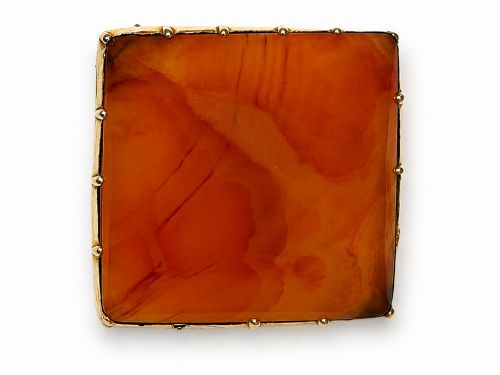
Most examples found here hail from the Victorian and Georgian periods, showcasing the craftsmanship of the nineteenth and late eighteenth centuries. These items often incorporate banded stones, carnelian, or bloodstone.
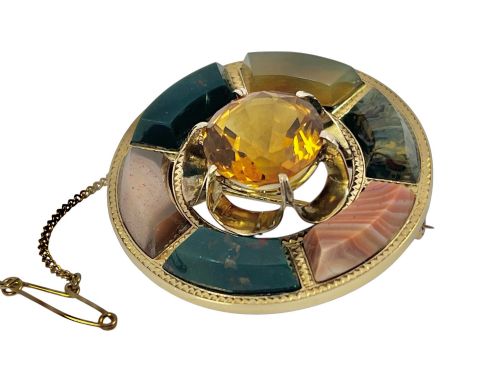
Forms range from simple geometric mounts to heart shapes and Scottish Revival designs. You are most likely to meet Victorian interpretations featuring citrine or multi-coloured hardstone varieties.
How they were made
Goldsmiths shaped high-carat gold, including 9ct, 15ct, and 18ct varieties, into secure bezels and decorative frames to hold the heavy stones. Hardstones like agate, jasper, and carnelian were cut and polished to reveal their natural banding and colour.
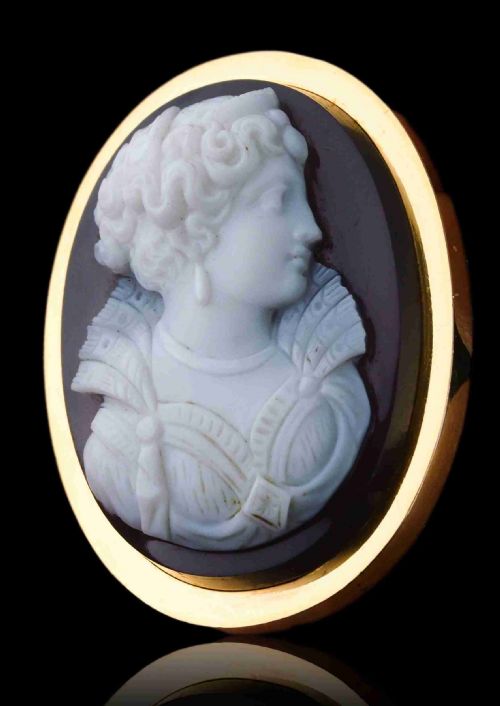
Lapidaries shaped the hardstone into smooth cabochons or flat cameo reliefs, sometimes combining several distinct stones in a single piece. Metalwork often included detailed wire twist work and chased borders surrounding the central hardstone.
Listings span the Georgian and Victorian eras, predominantly featuring 18ct gold paired with agate, citrine, and hardstone.
What varies in quality
The standard of cutting and the natural vibrancy of the hardstone separate the finest examples from simpler work. Stones with crisp, distinct banding and high polish demand greater skill than plain opaque varieties.
The weight and purity of the gold mount also define the grade of the piece, alongside the intricacy of any secondary gems like citrine or diamonds. Harmonious colour combination within multi-stone Scottish pieces indicates superior design.
The Gold Agate Brooch Glossary
- Agate
- A form of chalcedony quartz characterised by coloured bands or layers. It takes a high polish and provides varied natural patterns.
- Hardstone
- A collective term for semi-precious stones used in jewellery and decorative objects, including agate, carnelian, and jasper. These durable materials resist daily wear.
- Cabochon
- A gemstone shaped and polished with a smooth, rounded top rather than faceted edges. This cut highlights the internal patterns of agates and hardstones.
- Cameo
- A method of carving where a design is raised above a contrasting background. These are frequently carved in hardstone or shell.
Gold Agate Brooch: Frequently Asked Questions
How do I wear a gold agate brooch safely?
Pin the piece firmly through tightly woven fabrics that can support the weight of the gold and stone. Ensure the C-clasp or safety fastening is fully engaged before venturing out.
Avoid wearing these brooches on delicate silks or loose knits where the pin might pull the threads. Store them flat in a lined box when not in use to prevent knocks.
How do I tell Victorian from Georgian pieces?
Georgian pieces display earlier mounting techniques and often utilise lower carat golds or silver-gilt combinations. Their stone cuts tend to reflect eighteenth-century lapidary traditions.
Victorian examples frequently showcase bolder Revival styles, particularly Scottish hardstone motifs and heart shapes. Hallmarks and specific gold standards like 15ct point firmly to the later nineteenth century.
What is Scottish Revival jewellery?
Scottish Revival refers to nineteenth-century pieces inspired by traditional Highland ornamentation and promoted by royal patronage. They typically feature interwoven arrangements of local hardstones.
These designs often incorporate citrines and banded agates set in yellow gold. The aesthetic celebrates Celtic motifs and geological specimens found across Scotland.