
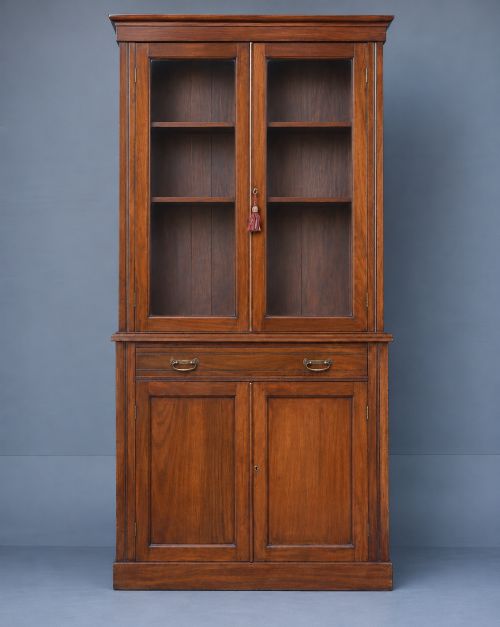
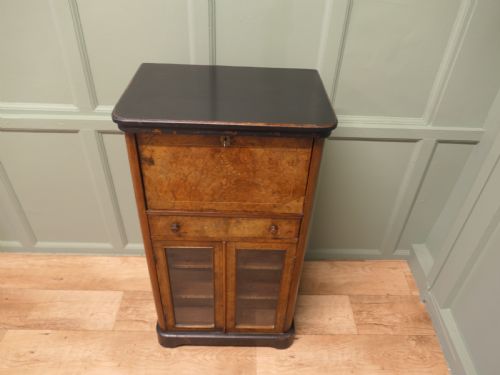
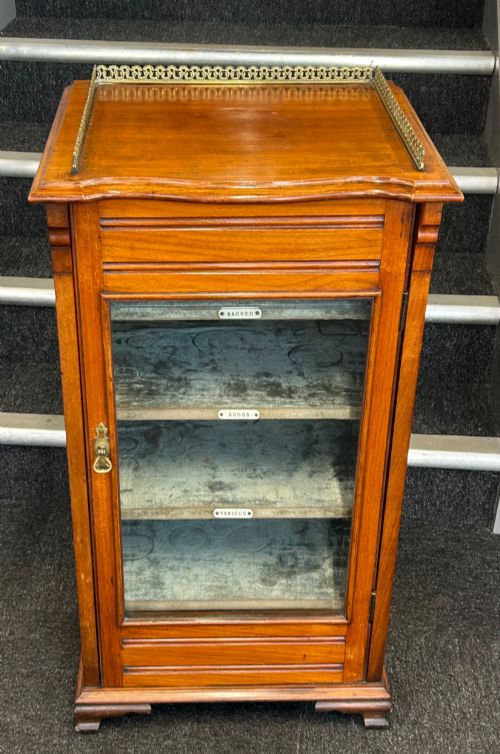
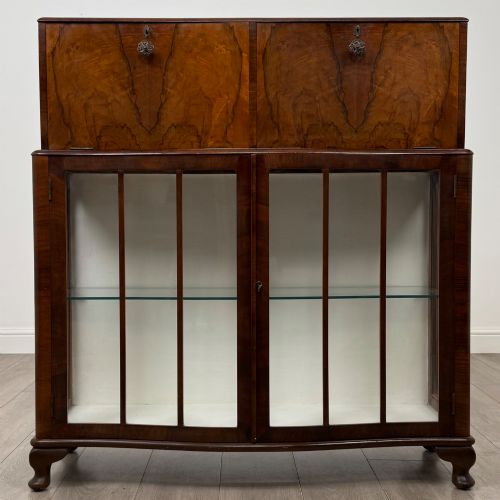




Glazed Walnut Storage Cupboard
A glazed walnut storage cupboard brings rich timber grain and visible display space to a room, offering both character and function.
Glazed Walnut Storage Cupboard
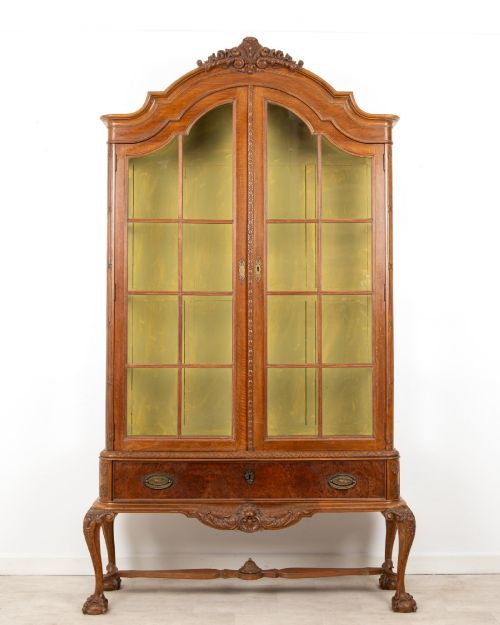
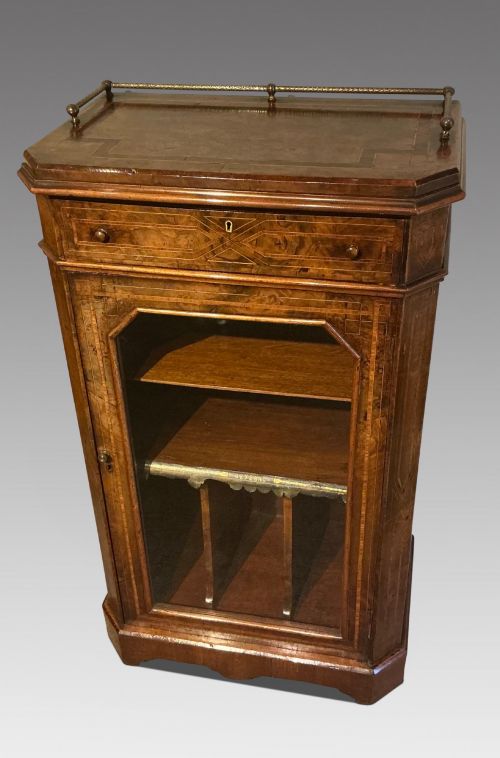
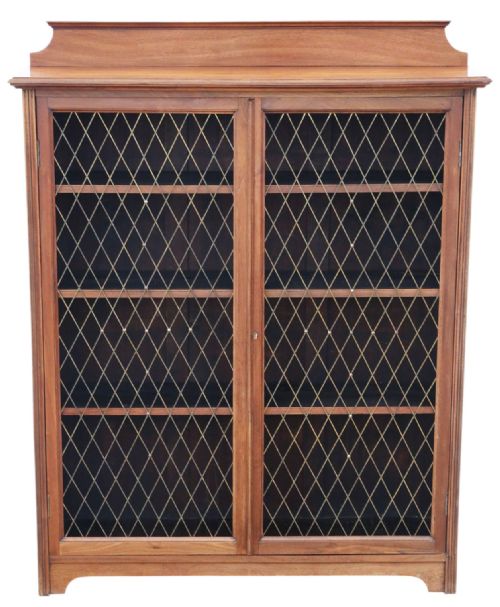
A glazed walnut storage cupboard encompasses music cabinets, display cases, bookcases, and side cabinets spanning the Victorian, Edwardian, and early twentieth-century periods. These pieces combine timber framing with glass panels to protect books, sheet music, and decorative objects while keeping them visible.
The versions most common here typically date from the Victorian and Edwardian eras, featuring burr walnut veneers, inlaid details, and brass fittings. Forms range from narrow pier cabinets and wall-hung units to broad breakfront bookcases and fitted music cabinets.
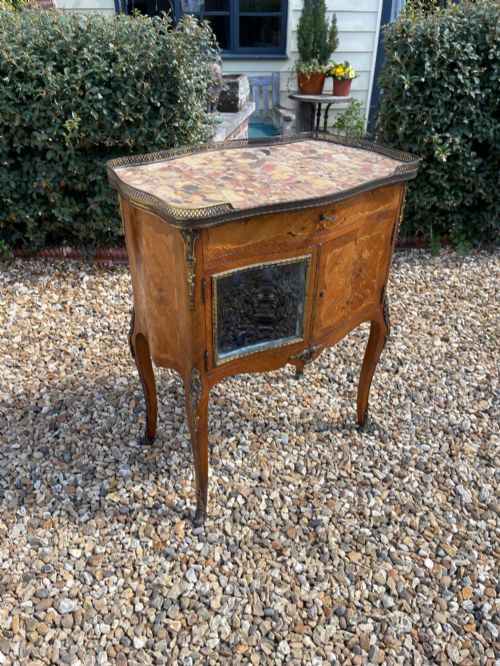
Originating across British and continental workshops, these pieces often adopt revival styles such as Queen Anne, French Louis XV, and Georgian. They serve well in sitting rooms, studies, and libraries where both enclosed storage and display capacity matter.
Distinctions in quality and execution
The depth and movement of the walnut grain set finer examples apart, particularly where highly figured burr walnut veneers cover the doors and drawer fronts. Superior pieces display precise matching of veneer patterns across the front elevation rather than random grain alignment.
Hand-cut joinery, well-fitted doors that hang true, and crisp inlay work indicate higher workshop standards. The quality of the brass mounts, hinges, and original glass panes further distinguishes standard production items from finer, more ambitious commissions.
Some Victorian music cabinets still harbour faint traces of chalk notes left by pianists who neatly filed their waltzes a century ago.
The Glazed Walnut Storage Cupboard Glossary
- Burr walnut
- A figured wood grain obtained from the excrescences or burls of walnut trees, prized for its swirling, organic patterns. It is frequently sliced into thin veneers for cabinet fronts.
- Pier cabinet
- A low, freestanding display cabinet designed specifically to stand against the narrow wall space between windows. These typically feature glass doors and velvet-lined or mirrored interiors.
- Breakfront
- A cabinet design where the central section projects forward from the flanking wings. This architectural arrangement adds visual depth and shadow to large bookcases and side cabinets.
- Ormolu
- Gilded bronze ornamentation applied to furniture, popular in French-influenced revival styles. It provides metallic contrast against dark walnut timber.
- Stringing
- Thin lines of contrasting wood inlay used to outline panels, drawers, and tabletops. It defines the geometric boundaries of Edwardian and Victorian cabinetwork.
Glazed Walnut Storage Cupboard: Frequently Asked Questions
What is a music cabinet?
A music cabinet is a specialist storage piece designed with internal shelves or vertical partitions specifically for organising sheet music and scores. They often feature glazed or solid doors and date predominantly from the Victorian and Edwardian eras.
These compact units fit easily beside pianos or in studies, functioning effectively as general storage cupboards for papers and slim folios today.
How do I date a walnut cabinet?
Dating relies on examining construction methods, secondary timbers, hardware, and stylistic revival cues. Victorian pieces often display heavier proportions and rich burr walnut veneers, whereas Edwardian examples can be lighter with subtle stringing.
Looking at the backboards, drawer linings, and hinge types helps narrow the decade of manufacture within the nineteenth and twentieth centuries.
Where should I place a pier cabinet?
A pier cabinet suits narrow wall spaces, hallways, or drawing rooms where floor area is restricted. Because they often feature glazed sides and fronts, placing them near a light source enhances the visibility of items displayed inside.
Ensure the cabinet does not obstruct walkways, as these pieces were originally scaled for specific architectural gaps in period rooms.
How do I care for walnut veneer?
Walnut furniture benefits from stable indoor humidity and protection from direct sunlight, which can fade figured veneers over time. Regular dusting with a soft, dry cloth maintains the finish without needing heavy polishes.
Avoid placing damp items or unsealed marble directly on the timber surfaces to preserve the original polish and grain.