

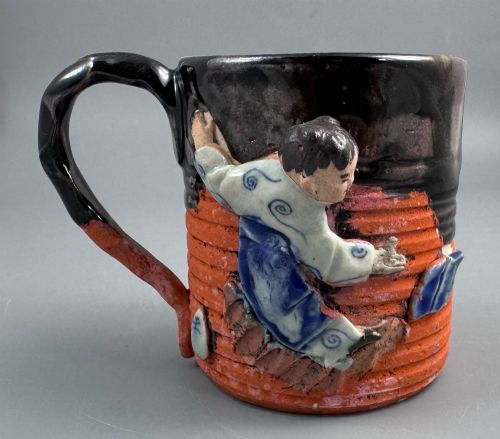


Glazed Earthenware Tankard
These glazed earthenware tankard examples span centuries of drinking vessels, offering collectors substantial forms and rich historical glazes.
Glazed Earthenware Tankard
When you search for a glazed earthenware tankard, you encounter drinking vessels spanning several centuries, from slipware jugs to tin-glazed drinking vessels. The selection draws on Dutch Delftware, English country pottery, and German styles.
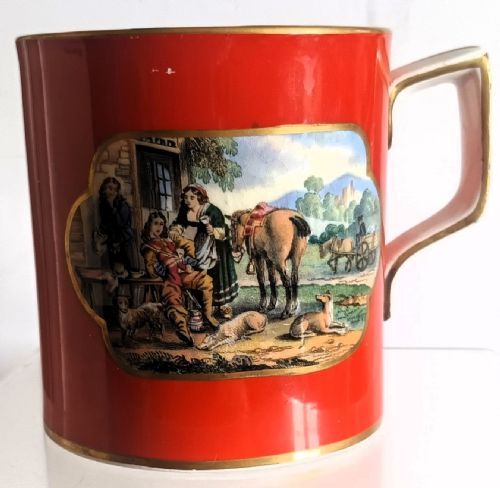
You are most likely to meet 18th-century and 19th-century examples alongside Victorian mugs and German steins. These vessels range from simple creamware and Pratt-ware pieces to elaborate commemorative items.
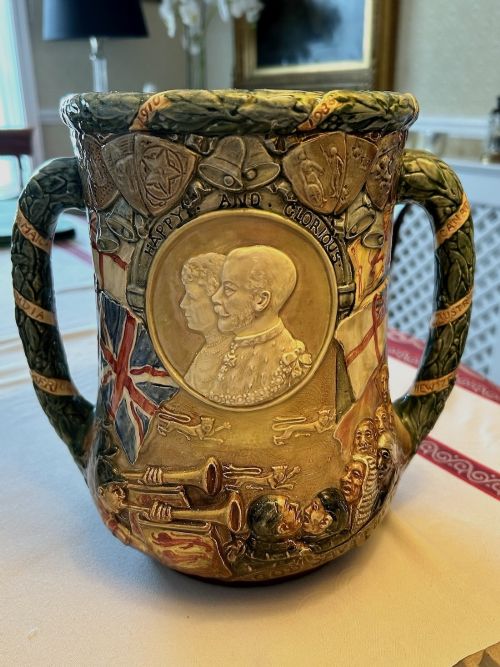
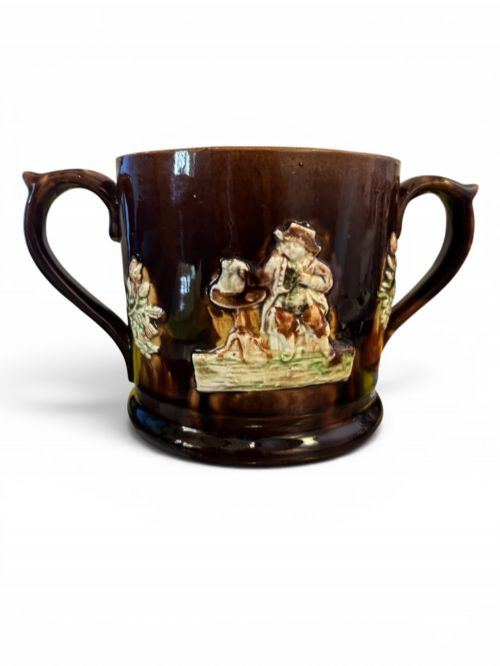
Makers shaped these drinking vessels for daily ale consumption, festive toasts, and royal jubilees. The forms encompass single-handled mugs, two-handled ale vessels, and lidded jugs.
How they were made
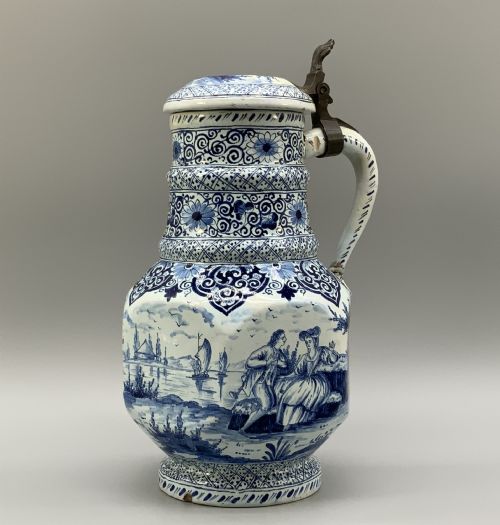
Potters shaped earthenware bodies on the wheel, applying tin glazes or slip decoration before firing the clay. Many pieces incorporate applied figures or hand-painted polychrome and blue-and-white designs.
Certain examples feature fitted pewter lids attached to the handle, bridging ceramic and metalwork traditions. Specialised workshops utilised distinct glazing techniques to achieve the characteristic glossy finish.
Listings feature earthenware vessels spanning the 17th century through the Georgian and Victorian eras to the early 20th century.
What varies in quality
The standard of a glazed earthenware tankard depends on the crispness of the painted or moulded detail and the stability of the glaze. Earlier pieces display distinct brushwork and individual potting marks that elevate their character.
Complexity of form distinguishes ordinary vessels from notable pieces, particularly those with applied figures or intact pewter mounts. Preservation of the surface glaze and the originality of components determine the standing of each item.
Inoue Ryōsai Workshop·Sarreguemines
The Glazed Earthenware Tankard Glossary
- Creamware
- A refined earthenware developed in England during the 18th century, known for its pale yellowish-buff body and clear lead glaze.
- Slipware
- Pottery decorated with slip, which is a liquid clay mixture, applied to the unfired body by trailing or dipping.
- Delftware
- Tin-glazed earthenware produced in the Netherlands and England, typically decorated with blue pigments on a white background.
- Faience
- European tin-glazed earthenware, most commonly associated with French and German production of decorative and functional wares.
Glazed Earthenware Tankard: Frequently Asked Questions
What is a frog mug?
A frog mug is a drinking vessel featuring a small ceramic frog moulded inside near the bottom, designed to surprise the drinker as the liquid lowers.
These novelty items were popular in English country pottery during the 18th and 19th centuries for tavern amusement.
How do I date a tankard?
Dating relies on stylistic markers, glazing techniques, and specific commemorative inscriptions tied to historical reigns or events.
Changes in handle shape, body weight, and ceramic composition further help distinguish 17th-century slipware from later Victorian earthenware.
Were these vessels used daily?
Many earthenware tankards served practical roles for ale and beer in homes and taverns, leading to natural handling wear.
Other examples, such as commemorative coronation pieces and jubilees, were kept as display items rather than utilised for drinking.
What is a pewter lid for?
Pewter lids kept insects and debris out of the ale during outdoor gatherings and helped retain the beverage's carbonation.
These metal mounts were hinged directly to the ceramic handle, combining durability with functional design.