






Glazed Corner Display Unit
A glazed corner display unit turns an overlooked room angle into a focal point for displaying prized ceramics and small objects.
Glazed Corner Display Unit
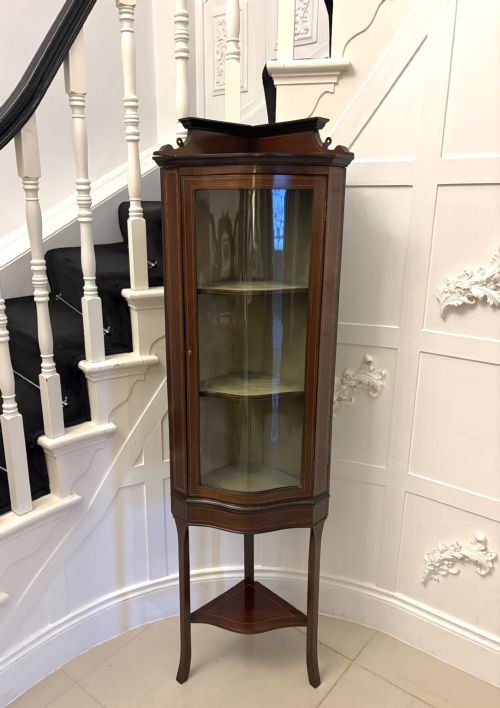
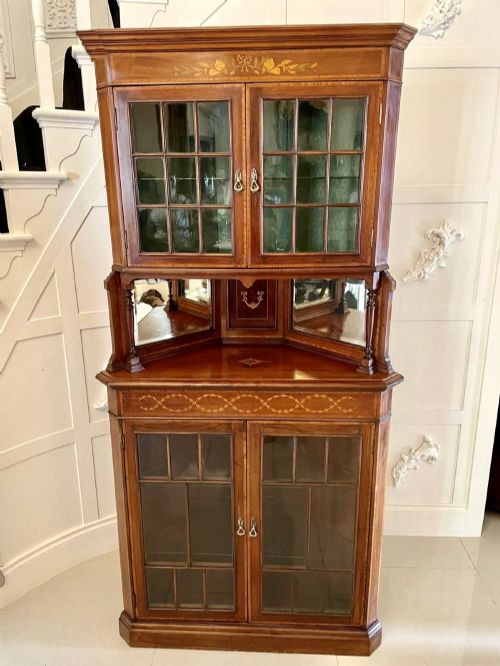
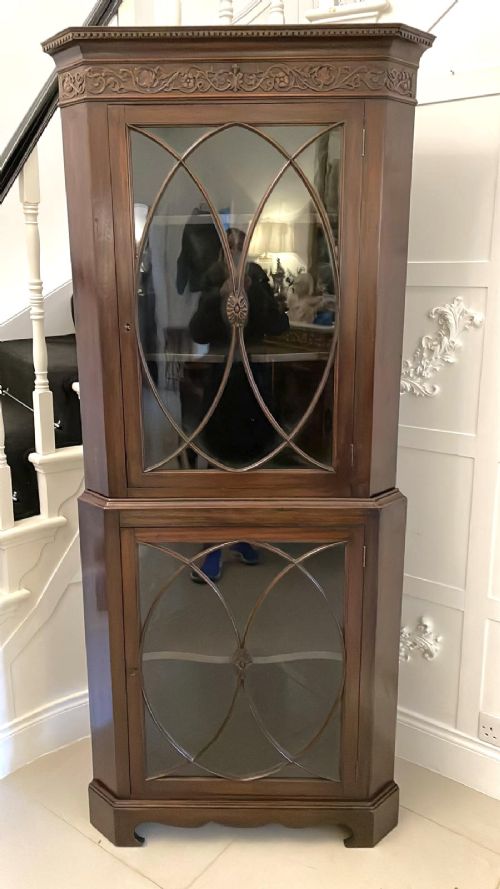
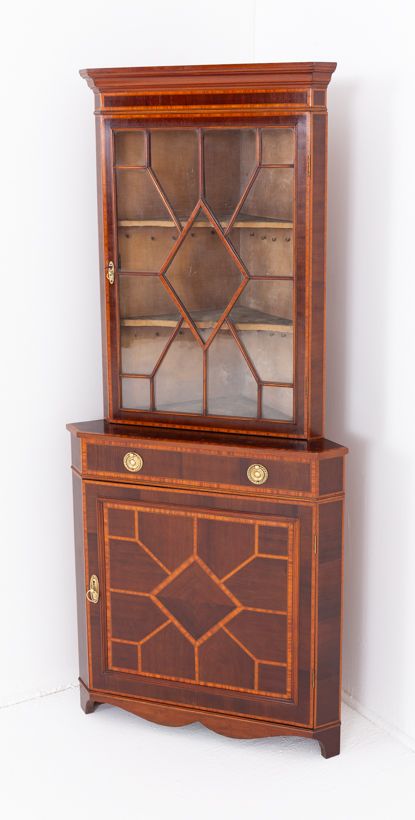
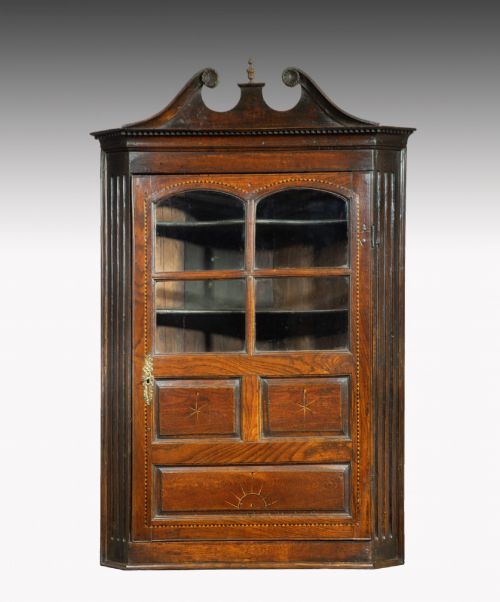
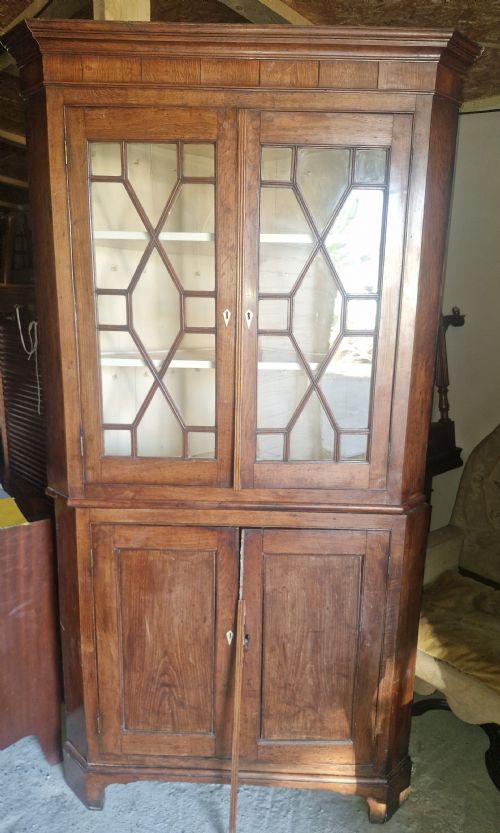
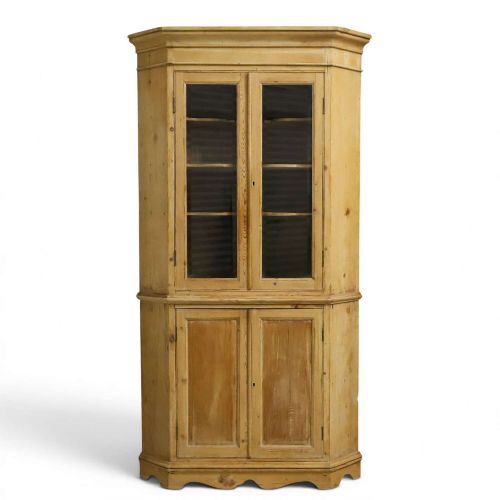
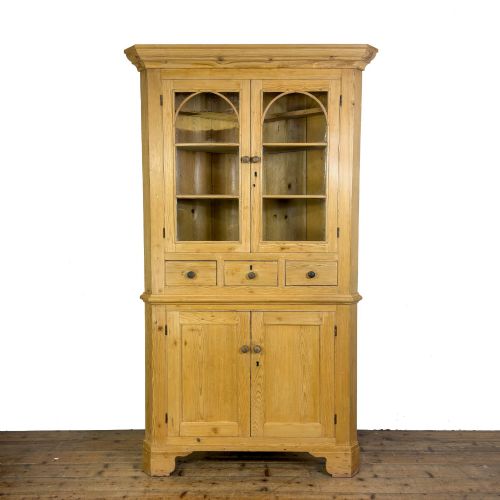
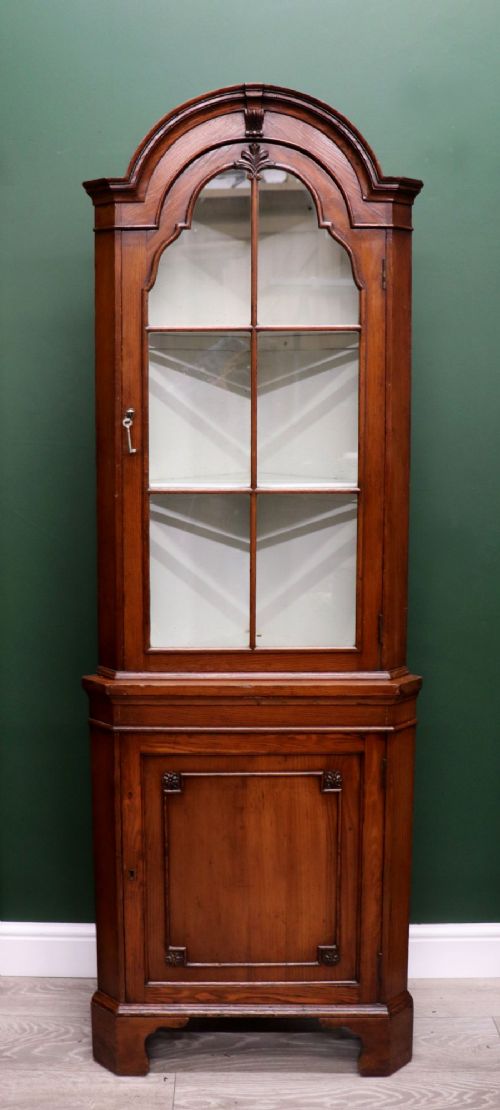
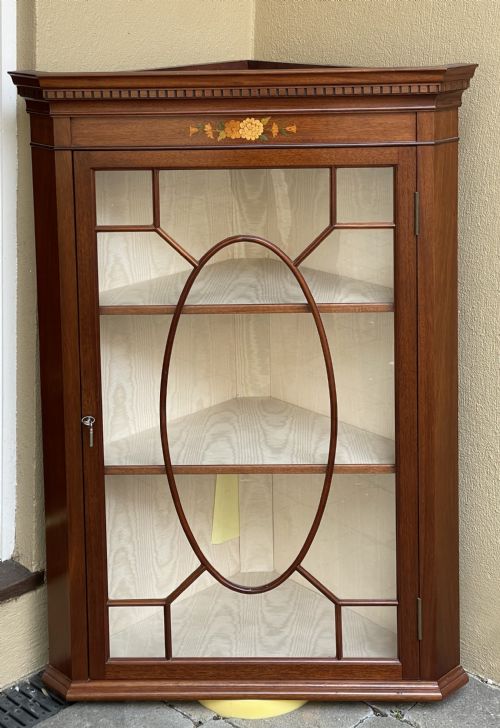
A glazed corner display unit turns dead room angles into functional storage, arriving in tall floor-standing variants, two-part designs, and wall-hanging formats. Buyers seeking a glazed corner display unit will most commonly encounter Edwardian mahogany examples alongside 19th-century and Georgian iterations.
The evidence shows these pieces span multiple centuries, ranging from early 18th-century oak and walnut pieces through Regency, Victorian, and Edwardian revivals up to 1930s creations. Formats vary from single-door wall cabinets to double-height standing corner cupboards with glass doors.
Materials and construction
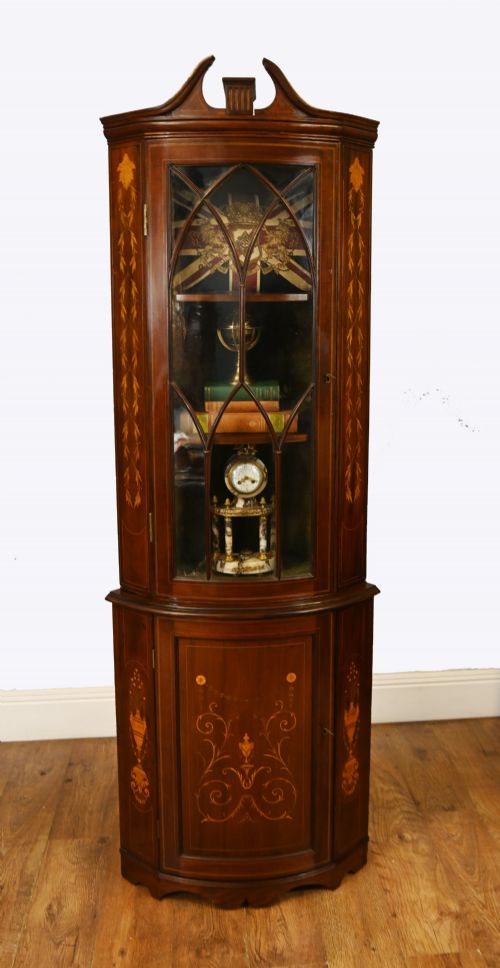
Cabinet makers relied primarily on timbers such as mahogany, oak, pine, and walnut, frequently enhancing surfaces with satinwood inlay, marquetry, and brass hardware.
Glazing takes the form of glass panels held by astragal bars, sometimes curved into bow fronts or barrel backs to shape the display area.
Glazed Corner Display Unit Retail Price Guide 2026
Typical asking prices for glazed corner display unit among the pieces listed under this phrase on Sellingantiques today, from the lower quarter to the upper quarter. They describe what is for sale here now, not the wider market.
Some historic makers designed their corner units with curved barrel backs, giving the interior shelves a snug, barrel-like hug.
Build and detail
Superior examples display crisp marquetry inlay, finely proportioned astragal glazing bars, and well-figured mahogany or walnut timbers rather than plain secondary woods.
Construction methods distinguish fine workshop output from country pine pieces, seen in the transition from simple wall-hanging units to substantial two-part standing corner cabinets.
Goodhall, Lamb and Heighway of Manchester·Edwards And Roberts
The Glazed Corner Display Unit Glossary
- Astragal glazed
- A glass door divided into smaller panes by narrow wooden bars called astragals. These geometric divisions structure the view into the cabinet.
- Two-part form
- A cabinet constructed in separate upper and lower sections stacked together. This method eased transport for large standing corner cupboards.
- Marquetry
- Decorative veneer work formed of fitted pieces of wood, shell, or ivory to create pictorial designs on the cabinet surface. It frequently defines Edwardian and Sheraton Revival pieces.
- Barrel back
- A curved interior timber lining behind the shelves that echoes the rounded rear angle of the cabinet. This classical feature frames displayed items effectively.
- Serpentine front
- A cabinet front featuring a convex centre flanked by concave curves. This undulating profile requires advanced joinery.
Glazed Corner Display Unit: Frequently Asked Questions
How do I choose between wall hanging and floor standing units?
Wall-hanging corner cabinets suit compact spaces where floor area remains at a premium, allowing them to sit above tables or sideboards.
Floor-standing and two-part variants offer substantial storage capacity and anchor an entire corner as a architectural furniture piece.
What is a two-part corner cupboard?
A two-part corner cupboard consists of a distinct upper glazed display section sitting upon a lower wooden cupboard base. This stacked construction aided transportation and placement in historic homes.
Such cabinets often rise to double height, providing significant display space above enclosed storage.
How do I identify an Edwardian revival piece?
Edwardian interpretations frequently incorporate Sheraton Revival styling, featuring light mahogany timbers adorned with delicate satinwood inlay and marquetry.
Makers of this era drew heavily on 18th-century design vocabulary while updating proportions for Edwardian interiors.
Where were corner cabinets placed in historic rooms?
Historic interiors utilised corner cabinets to exploit awkward angles that standard rectangular furniture could not occupy efficiently.
They served both to store tableware and to exhibit prized ceramics behind glass doors away from active foot traffic.