


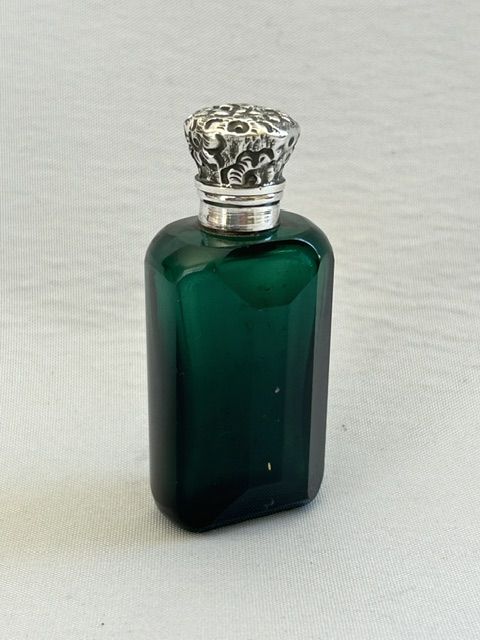


Glass Smelling Bottle
A glass smelling bottle is a portable pocket vessel for restoratives, combining coloured or clear glass with precious silver mounts.
Glass Smelling Bottle
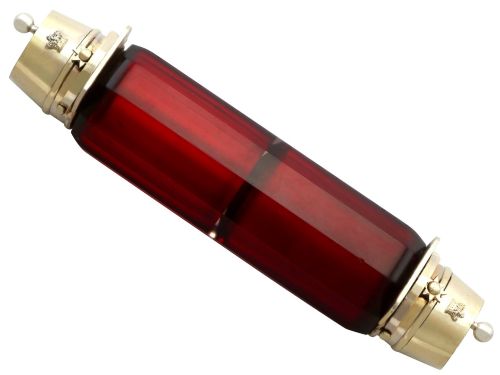
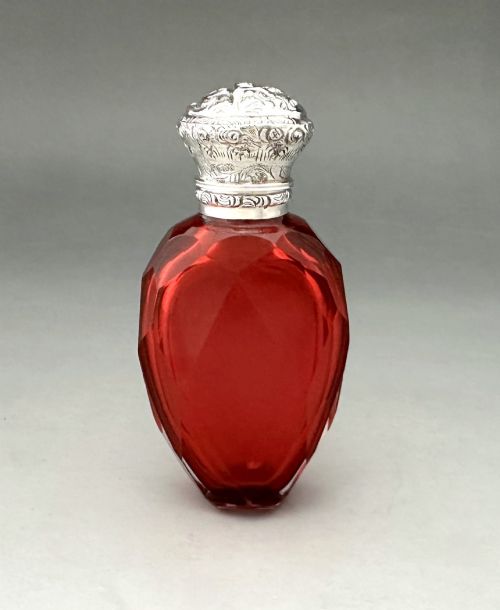
A glass smelling bottle is a personal accessory designed to hold volatile salts or perfumes, frequently shaped as slender flasks or double-ended cylinders. These objects appear across the Victorian, Edwardian, and Georgian periods, showcasing diverse glass hues including ruby, cranberry, Bristol green, amethyst, and opaline.
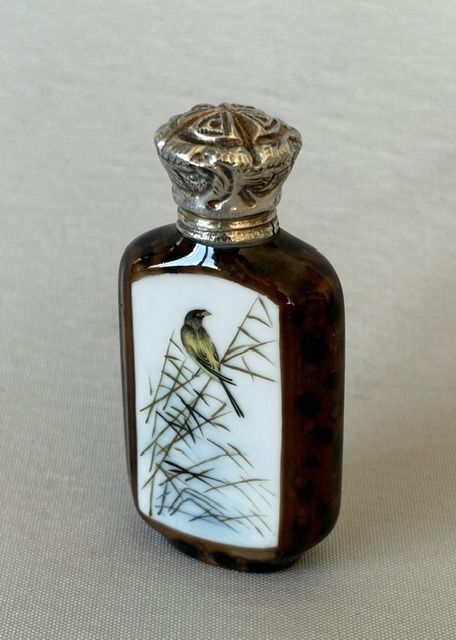
The specimens recorded on this page range from miniature champagne liquor flasks to double-ended scent bottles equipped with hinged silver caps at both extremities. Many examples incorporate sterling silver mounts, silver-gilt finishes, and detailed enamel painting upon the glass body.
Makers and makers' marks occasionally identify distinguished silversmiths like Sampson Mordan, connecting standard domestic wares to notable London workshops. The prevailing forms span simple cut glass vessels to elaborately etched and overlay glass configurations created for pocket use.
What varies in quality
The calibre of a glass smelling bottle depends upon the depth of the glass colour, the crispness of the wheel-cut facets, and the weight of the silver mount. Heavy gauge sterling silver, particularly when bearing maker signatures such as Sampson Mordan, elevates the distinction of the piece.
Subtlety in enamel painting, precision in the hinged screw-caps, and undamaged interior stoppers separate ordinary commercial production from superior cabinet examples. The integration of double-ended utility with unblemished coloured glass represents the higher standard of the medium.
Glass Smelling Bottle Retail Price Guide 2026
Typical asking prices for glass smelling bottle among the pieces listed under this phrase on Sellingantiques today, from the lower quarter to the upper quarter. They describe what is for sale here now, not the wider market.
The documented object forms include double-ended scent bottles, miniature liquor flasks, and standard vinaigrettes with engraved silver detail.
Sampson Mordan·S Morden and Co
The Glass Smelling Bottle Glossary
- Double-ended scent bottle
- A vessel featuring hinged lids at both top and bottom, allowing access to two distinct compartments for salts or perfume. These dual chambers were popular during the nineteenth century.
- Silver-gilt
- Sterling silver that has been coated with a thin layer of gold through an electrochemical or fire-gilding process, producing a rich warm sheen.
- Opaline glass
- An opaque or semi-translucent glass developed in various pastel or striking shades, frequently utilised for nineteenth-century vanity and pocket accessories.
- Cranberry glass
- A rich red transparent glass created by adding gold chloride to the molten batch, heavily favored by Victorian makers.
- Vinaigrette
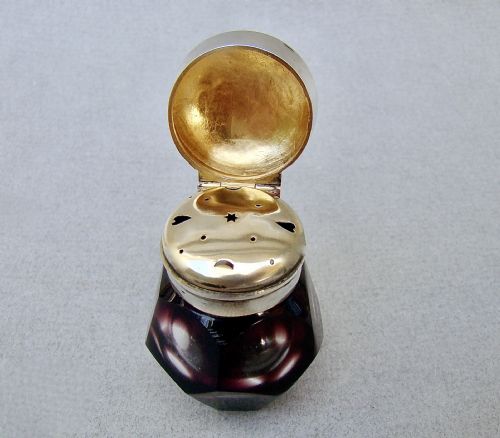
- A small ornamental box or bottle containing a sponge soaked in aromatic vinegar, fitted with an internal pierced grille.
Glass Smelling Bottle: Frequently Asked Questions
What is a glass smelling bottle?
A glass smelling bottle is a small pocket vial designed to hold reviving salts or liquid perfumes during the nineteenth and early twentieth centuries.
These personal accessories kept pungent aromatics close at hand for moments of fatigue or faintness in crowded spaces.
How are different glass colours achieved?
Different glass colours result from specific metallic oxides and minerals added to the molten batch during manufacture.
Ruby and cranberry glass rely on gold or copper compounds, while green and blue tones stem from iron or cobalt additives.
Where were these scent bottles made?
These scent bottles were produced primarily in British workshops and factories during the Georgian, Victorian, and Edwardian eras.
Silversmiths in London and Birmingham created the metal mounts, collaborating with glasshouses to house the coloured or cut glass bodies.