





Glass Shade Candlestick
These glass shade candlestick pieces combine practical illumination with decorative glass, offering a reliable way to bring period character and warm light into a room.
Glass Shade Candlestick
When you search for glass shade candlestick items, you are looking at functional lighting fixtures that combine metal bases with protective or decorative glass coverings. These objects bridge the gap between open flame candle holders and later electrified table lighting, serving both domestic utility and display.
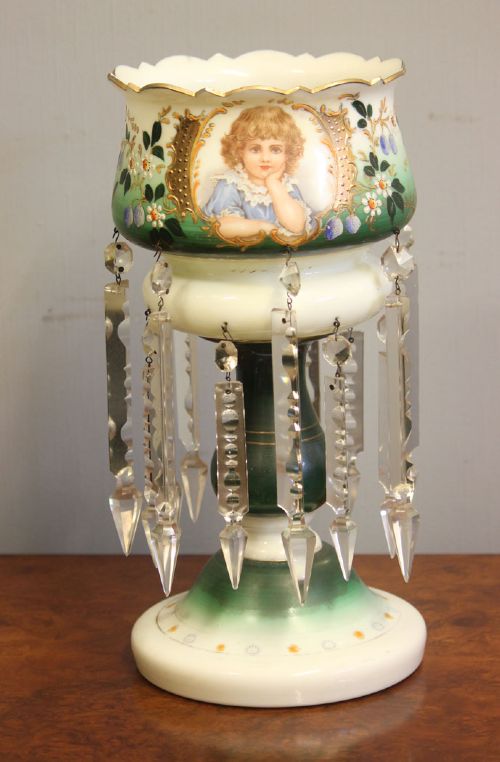
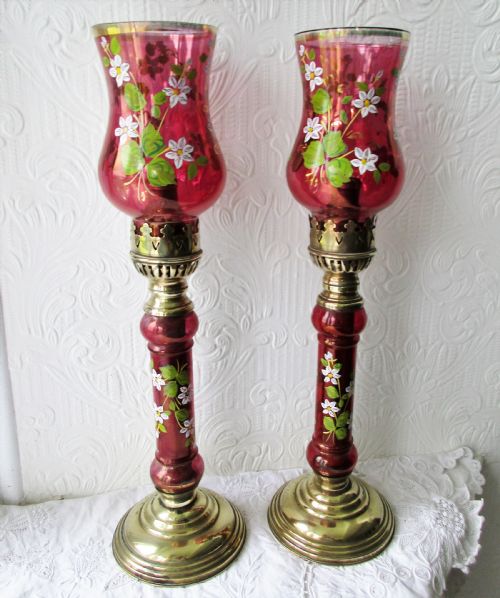
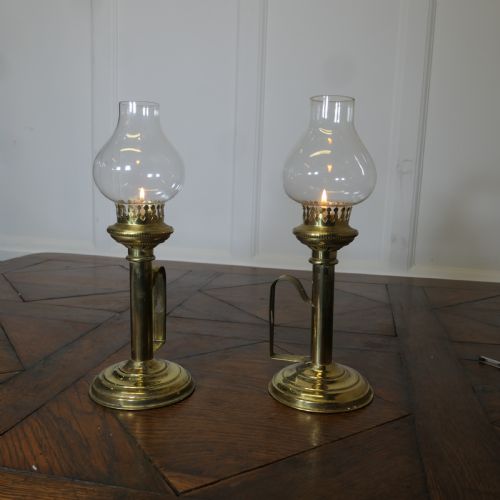
On this page, the most common versions you will meet are Victorian and nineteenth century brass candlesticks, table lamps, and peg oil lamps fitted with glass chimneys, storm shades, or cranberry glass shades. These pieces range from modest brass pairs to more ornate lustres and double helix designs.
The origins seen across these listings span English, French, and German workshops, with periods stretching from the mid nineteenth century through the Edwardian era and into nineteen thirty Art Deco examples. Such variety ensures that whether you seek a simple pair of brass holders or a more complex mantle lustre, the forms remain grounded in practical nineteenth and early twentieth century lighting needs.
How they were made
The construction of these items relies heavily on turned and cast brass for the structural bases and stems, providing the necessary weight to support upper glass components. Alongside brass, silver plate and bronze appear as primary metallic foundations for the lamp and candlestick bodies.
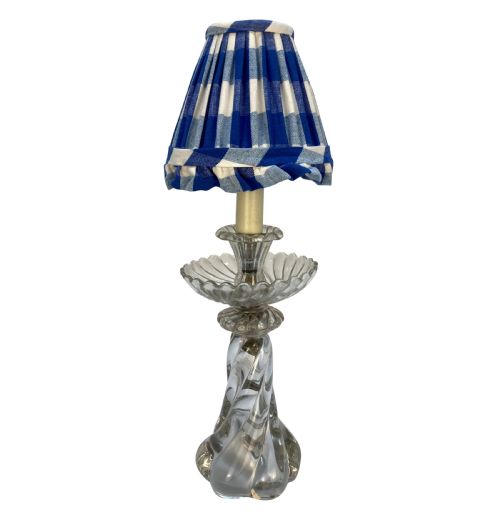
The upper portions utilise various forms of glass, including clear crystal, satin glass, enamel, and vibrant cranberry glass, shaped into chimneys, shades, or peg fonts. These glass elements are either blown or moulded to fit securely into or atop the metal mounts, sometimes accompanied by fabric or hanging lustres.
A bronze cherub occasionally holds the light, proving that even a practical nineteenth century oil lamp needed a little mythological assistance.
What varies in quality
Quality in these pieces is dictated by the crispness of the casting in the brass or bronze metalwork and the depth and colour of the glass shade. Finer examples display clean turning on the brass stems, balanced proportions between the metal base and the glass component, and careful finishing on silver plated surfaces.
The distinction between standard domestic items and superior examples lies in the integration of materials, such as heavy crystal chimneys, baccarat style moulding, or intricate decorative details like double helix stems and cherub figures. A higher quality piece maintains structural integrity while offering glass elements free from undue distortion.
The Glass Shade Candlestick Glossary
- Mantel lustre
- A decorative table ornament featuring a central candle holder hung with glass prisms that catch and reflect candlelight.
- Peg oil lamp
- A small oil reservoir fitted with a burner and glass chimney that sits inside the socket of a traditional candlestick.
- Storm shade
- A tall cylindrical glass shade designed to protect a candle flame from draughts while allowing light to pass through.
- Cranberry glass
- A rich pinkish-red glass produced by adding gold chloride to the molten batch during the nineteenth century.
- Silver plate
- A thin layer of silver applied to a base metal, commonly used during the Victorian period to give the appearance of solid silver.
Glass Shade Candlestick: Frequently Asked Questions
What is a glass shade candlestick?
It is a lighting fixture that combines a metal or plated base with a protective glass chimney or shade.
These items range from simple nineteenth century brass candle lamps to more elaborate oil lamps and mantle lustres.
How were glass shades used originally?
The glass shades served primarily to shield candle flames or oil burners from indoor draughts.
They also helped to diffuse the light evenly while preventing soot from marking surrounding walls and furnishings.
How do I date a brass candlestick?
Dating relies on examining the manufacturing techniques, metal composition, and style characteristics present in the base.
Nineteenth century pieces often show hand turned brass components, whereas later twentieth century examples display different casting methods.
Can I use these with modern candles?
Many of these pieces accommodate standard taper candles or function as adapted table lamps depending on their specific form.
Care should be taken to match the diameter of the candle to the original socket size to ensure a secure fit.