




Glass Prism Lamp
A glass prism lamp catches the light across a room, bringing together brass and cut crystal in pieces built to last.
Glass Prism Lamp
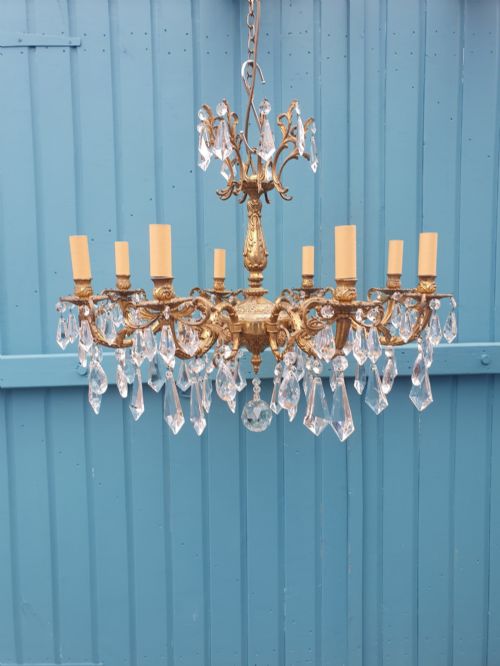
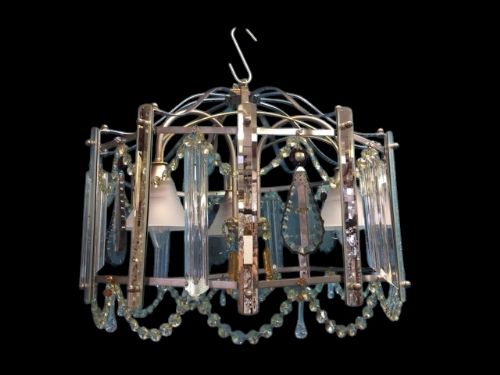
A glass prism lamp encompasses a variety of lighting forms designed to refract light through cut crystal and glass drops. Buyers searching for a glass prism lamp encounter everything from large multi-arm chandeliers to smaller table lamps and mantel lustres.
The selections span the Victorian, Edwardian, and Art Deco periods, drawing heavily on French Empire, Regency, and classical styles. Many pieces originate from the early twentieth century, featuring brass, gilt metal, and bronze frames.
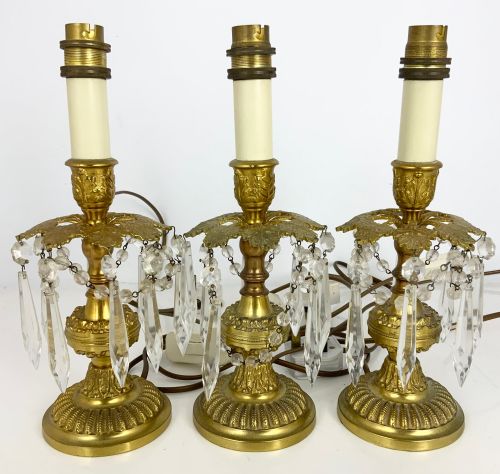
Chandeliers and ceiling lights dominate the current range, often incorporating tent and waterfall formations or delicate drop beads. Smaller items like candlesticks and mantel lustres also appear, fitted with hanging glass prisms.
Materials and construction
Makers built the structural frames using cast brass, gilt brass, and gilt metal to support the heavy weight of glass components. These metal foundations range from simple circular bands in basket chandeliers to elaborate multi-arm arrangements.
Cut glass, lead crystal, and plain crystal form the hanging prisms, drops, and storm shades attached to each fixture. Artisans shaped these glass elements by hand, suspending them from metal frames using wire or pins to maximise light refraction.
Glass Prism Lamp Retail Price Guide 2026
Typical asking prices for glass prism lamp among the pieces listed under this phrase on Sellingantiques today, from the lower quarter to the upper quarter. They describe what is for sale here now, not the wider market.
The listings feature brass, gilt metal, and crystal glass across pieces originating from the Victorian era through to the 1930s.
Assessing quality and finish
Quality reveals itself in the weight and clarity of the crystal components and the crispness of the metal casting. Superior pieces utilise heavy lead crystal with deep hand-cut facets that disperse light cleanly across the room.
The complexity of the metalwork also distinguishes better examples, such as detailed gilt brass frames and multi-tier tent structures. Intricate arrangement of drops, from blue-tinted top prisms to large centre lustres, indicates careful original design.
The Glass Prism Lamp Glossary
- Prism
- A cut glass or crystal pendant designed to refract light into spectral colours. These hang in rows or clusters from chandeliers and lustres.
- Lustre
- An ornamental tabletop vase or candlestick adorned with hanging glass prisms. Victorian examples often include matching storm shades.
- Tent and waterfall
- A chandelier design where strings of crystal beads form an upper tent shape above a cascading waterfall of further drops.
- Gilt metal
- Metal coated with a thin layer of gold paint or leaf to provide a bright finish. It serves as a common structural base in French lighting.
- Mantel lustre
- A decorative two-piece or three-piece garniture set placed on a fireplace mantelpiece, featuring hanging glass drops.
Glass Prism Lamp: Frequently Asked Questions
What is a mantel lustre?
A mantel lustre is an ornamental candlestick or vase designed to sit on a fireplace mantelpiece. These pieces feature hanging glass prisms that catch and scatter light from the room.
Victorian examples often include removable storm shades made of glass. They function primarily as decorative objects rather than primary light sources.
How do I clean a prism chandelier?
Cleaning requires removing dust gently with a soft cloth or a specialised glass cleaning solution. Many prisms can be detached individually for careful washing in warm soapy water.
Take care to support the metal frame and avoid pulling harshly on the original wire pins holding the drops in place.
Are these lights wired for modern use?
Most antique lighting fixtures require inspection and rewiring by a qualified electrician to meet current safety standards. Original wiring from the Victorian or Edwardian periods is rarely suitable for continuous modern use.
Wiring can usually be updated while retaining the original brass frames and candle sleeves.
How do I date an Edwardian chandelier?
Dating relies on stylistic clues such as the simpler geometric lines of early twentieth-century design or the persistence of heavy Victorian brasswork. Edwardian pieces often bridge ornate nineteenth-century forms and the cleaner lines of the 1920s.
Examine the construction of the metal arms and the cut of the glass drops for period manufacturing traits.