






Glass Prism Ceiling Light
A glass prism ceiling light brings together cut crystal and brass to catch the light in any hallway or room.
Glass Prism Ceiling Light
When you search for a glass prism ceiling light, you are looking at hanging fixtures designed to refract light through cut and moulded glass elements. These pieces range from compact single-tier pendants to multi-armed chandeliers originating across the nineteenth and early twentieth centuries.
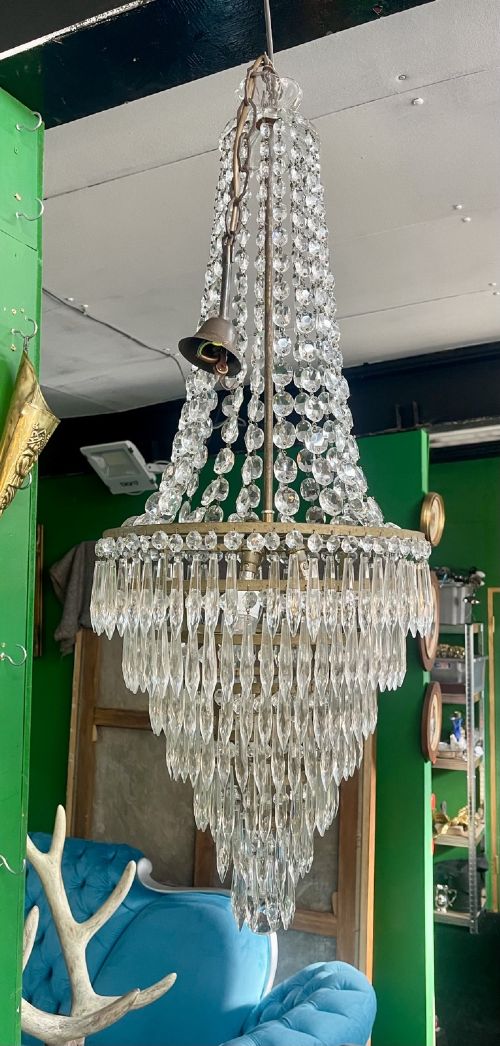
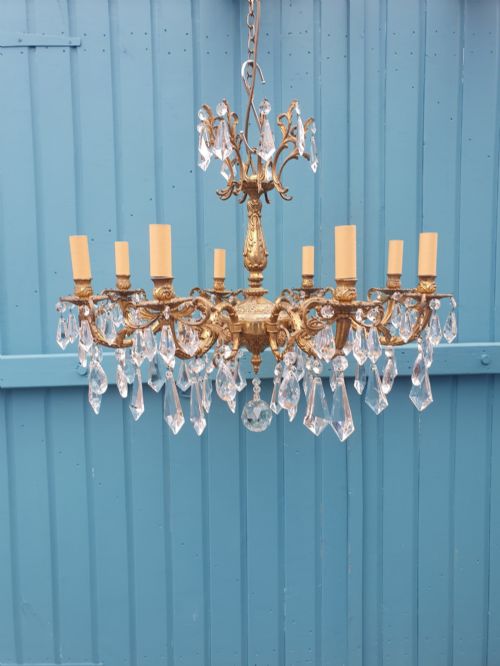
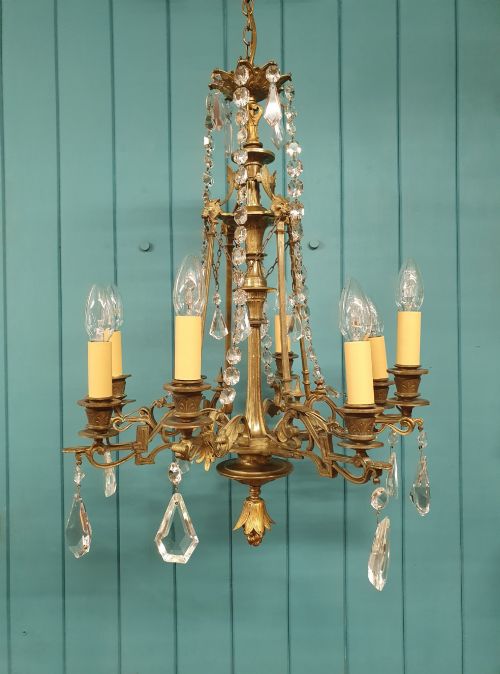
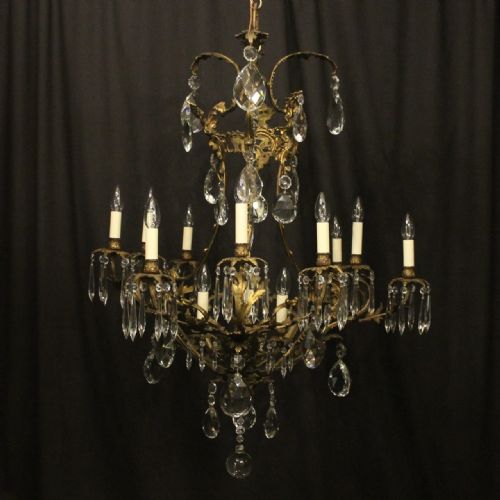
The versions you are most likely to meet on this page include Edwardian and early twentieth-century examples alongside French Empire and Rococo style chandeliers. Many feature brass, gilt brass, or gilded bronze frames supporting tiers of glass drops, beads, and swags.
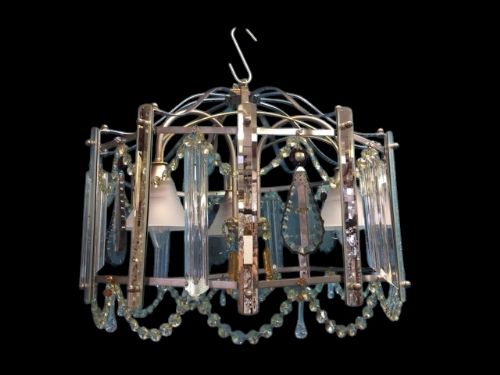
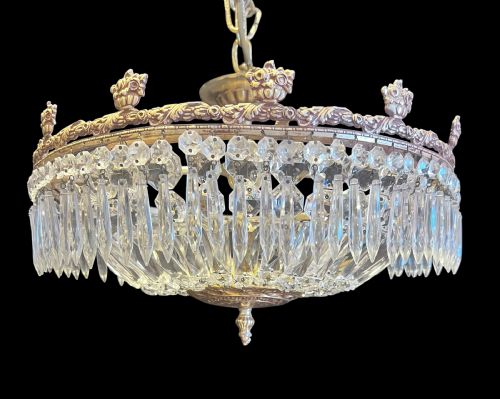
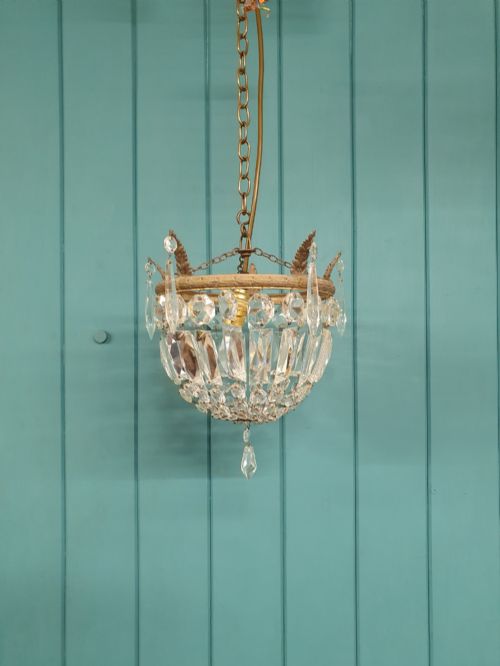
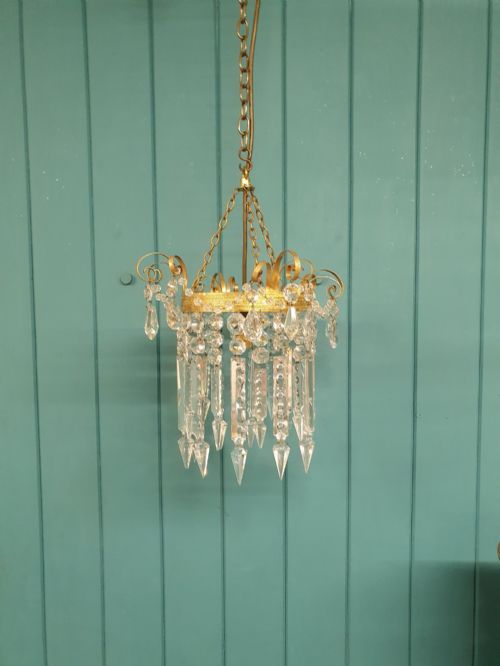
Formats vary from simple basket and bag chandeliers to elaborate tent and waterfall arrangements carrying numerous lights. Smaller ceiling lights and plafonieres also appear, often fitted with distinctive spike or coffin prisms.
Materials and construction
The primary structural framework relies on cast and spun brass, gilt brass, or gilded bronze, which provides the rigid skeleton required to support heavy glass components. These metal mounts frequently display decorative casting, including details such as lion masks.
Hanging elements consist of crystal glass, cut glass, and cut crystal shaped into prisms, lustres, drops, beads, and oblong drips. These glass pieces are typically wired or pinned directly to the metal frames by hand, creating complex tiers and swags.
Glass Prism Ceiling Light Retail Price Guide 2026
Typical asking prices for glass prism ceiling light among the pieces listed under this phrase on Sellingantiques today, from the lower quarter to the upper quarter. They describe what is for sale here now, not the wider market.
Assessing quality and finish
Quality in these fixtures is defined by the clarity and cutting of the glass and the weight of the metal armature. Superior pieces utilise heavy cut crystal that refracts light sharply, set within substantial gilded bronze or brass frames rather than lighter pressed metals.
The intricacy of the assembly also marks the distinction between standard and finer examples. High-end pieces employ elaborate arrangements of long prisms, blue glass highlights, and multi-tiered tent and waterfall structures that demand meticulous hand-threading.
The Glass Prism Ceiling Light Glossary
- Prism
- A cut glass pendant designed to refract light into spectral colours. These hang from the frame in various lengths and shapes.
- Plafoinere
- A ceiling-mounted light fixture that sits relatively flush against the ceiling rather than hanging on a long chain.
- Lustre
- A glass drop or pendant suspended from a chandelier to enhance reflection. They often feature faceted edges for increased sparkle.
- Tent and waterfall
- A specific chandelier configuration where glass swags form an upper tent shape above a cascading waterfall of lower drops.
- Coffin prism
- An elongated, flat-backed glass drop shaped similarly to a traditional coffin, commonly found on Edwardian fixtures.
Glass Prism Ceiling Light: Frequently Asked Questions
How do I clean a prism chandelier?
Cleaning requires a gentle solution applied by hand to each individual glass drop and metal arm.
Many specialists advise cleaning the prisms in situ using a dedicated spray and a soft cloth to avoid damaging the historical wiring or delicate brass mounts.
What periods do these lights come from?
The pieces span the nineteenth century through to the Edwardian era and the 1920s and 1930s.
Earlier nineteenth-century examples often lean towards French Empire and Rococo styling, while later pieces embrace Art Deco or simpler Edwardian basket forms.
How are basket chandeliers different from other styles?
Basket chandeliers feature a rounded or bowl-shaped lower section constructed from a dense web of glass beads and drops.
This enclosed shape differs from the open multi-armed format of tent and waterfall fixtures, creating a distinct silhouette when lit.
Can these antique lights be rewired for modern ceilings?
Most antique fixtures can be adapted by a qualified electrician to meet contemporary safety standards.
The original brass frames and brass sockets are usually retained while the internal wiring is safely updated for daily use.