

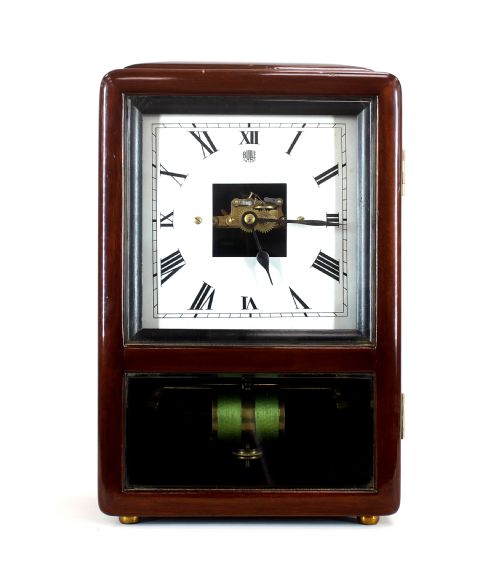


Glass Panelled Clock
A glass panelled clock brings together polished brass framing and transparent glazing, letting you watch the intricate movement within.
Glass Panelled Clock
When you search for a glass panelled clock, you encounter a range of timepieces spanning the nineteenth and twentieth centuries, predominantly carriage clocks and library clocks housed in brass and glass cases.
Victorian and Edwardian examples dominate the listings, alongside mid twentieth century items and older nineteenth century designs utilising enamel and porcelain inserts.
Construction and Materials
These clocks combine heavy brass, gilt bronze, or ormolu framing with bevelled glass panels that reveal the mechanical escapement and gear trains from all sides.
Dials are typically formed of white enamel with delicate numbering, while finer models incorporate hand painted porcelain or Sevres style panels and chased side details.
Cabinets employ timber elements such as mahogany and rosewood in specific English library styles, supporting single fusee or eight day movements.
Glass Panelled Clock Retail Price Guide 2026
Typical asking prices for glass panelled clock among the pieces listed under this phrase on Sellingantiques today, from the lower quarter to the upper quarter. They describe what is for sale here now, not the wider market.
Some miniature travel clocks are so small they slip entirely into a coat pocket, ready to chime on the move.
Factors of Quality
Quality rests upon the crispness of the brass casting, the depth of gilding, and whether the side and top panels retain their bevelled edges without chips.
The sophistication of the internal movement separates standard timepieces from superior strike repeat mechanisms, fusee movements, and signed maker dials.
Completeness alters the character of a piece, with original fitted boxes, matching keys, and undamaged enamel dials elevating the standard of the clock.
WALKER·L Epee·J C Vickery London·John Massey London
The Glass Panelled Clock Glossary
- Carriage clock
- A portable spring driven clock designed for travellers, featuring a brass case with glass panels and a folding handle on top.
- Fusee
- A conical pulley used in better clocks to maintain equal power as the mainspring unwinds, improving timekeeping accuracy.
- Crystal regulator
- A mantel clock featuring heavy glass panels on all four sides enclosing a suspended pendulum and visible movement.
- Ormolu
- Gilt bronze decoration applied to metal surfaces, providing a rich golden finish common on nineteenth century French pieces.
- Enamel
- A fused glass powder coating used on clock dials and decorative panels to create a smooth, durable, glossy surface.
Glass Panelled Clock: Frequently Asked Questions
What is a four glass clock?
A four glass clock is a mantel timepiece housed in a heavy brass frame with glass panels on the front, back, and both sides. This construction allows unobstructed views of the pendulum and movement from any angle.
These pieces typically date from the late nineteenth century and stand out for their architectural presence on a mantelpiece or shelf.
How do carriage clocks work?
Carriage clocks operate using a spring driven movement regulated by a platform escapement rather than a hanging pendulum. This compact design allowed travellers to transport the timepiece safely.
Many examples include striking mechanisms that chime the hours and quarters, often paired with a repeat button on the top to sound the last hour on demand.
Where should I place a library clock?
Library clocks suit enclosed spaces such as desks, bookshelves, or side tables where their refined proportions can be appreciated up close. Their heavy brass and glass construction requires a stable, level surface.
Keep them away from direct sunlight and damp environments to protect the internal brass mechanics and enamel dials from deterioration.
How do I identify a French carriage clock?
French carriage clocks are generally characterised by their polished brass or gilt cases, white enamel dials, and characteristic bevelled glass panels. They often feature engraved or chased mask surrounds framing the dial.
Examining the backplate through the rear glass door frequently reveals maker stamps, serial numbers, and platform escapement details peculiar to French workshops.